

Research
- +6
Yasmine Farouk, Nathan J. Brown, Maysaa Shuja Al-Deen, …
{
  "authors": [
    "Intissar Fakir"
  ],
  "type": "other",
  "centerAffiliationAll": "",
  "centers": [
    "Carnegie Endowment for International Peace"
  ],
  "collections": [],
  "englishNewsletterAll": "",
  "nonEnglishNewsletterAll": "",
  "primaryCenter": "Carnegie Endowment for International Peace",
  "programAffiliation": "",
  "programs": [],
  "projects": [],
  "regions": [
    "Middle East",
    "North Africa"
  ],
  "topics": [
    "Civil Society"
  ]
}
Source: Getty
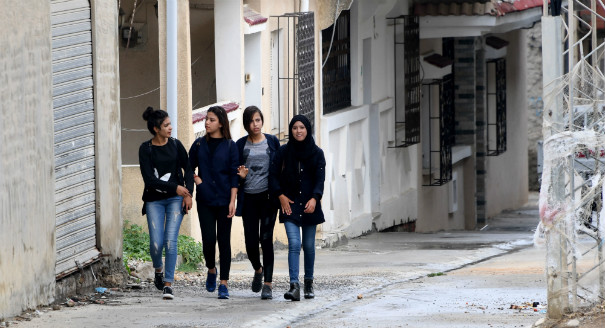
The spectrum of youth’s hopes and aspirations is as broad as befits a diverse region, but specific cases do not always reflect the state of each country.
Source: Italian Institute for International Political Studies
The Middle East and North Africa (MENA) have the second youngest population in the world. Of the entire population, 60% is under 30. MENA populations face grim political realities that range from war displacement, authoritarianism, and instability to economic and political stagnation, glacial-paced development, and even rare prosperity. Youth have reacted to their challenging circumstances in diverse ways. Some are hopeful, some are in despair, some are adrift, and others are holding on to a small hope of deliverance through some sort of miracle. There are rare examples of smashing success—which are not usually due entirely to chance or entirely to hard work. There are those who still hold on the desire to change their communities and those focused solely on eking out a living. The spectrum of youth’s hopes and aspirations is as broad as befits a diverse region, but specific cases do not always reflect the state of each country.
There is no shortage of challenges for young people. Of the region’s young population, 30% consider unemployment their largest challenge.1 Across the region, the unemployment rate is at 10.6% and still higher among youth, and it varies been urban and rural areas. For many, the informal economy is the only option, as governments are unable to address unemployment. Making the situation more difficult, some governments are trying to cut back on the size of their public sectors while failing to give private enterprise the regulatory environment and resources to grow. Informal employment is particularly predominant where economies are weak, such as in disenfranchised peripheral areas, borderlands, or conflict-ridden countries. In some areas, smuggling and illegal trade abound and offer greater opportunities, but they contribute to a risky way of living.
Even among relatively stable and peaceful MENA countries, people face high rates of poverty and illiteracy, food shortages, and a lack of access to education, drinking water, and healthcare. Corruption and cronyism are rife. Public education systems fail to provide paths towards upward mobility. For some, education ends at an early age as they are left either to work in the informal sector from an early age or to hustle their way into temporary employment that can barely take them from day to day—potentially leading to criminality and even extremism.
In aggregate, youth are angry that their governments fail to represent them, fail to serve them, and fail to offer them options for the future. Saudi Arabian youth appear sanguine about Crown Prince Mohammed bin Salman’s reform drive and vision for the future. A recent poll of Arab youth indicated 89% of GCC youth support his anti-corruption drive.2 Despite the egregious human rights violations associated with it, including unlawful arrests and arbitrary sentences and rulings, young people view it as the first acknowledgement that the old Saudi model is unsustainable and the first attempt to address it in earnest. This may be one of the few examples of a country explicitly confronting challenges, but at the same time it highlights how low the standard is if such an uneven and authoritarian campaign generates this degree of enthusiasm. Mohammed Bin Salman’s Saudi Vision 2030 is likewise the subject of hope—regardless of whether its plans are feasible or realistic. But in places like Egypt, Jordan, Morocco, and Algeria, young people see governments struggling to sustain their grip on power through carrots and sticks—mostly sticks—often adding to their difficult political and economic circumstances. Yet a surprising diversity of hope and aspirations exists against this backdrop.
Youth reactions to their plights range from violent, to tragic, to pragmatic, to hopeful, to even triumphant. There are those among the region’s youth who have resigned themselves to the horrors of their circumstances and been numbed into inaction, waiting, or desperation. A manifestation of this despair is the number of young people leaving or wishing to leave, risking a perilous journey across dangerous seas and ungoverned lands to reach an outside world that does not want them. In 2015, Egypt had the largest percentage of people living abroad, followed by Morocco, Somalia and Algeria.3 A recent poll indicated that 46% of North Africans under 30 want to permanently leave for another country.4 Others went the way of violent extremism as thousands of young people from North Africa poured into the Syrian, Libyan, and Iraqi conflicts to join the ranks of terrorist organizations. With little to aspire to, these individuals went on a quest to find a stronger identity with extremist organizations that promise to remake a broken Islamic world.
On the other end of the spectrum, there are young people who have set out to achieve impressive feats of innovation, hard work, and pioneering endeavors. To be sure, personal circumstances and family connections play a role or are even the basis of this success, but these young people’s triumphs are their own. Many young people across the Middle East and North Africa emerged as leaders of successful start-ups,5 as political pioneers, star athletes,6 successful artists, and influential intellectual figures. There are a number of uplifting stories of young people who have been able to achieve tremendous goals despite the region’s restrictive environment. Some have been at the forefront of financial and social entrepreneurship, despite a regulatory environment not conducive to business. By some estimates, 63% of entrepreneurs in the Arab world are 35 or younger.
In between these two poles, others hold on to a plea for pragmatism; they are wishing for and demanding better governance from their incompetent authoritarian governments, even if that means setting aside loftier hopes. “I want to go to school and get educated; go to a hospital and get treated; graduate and get a job.” These were the aspirations of a young Moroccan. This is the group of youth from which hundreds of thousands go out to protest seeking progress on the most practical of reasons: to build schools and hospitals in underserved areas, to pressure the state into timely garbage collection, to stem the increase of subsidies. The Rif protests in Morocco, the Kamour protests in Tunisia,7 and the YouStink movement in Lebanon are just a few examples from the number of protest movements and boycotts we have seen across the region over the past few years in Morocco, Tunisia, Lebanon, and Jordan.
Other young people have not been able to set their loftier hopes aside. These are the young people who take to the streets to demand reform, justice, and even democracy, an obsolete notion in today’s Middle East and North Africa. In the aftermath of changes brought on by protests in 2011, Tunisians became active in civil society hoping to own a part of their country’s revolution, whether by holding their leaders accountable, helping underserved communities, or drawing attention to important issues. Many young people in the Middle East who did not see a future for themselves in politics left it for civil society, judging that is where they are able to make some impact. Tunisian youth came out in droves for weeks on end in the Manich Msamah movement against the financial reconciliation law. Women in Saudi Arabia came out to demand the right the drive. Regardless of the outcome, young people showed up, driven by a desire to change their world, even in small incremental ways.
These differences must be seen together to provide a clear sense of where the region’s youth are and the options before them. The backdrop against which the gamut of aspirations and hopes—or lack thereof—is borne out is constantly changing. These changes are revealing the contours of a predominant trend of action. To be sure, there are millions of Arab youth who feel rudderless and adrift, yet more are eager to be engaged. Whatever the driver, which ranges from self-interest and pragmatism to altruism and grand visions for the future, the sense of civic engagement has grown stronger across the region among not just the dreamers but also the pragmatists. All of this is merging into a sort of collective action, hints of which we have seen over the past few years and will likely continue to see. These are young people trying to get one step ahead of their circumstances—a response that only such adversity can generate.
1. Arab Barometer, Unlocking the Potential of People in MENA, January 2018, http://www.arabbarometer.org/wp-content/uploads/jobs.pdf.
2. Arab Youth Survey 2018, http://www.arabyouthsurvey.com/.
3. M. McAulife and M. Ruhs (eds.), World Migration Report 2018, International Organization for Migration (IOM, UN Migration Agency), https://publications.iom.int/system/files/pdf/wmr_2018_en.pdf.
4. I. Berrached and R. Reinhart, “Desire to Migrate Rises in North Africa”, Gallup, 24 April 2018, https://news.gallup.com/poll/233006/desire-migrate-rises-north-africa.aspx.
5. T. Tupper, “Ayah Bdeir founded litleBits to make science fun. She might now be on to something bigger”, Forbes, 9 October 2015, https://www.forbes.com/sites/forbesinternational/2015/10/09/ayah-bdeir-founded-littlebits-to-make-science-fun-she-might-now-be-on-to-something-bigger/.
6. R. Mneimneh, “These 5 Arab millennials are taking the world by storm”, StepFeed, 26 March 2018, https://stepfeed.com/these-5-arab-millennials-are-taking-the-world-by-storm-8929.
7. Y. Cherif, “The Kamour Movement and Civic Protests in Tunisia”, Carnegie Endowment for International Peace, 8 August 2017, http://carnegieendowment.org/2017/08/08/kamour-movement-and-civic-protests-intunisia-pub-72774.
Former Fellow, Middle East Program, Editor in Chief, Sada
Intissar Fakir was a fellow and editor in chief of Sada in Carnegie’s Middle East Program.
Recent Work


Yasmine Farouk, Nathan J. Brown, Maysaa Shuja Al-Deen, …
Intissar Fakir
Carnegie does not take institutional positions on public policy issues; the views represented herein are those of the author(s) and do not necessarily reflect the views of Carnegie, its staff, or its trustees.

Radical-right parties are expected to do well in upcoming elections in four of the EU's biggest member states. If successful, they could prevent the union from addressing key challenges ahead.

Stefan Lehne

In supporting Europe’s far-right, MAGA and Russia both want the same thing: a weaker EU. Europe must defend itself without abandoning the openness these forces exploit.

Armida van Rij

As the EU confronts profound challenges, several leaders have called for fundamental reform to the union’s model—but only modest, superficial changes have resulted. What if Europe really could be reimagined from zero today: What should such a redesigned European order look like?

Richard Youngs, ed.
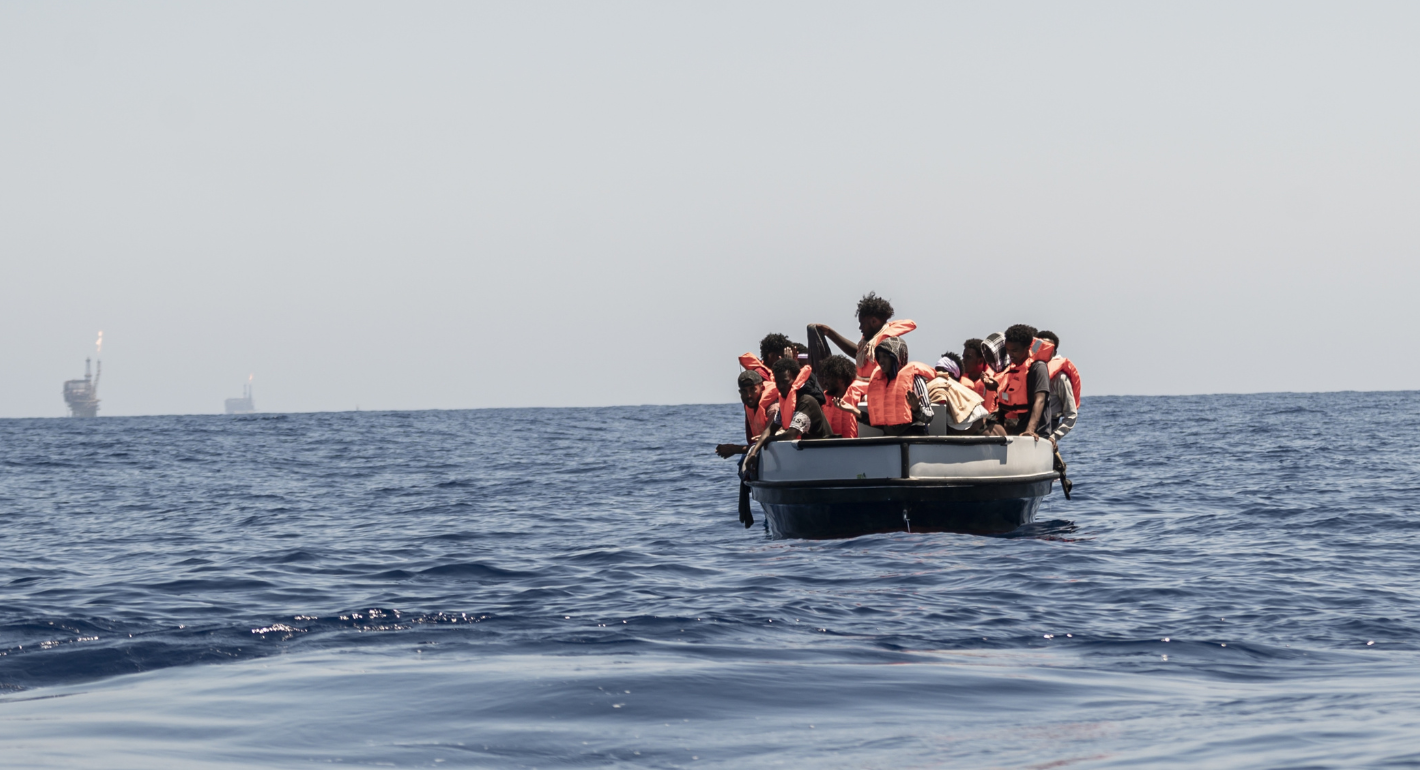
The EU’s new migration policy is not suited to today’s realities. With climate change increasingly becoming a driver of displacement, Europe needs to rethink its deterrence-focused approach.

Shana Tabak
The battle over free speech has taken center stage since U.S. Vice President JD Vance accused Europe of censorship. From travel bans to social media regulation, especially around the Israel-Palestine conflict, are liberal democratic governments weaponizing free speech?

Rym Momtaz, ed.