

Commentary
Ulrich Kühn
{
  "authors": [
    "Ulrich Kühn"
  ],
  "type": "other",
  "centerAffiliationAll": "dc",
  "centers": [
    "Carnegie Endowment for International Peace"
  ],
  "collections": [],
  "englishNewsletterAll": "ctw",
  "nonEnglishNewsletterAll": "",
  "primaryCenter": "Carnegie Endowment for International Peace",
  "programAffiliation": "NPP",
  "programs": [
    "Nuclear Policy"
  ],
  "projects": [],
  "regions": [],
  "topics": [
    "Nuclear Policy"
  ]
}
Source: Getty
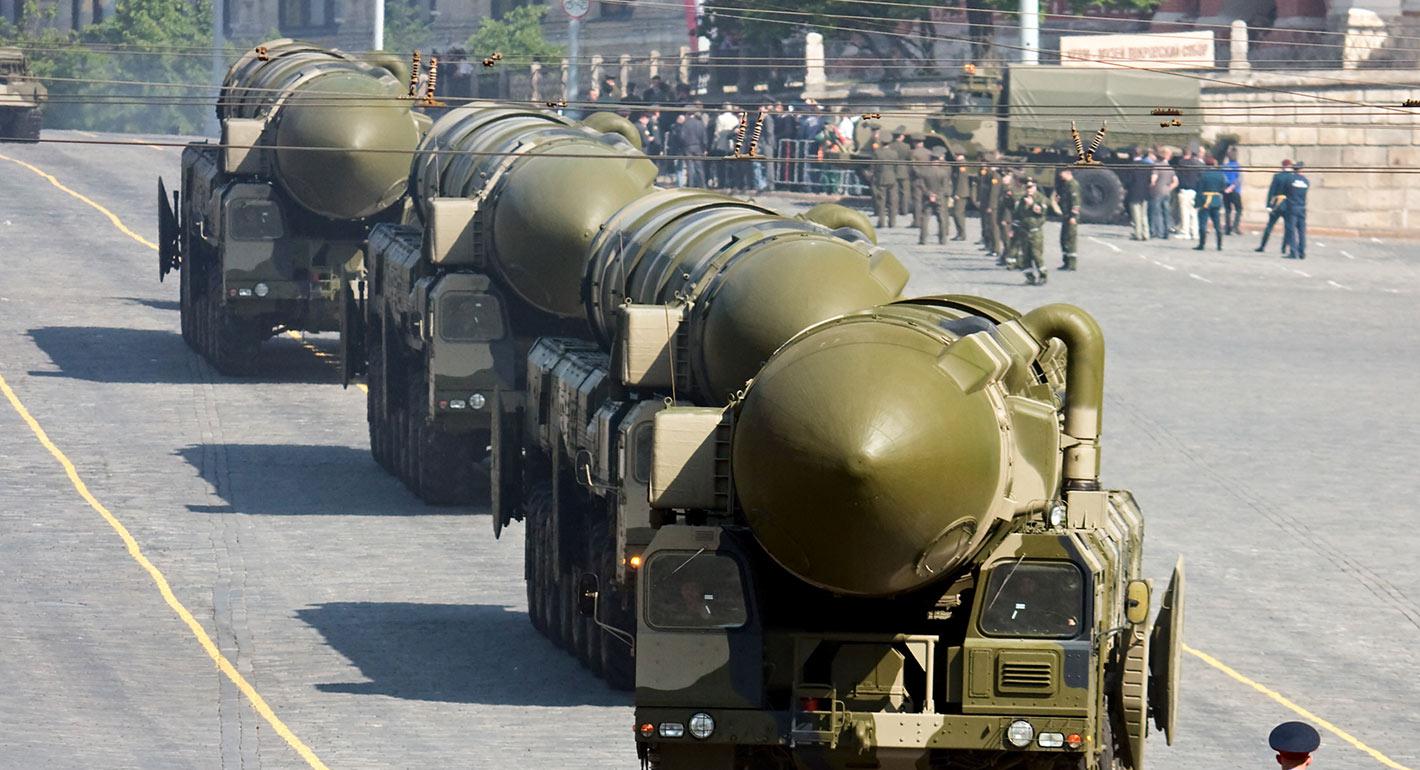
Risks of nuclear weapon use in the Euro-Atlantic region have grown, but policymakers have not yet correctly assessed which risks they should be most concerned about.
Source: United Nations Institute for Disarmament Research
The risk of nuclear weapon use—be it deliberately in an escalating crisis or war, in accordance with one’s own nuclear doctrine or due to inadvertent events—has grown in the Euro-Atlantic region, mainly as a function of the recurring competition between the Russian Federation and the United States. As this chapter argues, decision makers are correct to see a riskier environment. Yet in considering the risk of nuclear weapon use, analysts and policymakers alike are assessing threats by often focusing on highimpact/low-probability scenarios, driven by misreading of one another’s plans and intentions. As a result, they are assessing the risks wrongly, and respond to the wrong things. This chapter first addresses actors, interests, and political change at three levels of analysis. It then establishes a menu for manipulating and perceiving risk, focusing on asymmetric capabilities, (unofficial) doctrines, and poor risk analysis. It concludes with a set of recommendations on how to mitigate the most pressing risks of nuclear use in the Euro-Atlantic.
The original article was published as a chapter in "Nuclear Risk Reduction: Closing Pathways to Use," edited by Wilfred Wan and published by UNIDIR.

Nonresident Scholar, Nuclear Policy Program
Ulrich Kühn is a nonresident scholar at the Carnegie Endowment for International Peace, and the head of the arms control and emerging technologies program at the Institute for Peace Research and Security Policy at the University of Hamburg.
Recent Work
Ulrich Kühn
Ulrich Kühn
Carnegie does not take institutional positions on public policy issues; the views represented herein are those of the author(s) and do not necessarily reflect the views of Carnegie, its staff, or its trustees.

When the U.S.-Iran memorandum of understanding was announced, the UK, France, Germany, and Italy declared their readiness to help demine the Strait of Hormuz and lift nuclear sanctions on Tehran. But does Europe need new tools to recover a diplomatic role?

Rym Momtaz, ed.

Amid uncertainty caused by the Iran war, the global drive for nonproliferation has stalled. With Europe diplomatically marginalized and countries reassessing their nuclear options, efforts to curb the spread of nuclear weapons risk becoming irrelevant.

Jane Darby Menton
French President Emmanuel Macron has unveiled his country’s new nuclear doctrine. Are the changes he has made enough to reassure France’s European partners in the current geopolitical context?
Rym Momtaz, ed.
Europe’s reaction to the war in Iran has been disunited and meek, a far cry from its previously leading role in diplomacy with Tehran. To avoid being condemned to the sidelines while escalation continues, Brussels needs to stand up for international law.

Pierre Vimont
France has stopped clinging to notions of being a great power and is embracing the middle power moment. But Emmanuel Macron has his work cut out if he is to secure his country’s global standing before his term in office ends.
Rym Momtaz