

Research
- +6
Yasmine Farouk, Nathan J. Brown, Maysaa Shuja Al-Deen, …
{
  "authors": [
    "Anouar Boukhars"
  ],
  "type": "other",
  "centerAffiliationAll": "dc",
  "centers": [
    "Carnegie Endowment for International Peace"
  ],
  "collections": [],
  "englishNewsletterAll": "menaTransitions",
  "nonEnglishNewsletterAll": "",
  "primaryCenter": "Carnegie Endowment for International Peace",
  "programAffiliation": "MEP",
  "programs": [
    "Middle East"
  ],
  "projects": [],
  "regions": [
    "North Africa",
    "Mauritania"
  ],
  "topics": [
    "Security"
  ]
}
Source: Getty
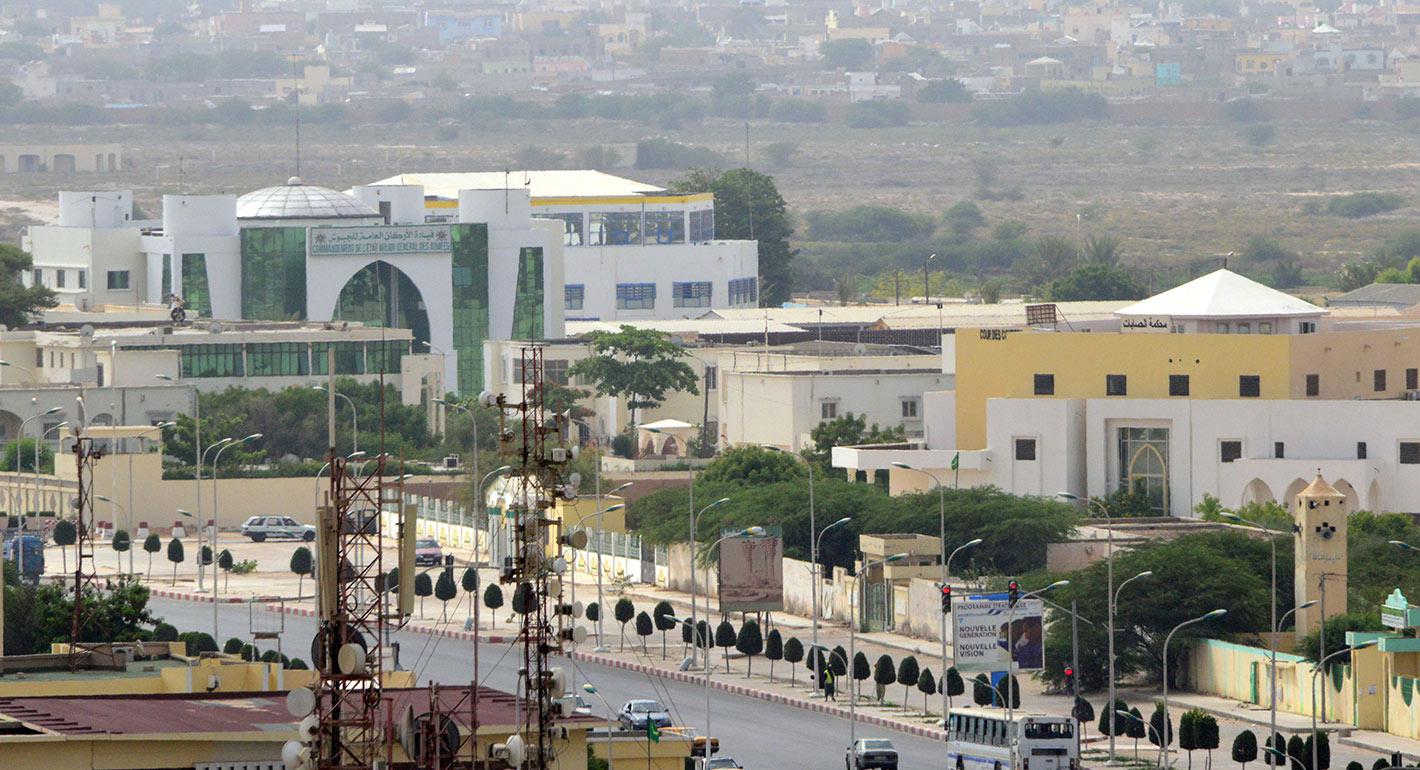
The story of Mauritania’s transformation from the weakest link in the crisis-ridden Sahel to one of its most resilient is instructive.
Source: Africa Center for Strategic Studies
Violent extremism continues to be one of the most significant challenges to peace and security in the Sahel. Militant Islamist groups have shown remarkable staying power despite their military rout in northern Mali in 2013 following the deployment of French-led Operation Serval (now Operation Barkhane). Indeed, violent extremist groups in the Sahel have grown in number, size, and lethality—now concentrated in central Mali, northeastern Burkina Faso, and western Niger.
Largely absent from this narrative is Mauritania. The story of Mauritania’s transformation from the weakest link in this crisis-ridden neighborhood to one of its most resilient is instructive. The country was the first in the Sahel to be hit by terrorist attacks in 2005. However, since 2011 it has avoided the expanding and diversifying threat from militant Islamist groups. That security threats in the Sahel are characterized by layers of intertwined and crosscutting interests at the local, national, and regional levels makes Mauritania’s example all the more informative. Importantly, the government has managed to restore its authority and control over border regions, which militant Islamist groups in the Sahel have often exploited to their advantage....
This article was originally published by the Africa Center for Strategic Studies
Former Nonresident Fellow, Middle East Program
Boukhars was a nonresident fellow in Carnegie’s Middle East Program. He is a professor of countering violent extremism and counter-terrorism at the Africa Center for Strategic Studies, National Defense University.
Recent Work



Yasmine Farouk, Nathan J. Brown, Maysaa Shuja Al-Deen, …

Frederic Wehrey, Nathan J. Brown, Bader Al-Saif, …
Carnegie does not take institutional positions on public policy issues; the views represented herein are those of the author(s) and do not necessarily reflect the views of Carnegie, its staff, or its trustees.

Russia is testing the waters of NATO’s mutual defense clause. What do strikes in Romanian territorial waters mean for the alliance’s posture toward Moscow?

Dimitar Bechev

With its public finances in shambles, the far right polling at 35 percent ahead of the 2027 presidential election, and a growing protest movement, is France’s crisis a threat to the EU’s geopolitical awakening?

Rym Momtaz, ed.

Europe is facing rising populism internally as well as external pressures from Russia, China, Turkey, and the United States.
Dimitar Bechev

The new U.S.–Denmark–Greenland agreement will help Washington exert political, economic, and financial dominance under the guise of security. Yet, it acknowledged Copenhagen’s and Nuuk’s sovereignty on the island.

Marc Pierini

A summer of escalation in the Black Sea has hurt Ukraine economically and is exacerbating world food security. A truce is needed—as is a broader reframing of Europe’s Ukraine strategy.

Thomas de Waal