

Commentary
Dmitri Trenin
{
  "authors": [
    "Dmitri Trenin"
  ],
  "type": "legacyinthemedia",
  "centerAffiliationAll": "",
  "centers": [
    "Carnegie Endowment for International Peace",
    "Carnegie Russia Eurasia Center"
  ],
  "collections": [],
  "englishNewsletterAll": "",
  "nonEnglishNewsletterAll": "",
  "primaryCenter": "Carnegie Russia Eurasia Center",
  "programAffiliation": "",
  "programs": [],
  "projects": [],
  "regions": [
    "North America",
    "United States",
    "Russia"
  ],
  "topics": [
    "Nuclear Policy",
    "Arms Control"
  ]
}
Source: Getty
Bilateral nuclear arms control is being succeeded in a polycentric nuclear world by deregulation. Rather than mourn arms control, we should focus on complimenting deterrence—which has been and will remain the bedrock of strategic stability—with reliable communication, contacts, transparency, and restraint among relevant parties.
Source: Washington Quarterly
That nuclear arms control is on the way out is no news. The unraveling of its Cold War-era architecture started almost two decades ago, when US President George W. Bush welcomed Vladimir Putin to his ranch at Crawford, Texas and told the then-young Russian leader that he intended to withdraw from the Anti-Ballistic Missile (ABM) Treaty. The withdrawal from this 1972 treaty, which placed severe restrictions on both countries’ strategic defenses, was a severe blow to the Russians, who had long considered it a cornerstone of strategic stability. Bush, however, couldn’t care less. The Cold War was over, and several countries around the world were busy developing ballistic missiles that required US response. Russia was neither an adversary nor a close partner of the United States, and it was lying flat on its back. While Washington was pointing to North Korean and Iranian missile programs, Moscow suspected it was seeking strategic superiority over both Russia and China.
In 2019, President Donald Trump took the United States out of the Intermediate Range Nuclear Forces (INF) Treaty. The 1987 agreement had eliminated a whole class of missiles with ranges between 500 and 5,500 km, and its signers touted it as a major step toward strategic stability and US-Soviet understanding. However, the INF treaty had been in trouble for some time as a result of US com-plaints about Russian treaty violations, countered by Moscow’s own accusations leveled against Washington. Both Russia and the United States were also wary of continuing with self-imposed restraint while the rest of the world, particularly China, was free to develop and deploy INF systems. Thus, the decision taken by Trump was clearly a strategic move aimed at China, and potentially Russia, evoking bad memories of the 1980s US INF deployments in Europe, when US Pershing II ballistic missiles and ground-based cruise missiles (installed to counter the Soviet Union’s SS-20 systems targeting Western Europe) were positioned just a few minutes’ flight away from Soviet targets.
This article was originally published in the Washington Quarterly, Fall 2020
Former Director, Carnegie Moscow Center
Trenin was director of the Carnegie Moscow Center from 2008 to early 2022.
Recent Work
Dmitri Trenin
Dmitri Trenin
Carnegie does not take institutional positions on public policy issues; the views represented herein are those of the author(s) and do not necessarily reflect the views of Carnegie, its staff, or its trustees.

Europe’s reaction to the war in Iran has been disunited and meek, a far cry from its previously leading role in diplomacy with Tehran. To avoid being condemned to the sidelines while escalation continues, Brussels needs to stand up for international law.

Pierre Vimont
France has stopped clinging to notions of being a great power and is embracing the middle power moment. But Emmanuel Macron has his work cut out if he is to secure his country’s global standing before his term in office ends.

Rym Momtaz
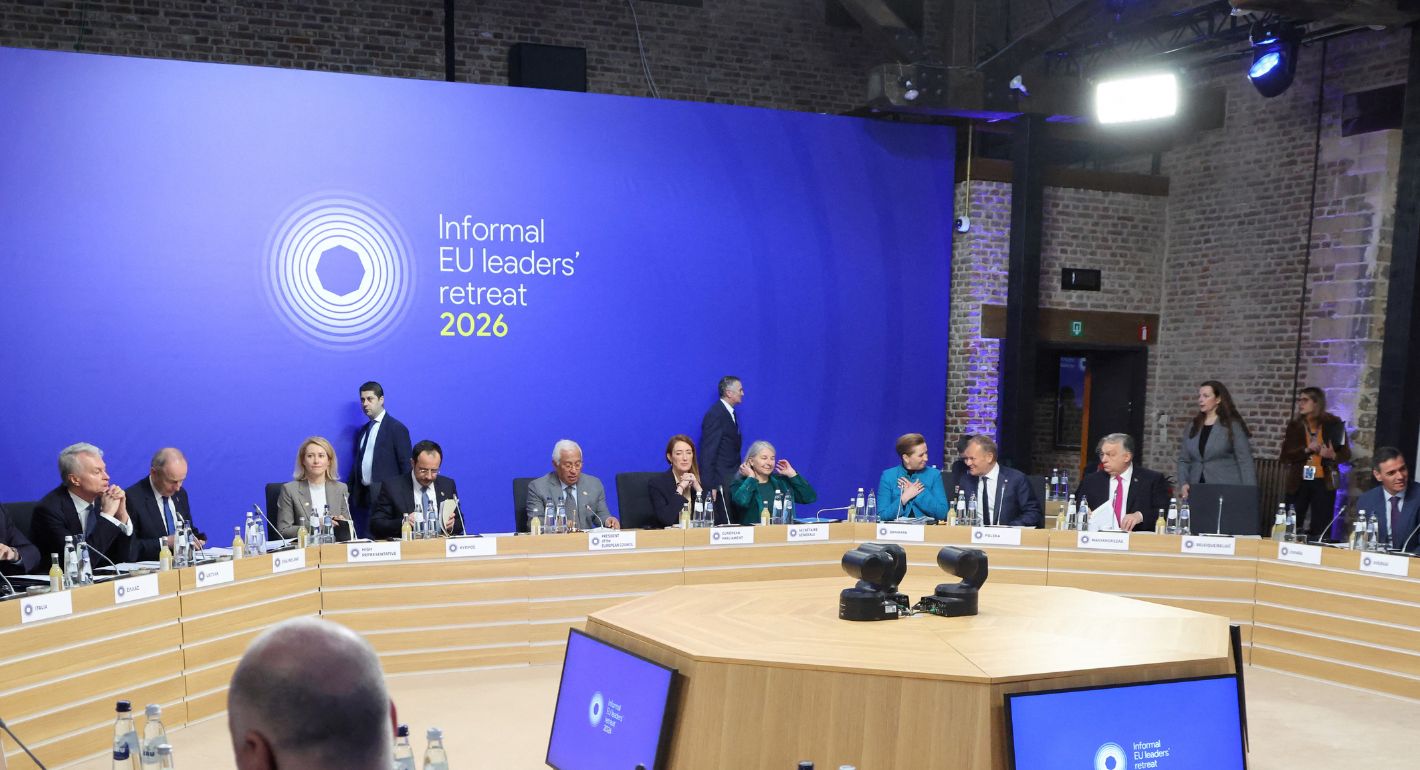
EU member states clash over how to boost the union’s competitiveness: Some want to favor European industries in public procurement, while others worry this could deter foreign investment. So, can the EU simultaneously attract global capital and reduce dependencies?
Rym Momtaz, ed.
Europe’s policy of subservience to the Trump administration has failed. For Washington to take the EU seriously, its leaders now need to combine engagement with robust pushback.

Stefan Lehne

The EU lacks leadership and strategic planning in the South Caucasus, while the United States is leading the charge. To secure its geopolitical interests, Brussels must invest in new connectivity for the region.

Zaur Shiriyev