

Commentary
The European Commissioner for Trade is headed to China. But after President Xi’s bridge-building visit to Washington, can a more isolated EU overcome Beijing’s stranglehold on critical raw materials? Who will blink first?
Rym Momtaz, ed.
{
  "authors": [
    "Ovigwe Eguegu"
  ],
  "type": "commentary",
  "centerAffiliationAll": "dc",
  "centers": [
    "Carnegie Endowment for International Peace"
  ],
  "collections": [
    "Chart of the Month",
    "Africa’s Shifting Politics and Geopolitics"
  ],
  "englishNewsletterAll": "africa",
  "nonEnglishNewsletterAll": "",
  "primaryCenter": "Carnegie Endowment for International Peace",
  "programAffiliation": "AFP",
  "programs": [
    "Africa"
  ],
  "projects": [],
  "regions": [
    "Southern, Eastern, and Western Africa"
  ],
  "topics": [
    "Economy"
  ]
}
Source: Getty
Despite these signs of progress, the severity of the governance and security challenges throughout the continent do raise important questions on the role of the AU, notably its Peace and Security Council, going forward.
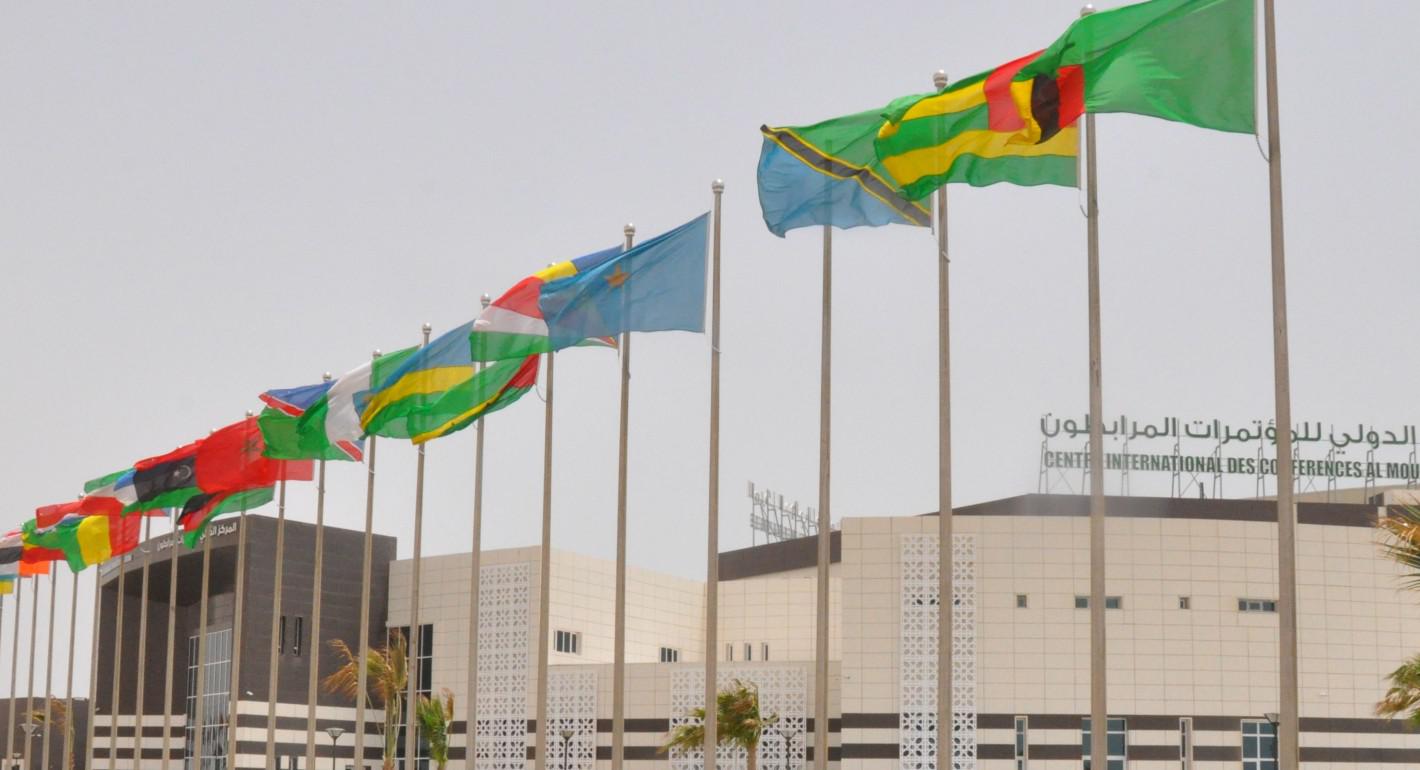
The African Union (AU) summit in early February 2022 happened at a crucial moment for the African continent. This year marks twenty years since the AU’s founding in 2002 when it succeeded its predecessor, the Organization for African Unity, which had been established in 1963. Important initiatives and developments were announced at the latest summit. The AU Climate Change and Resilient Development Strategy and Action Plan for 2022–2023 was unveiled. Kenyan President Uhuru Kenyatta assumed the role of chair of the Committee of African Heads of State and Government on Climate Change in preparation for the twenty-seventh Conference of Parties (COP27) gathering to be hosted in Egypt. The Africa Centres for Disease Control and Prevention was elevated from a specialized technical institution to a public health agency. And a permanent AU mission was established in Beijing to strengthen commercial, economic, and cultural ties with China, which is Africa’s largest trading partner.
The continent’s pressing governance and security issues loomed large throughout the summit. Most notable were the recent undemocratic political transitions in West Africa and Sudan. Between 2021 and 2022, there were at least five such coups (see figure 1) in Burkina Faso, Chad, Guinea, Mali, and Sudan. The socioeconomic and political factors behind these various coups were diverse and complex. For instance, while there were crowds supportive of the military takeover in the Malian capital of Bamako due to deteriorating national security conditions under late president Ibrahim Boubacar Keïta’s government, there were widespread protests against the Sudanese junta in Khartoum. Still, other governance challenges beyond undemocratic power transitions featured in deliberations at the summit. The conflict in the Tigray region of Ethiopia continues, and Islamist insurgencies persist in the Sahel region and Mozambique.

Yet these critical challenges overshadow significant progress being made with peaceful electoral transitions in other countries. The peaceful transfer of power from former president Edgar Lungu who was defeated by Hakainde Hichilema in Zambia’s 2021 presidential election is a notable example. Similarly, Malawi’s 2020 presidential election was successfully concluded, marking the first time an incumbent African leader lost after a court-mandated do-over election. Recent political transitions in countries like the Democratic Republic of the Congo and the Gambia signal hope for progressive peace in the continent. Indeed, there are more elected governments (thirty-five) across Africa today who have spent less than ten years in office and therefore are highly unlikely to have exceeded constitutional term limits even though the elections that brought them to office might have been flawed (see figure 1).
Despite these signs of progress, the severity of the governance and security challenges throughout the continent do raise important questions on the role of the AU, notably its Peace and Security Council, going forward.
Ovigwe Eguegu
Carnegie does not take institutional positions on public policy issues; the views represented herein are those of the author(s) and do not necessarily reflect the views of Carnegie, its staff, or its trustees.

The European Commissioner for Trade is headed to China. But after President Xi’s bridge-building visit to Washington, can a more isolated EU overcome Beijing’s stranglehold on critical raw materials? Who will blink first?

Rym Momtaz, ed.

The domestic impacts of how long it is taking to end the war in Ukraine have pushed the French electorate to the political extremes and compromised the country’s diplomatic capacity.
Rym Momtaz

A summer of escalation in the Black Sea has hurt Ukraine economically and is exacerbating world food security. A truce is needed—as is a broader reframing of Europe’s Ukraine strategy.

Thomas de Waal

As geopolitical rivalry weaponizes global supply chains, the EU’s true vulnerability lies in emerging-risk imports. For these goods, suppliers are growing more concentrated, substitution more difficult, and political risk is looming.

Sinan Ülgen
The EU is putting together a new security strategy to meet today’s myriad challenges. But for any proposal to be effective, the union needs to grapple with its identity and ambitions.

Pierre Vimont