

Paper
- +2
Ian Klaus, Mark Baldassare, Rachel George, …
{
  "authors": [
    "Mark Baldassare"
  ],
  "type": "commentary",
  "centerAffiliationAll": "dc",
  "centers": [
    "Carnegie Endowment for International Peace"
  ],
  "collections": [
    "Democratic Innovation"
  ],
  "englishNewsletterAll": "ctw",
  "nonEnglishNewsletterAll": "",
  "primaryCenter": "Carnegie Endowment for International Peace",
  "programAffiliation": "CC",
  "programs": [
    "Carnegie California"
  ],
  "projects": [],
  "regions": [
    "North America",
    "United States"
  ],
  "topics": [
    "Political Reform",
    "Civil Society"
  ]
}
Source: Getty
Without federal reform, state and local leaders will need to find innovative ways to cope with migration trends within the bounds of existing inadequate policy.
California is exceptional in many ways, including its large immigrant population. A recent report on immigrants in the Golden State noted that almost half of children have at least one immigrant parent, one in three working-age adults are foreign-born, and about one in four residents are immigrants.
California’s state and local governments—and its people and economy—are thus highly impacted by global migration trends, federal policies, and national politics. Recent examples include the expiration of Title 42, the federal immigration rule that dictates how migrants are processed at the Southern border, and the migrants sent to California cities by Florida and Texas.
As a result of this unique position, Californians’ views on immigrants and immigration policies are a key focus area of the Public Policy Institute of California (PPIC) Statewide Survey, which I have directed since its launch twenty-five years ago. We consistently find for the past decade that large majorities of Californians hold a positive view of immigrants and support immigration policy changes. But a deep partisan divide remains steady among state residents. Here are some of the key results from the June PPIC survey.
Perceptions of immigrants: When asked which of two statements comes closest to their view, 66 percent of California adults choose “Immigrants today are a benefit to California because of their hard work and job skills,” while 32 percent say “Immigrants today are a burden to California because they use public services.”
For the past decade, at least 60 percent of residents have shared the positive view of immigrants. Californians had more mixed views of immigrants when we first asked this question in the April 1998 PPIC survey (46 percent benefit, 42 percent burden). Today, majorities across demographic blocs, racial and ethnic groups, and regions of the state have positive impressions of the impacts of immigrants. Majorities of Democrats (84 percent) and independents (66 percent) hold positive views, versus 26 percent of Republicans. However, Democrats outnumber Republicans today in California 47 percent to 24 percent, and this partisan voter registration trend has increased over time.
Path to citizenship: Eighty percent of California adults are in favor of providing a path to citizenship for undocumented immigrants in the United States if they meet certain requirements, including a waiting period, paying fines, and passing criminal background checks.
The level of support for this policy preference has remained steady for a decade. Today, large majorities across demographic blocs, racial and ethnic groups, and regions of the state hold this policy preference. Nearly all Democrats, 79 percent of independents, and 59 percent of Republicans are in favor of providing a path to citizenship for undocumented immigrants.
DACA protections: When asked to think about the undocumented immigrants brought to the United States as children, 75 percent favor protection from deportation and work permits under the federal program known as DACA. This level of support for DACA has remained steady since PPIC started asking this question in 2017, and large majorities across demographic groups and regions support it. Nearly all Democrats (93 percent) and a majority of independents (72 percent) support DACA, compared with 43 percent of Republicans.
Health coverage. Fifty-five percent of Californians are in favor of providing health coverage for undocumented immigrants in the state. Although this policy preference has received majority support since 2015, these consistently favorable views are in stark contrast to a 2007 poll, when 43 percent favored coverage and 53 percent opposed. Today, about half or more across demographic and racial and ethnic groups and state regions are in favor, while partisans are deeply divided (71 percent of Democrats, 51 percent of independents, and 12 percent of Republicans) on the issue.
The positive views of immigrants and favorable opinions of immigration policy are noteworthy in the context of gloomy economic attitudes toward California and the United States in the June PPIC survey.
State residents name the economy, jobs, and inflation as the most important issues facing the people of California. When asked about economic conditions in California, 59 percent say they perceive that the state is in a recession, and 69 percent expect bad financial times for the state in the next twelve months. Although 45 percent say the state is going in the right direction, 54 percent think it is going in the wrong direction. Just 4 percent of Californians name immigration as the most pressing state issue today.
In addition, Californians’ views of the nation are even more pessimistic. When asked about economic conditions across the country, 76 percent expect bad financial times during the next year. Twenty-two percent say the United States is going in the right direction, while 76 percent think that it is going in the wrong direction. Majorities of Democrats, Republicans, and independents have negative assessments of the U.S. economic outlook and the direction of the nation.
Moreover, the state government is dealing with a multibillion-dollar gap between revenues and spending for the coming fiscal year, resulting in proposed cuts in areas such as workforce training, transportation, housing programs, and efforts to fight climate change. In many ways, this context makes the majority support for health coverage for undocumented immigrants all the more remarkable.
Immigration has long been a critical issue for the quality of life and economic well-being of Californians—especially given the presence of about 10 million immigrants. The stakes are even higher today when it comes to global migration trends, federal policies, and national politics, since California has recently been losing population and businesses to other states due to factors including housing availability and the high cost of living. But without federal immigration reform, California’s state and local leaders will need to find innovative ways to cope with migration trends within the bounds of inadequate federal policy.
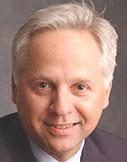
Nonresident Scholar, Carnegie California
Mark Baldassare is a nonresident scholar at Carnegie California. He is an authority on elections, voter behavior, and political and fiscal reform.
Recent Work

Ian Klaus, Mark Baldassare, Rachel George, …
Mark Baldassare, Ian Klaus
Carnegie does not take institutional positions on public policy issues; the views represented herein are those of the author(s) and do not necessarily reflect the views of Carnegie, its staff, or its trustees.

Ahead of a tough winter for Ukraine, Donald Trump’s swing back toward Russia bodes ill. But instead of panicking, Kyiv’s European allies are focusing on action.

Rym Momtaz

While the EU and European governments are embracing the much-lauded middle-power moment, this entails three difficult conundrums.

Richard Youngs

Europe is facing rising populism internally as well as external pressures from Russia, China, Turkey, and the United States.

Dimitar Bechev

A notable degree of participative democracy has firmly arrived in Europe. But to have more far-reaching impact, democratic deliberation needs to move into a radically new phase.
Richard Youngs

European NATO countries are wrestling with the possibility of U.S. disengagement from the alliance. With the continent’s security increasingly uncertain, governments must restore the credibility of their collective defense.



Hans-Dieter Lucas, Adam Thomson, Pierre Vimont