The following on Iran's WMD capabilities is taken from the CIA's biannual
"Unclassified
Report to Congress on the Acquisition of Technology Relating to Weapons of Mass
Destruction and Advanced Conventional Munitions," from January1 -
June 30, 2003. This report was released November 10, 2003.
Nuclear. The United States remains convinced that Tehran has
been pursuing a clandestine nuclear weapons program, in violation of its obligations
as a party to the Nuclear Nonproliferation Treaty (NPT). To bolster its efforts
to establish domestic nuclear fuel-cycle capabilities, Iran sought technology
that can support fissile material production for a nuclear weapons program.
Iran tried to use its civilian nuclear energy program to justify its efforts
to establish domestically or otherwise acquire assorted nuclear fuel-cycle capabilities.
In August 2002, an Iranian opposition group disclosed that Iran was secretly
building a heavy water production plant and a "nuclear fuel" plant.
Press reports later in the year confirmed these two facilities using commercial
imagery and clarified that the "fuel" plant was most likely a large
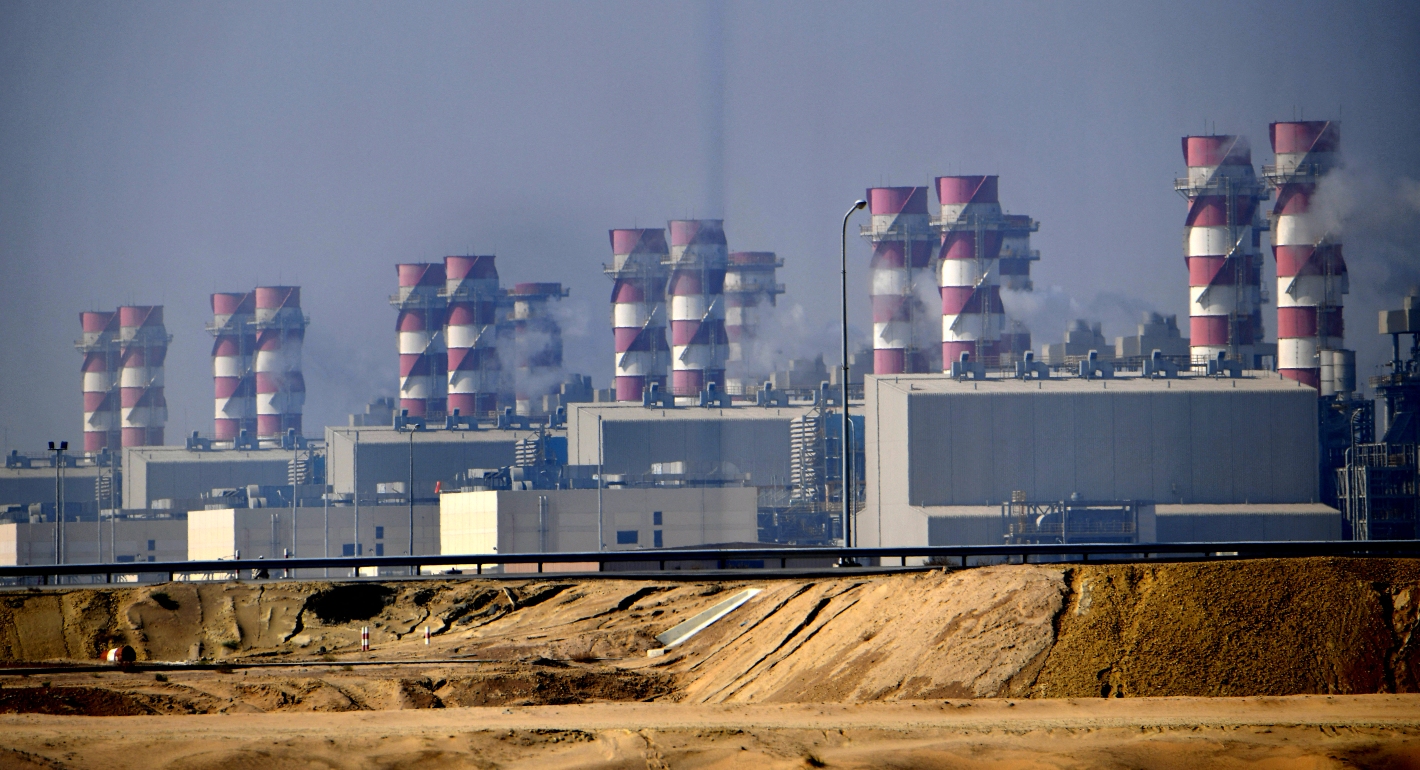
uranium centrifuge enrichment facility located at Natanz. Commercial imagery
showed that Iran was burying the enrichment facility presumably to hide it and
harden it against military attack. Following the press disclosures, Iran announced
at the International Atomic Energy Agency (IAEA) September 2002 General Conference
that it had "ambitious" nuclear fuel cycle plans and intended to develop
all aspects of the entire fuel cycle. By the end of 2002, the IAEA had requested
access to the enrichment facility at Natanz, and the IAEA Director General (DG)
for the first time visited the facility in February 2003. The IAEA is investigating
the newly disclosed facilities, and previously undisclosed nuclear material
imports to determine whether Iran has violated its NPT-required IAEA safeguards
agreement in developing these facilities and their related technologies. At
the June 2003 Board of Governors meeting, the IAEA DG presented a report on
the Iranian program noting Tehran had failed to meet its safeguards obligations
in a number of areas. The DG's report described a pattern of Iranian safeguards
failures related to the undeclared import and processing of uranium compounds
in the early 1990s, expressed concern over the lack of cooperation from Iran
with IAEA inspections, and identified a number of unresolved concerns in Iran's
program that the IAEA will continue to investigate. The IAEA Board on 19 June
welcomed the report and called on Iran to answer all IAEA questions, cooperate
fully with IAEA inspectors, and sign and implement an Additional Protocol immediately
and unconditionally.
Although Iran claims that its nascent enrichment plant is to produce fuel for
the Russian-assisted construction projects at Bushehr and other possible future
power reactors, we remain concerned that Iran is developing enrichment technology
to produce fissile material for nuclear weapons under the cover of legitimate
fuel cycle activities. Iran appears to be embarking on acquiring nuclear weapons
material via both acquisition paths--highly enriched uranium and low burn-up
plutonium. Even with intrusive IAEA safeguards inspections at Natanz, there
is a serious risk that Iran could use its enrichment technology in covert activities.
Of specific proliferation concern are the uranium centrifuges discovered at
Natanz, which are capable of enriching uranium for use in nuclear weapons. Iran
claims its heavy water plant is for peaceful purposes. In June, Iran informed
the IAEA that it is pursuing a heavy water research reactor that we believe
could produce plutonium for nuclear weapons. We also suspect that Tehran is
interested in acquiring fissile material and technology from foreign suppliers
to support its overall nuclear weapons program.
Ballistic Missile. Ballistic missile-related cooperation from entities
in the former Soviet Union, North Korea, and China over the years has helped
Iran move toward its goal of becoming self-sufficient in the production of ballistic
missiles. Such assistance during the first half of 2003 continued to include
equipment, technology, and expertise. Iran's ballistic missile inventory is
among the largest in the Middle East and includes some 1,300-km-range Shahab-3
medium-range ballistic missiles (MRBMs) and a few hundred short-range ballistic
missiles (SRBMs)--including the Shahab-1 (Scud-B), Shahab-2 (Scud C), and Tondar-69
(CSS-8)--as well as a variety of large unguided rockets. Already producing Scud
SRBMs, Iran announced that it had begun production of the Shahab-3 MRBM and
a new solid-propellant SRBM, the Fateh-110. [Iranian press reporting, Tehran
IRNA, 11 Sep 2002] In addition, Iran publicly acknowledged the development of
follow-on versions of the Shahab-3. It originally said that another version,
the Shahab-4, was a more capable ballistic missile than its predecessor but
later characterized it as solely a space launch vehicle with no military applications.
Iran is also pursuing longer-range ballistic missiles.
Chemical. Iran is a party to the Chemical Weapons Convention (CWC).
Nevertheless, during the reporting period it continued to seek production technology,
training, and expertise from Chinese entities that could further Tehran's efforts
to achieve an indigenous capability to produce nerve agents. Iran likely has
already stockpiled blister, blood, choking, and probably nerve agents-and the
bombs and artillery shells to deliver them-which it previously had manufactured.
Biological. Even though Iran is part of the Biological Weapons Convention
(BWC), Tehran probably maintained an offensive BW program. Iran continued to
seek dual-use biotechnical materials, equipment, and expertise. While such materials
had legitimate uses, Iran&'s biological warfare (BW) program also could
have benefited from them. It is likely that Iran has capabilities to produce
small quantities of BW agents, but has a limited ability to weaponize them.
Advanced Conventional Weapons. Iran continued to seek and acquire conventional
weapons and production technologies, primarily from Russia, China, and North
Korea. Tehran also sought high-quality products, particularly weapons components
and dual-use items, or products that proved difficult to acquire through normal
governmental channels.
Additional Resources: