

Commentary
Nathan J. Brown

Source: Getty
Kuwait's parliamentary election on May 17 is more likely to continue political stalemate than move the country toward much needed political and economic reforms. Tensions between the ruling family and parliament may have serious implications for democracy promotion in the broader Middle East as other countries in the region begin to see Kuwait as a negative model of what democracy can bring.
Despite recent electoral reform, Kuwait’s parliamentary election on May 17 will produce little change and continue to foster a parliament more adept at blocking the ruling family than initiating positive change, argues Middle East expert Nathan Brown. Increasing frustration with parliament led Kuwait’s ruling family to call an early election and has fueled speculation that they may suspend parliament.
Brown provides a question and answer guide to explain the significance of the election, and the implications of the electoral reform on campaigning, opportunities for women in Kuwaiti politics, and most significantly, for democracy in the Gulf—an important development the United States is overlooking.
Key Conclusions:
• New electoral districts over-represent wealthy elites who view Kuwait’s constitution as a pact between the ruling families and are unlikely to support a stronger parliament.
• Reformists hoped the reduction in electoral districts—from 25 to five—would encourage campaigning to focus on issues rather than constituent pandering. But early indications from the campaigns signal that candidates are continuing to rely on tribal allegiances and vote buying.
• Electoral reform has made it even more difficult for a woman to be elected to the parliament. Parties may only field four candidates and are reluctant to support a female candidate after none were successful in the 2006 elections.
Brown argues that Kuwait’s looming political crisis may have some serious implications for democracy in the Gulf:
“The ruling family tends to blame the parliament for Kuwait’s failure to develop as rapidly as Dubai—a model which allows the government to make decisions unhindered by democratic institutions. Other countries in the region are coming to see Kuwait as a negative model of what democracy can result in. Kuwaitis are increasingly debating how to reform (or whether to scale back) their democratic experiment.”

Nonresident Senior Fellow, Middle East Program
Nathan J. Brown, a professor of political science and international affairs at George Washington University, is a distinguished scholar and author of nine books on Arab politics and governance, as well as editor of five books.
Recent Work
Nathan J. Brown
Nathan J. Brown
Carnegie does not take institutional positions on public policy issues; the views represented herein are those of the author(s) and do not necessarily reflect the views of Carnegie, its staff, or its trustees.

As the EU confronts profound challenges, several leaders have called for fundamental reform to the union’s model—but only modest, superficial changes have resulted. What if Europe really could be reimagined from zero today: What should such a redesigned European order look like?

Richard Youngs, ed.

Preparing candidate countries for EU membership is no longer enough. As the enlargement process becomes a reality, the union must also prepare its own societies.

Iliriana Gjoni

The U.S.-Iran war has crossed a dangerous threshold: water infrastructure in the Gulf is now a target. Ecological statecraft is no longer peripheral to security, it's part of its foundations.


Olivia Lazard, Ali Bin Shahid
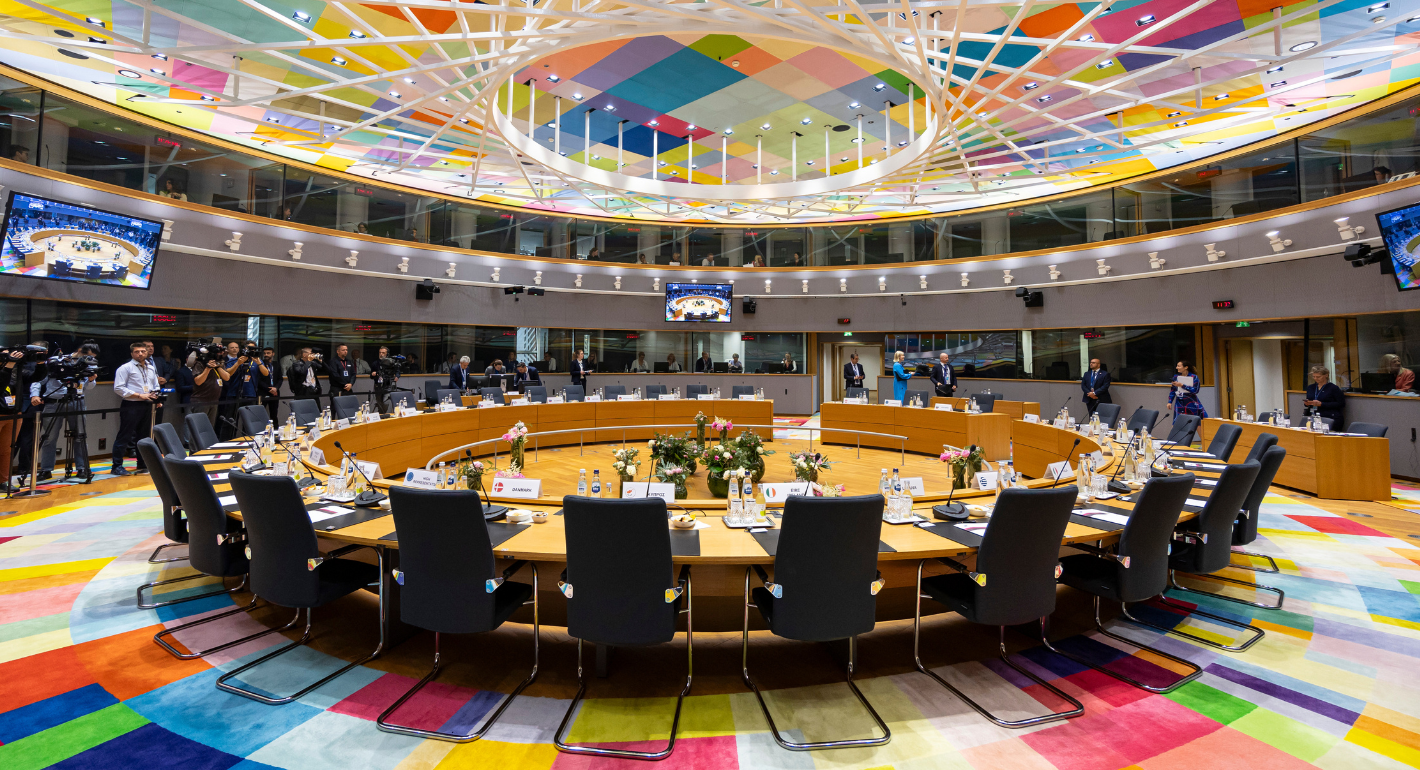
Countries face several hurdles in joining the EU, including the final stage of ratifying their accession treaties. Procedural reforms and substantive adjustments could help move the process forward.

Stefan Lehne

Europe has an interest in supporting Armenian leader Nikol Pashinyan as he tries to make peace with neighbors and loosen ties with Russia. But it is depersonalized support in the long term, not quickfire flash, that will win the day.

Thomas de Waal