• Research
  • Strategic Europe
  • About
  • Experts
Carnegie Europe logoCarnegie lettermark logo
EUUkraine
  • Donate
The Oil Boom in the GCC Countries: Old Challenges, Changing Dynamics

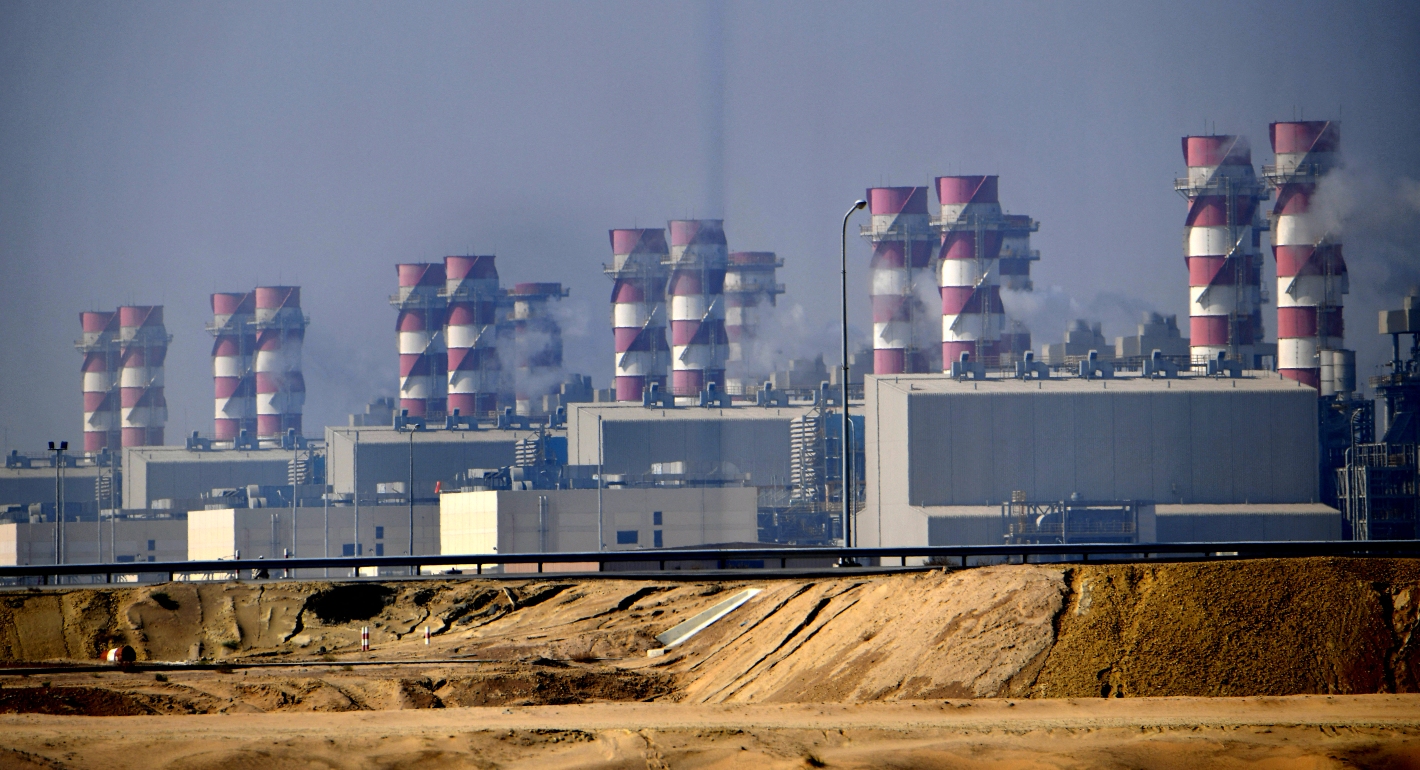
Source: Getty

Paper

The Oil Boom in the GCC Countries: Old Challenges, Changing Dynamics

To meet long-term domestic challenges, oil-producing Gulf States should focus on improving economic governance to better manage diminishing oil revenues and attract foreign investment.

Link Copied
By Ibrahim Saif and Muriel Asseburg
Published on Mar 18, 2009

Additional Links

Full Text

Oil-producing Gulf states squandered the opportunity to make much needed economic reforms when high oil revenues would have made the task easier. Now, reduced oil revenues and global economic uncertainty make it imperative that they develop competitive, diversified economies, concludes a new paper from the Carnegie Middle East Center.

Ibrahim Saif explains that the top priority for the Gulf Council Cooperation (GCC) countries—Saudi Arabia, Bahrain, Kuwait, Oman, Qatar, and the UAE—should be improving economic governance to better manage existing oil revenues and attract foreign direct investment (FDI).  With a comfortable cushion of foreign reserves, the risks for short-term instability is low; however, the current system of low taxes and generous public spending is unsustainable. 

Recommendations for GCC countries:

  • Improve minimum wage standards and working conditions to attract more domestic employment and reduce dependence on immigrant labor.
     
  • Regionally concentrate on growth in non-oil sectors to avoid duplication in areas like finance and tourism.
     
  • Encourage foreign direct investment through better economic and corporate regulation, including greater transparency in public spending and easier access to credit.
     

Saif concludes:
“Despite nearly six years in which high oil revenues created favorable macroeconomic conditions in the GCC countries, they were still not able to tackle their long-term economic challenges. The oil windfall actually pushed back attempts to address these challenges, and the global financial crisis has reminded GCC policymakers that structural challenges must be addressed at a time when macroeconomic conditions are favorable and not when the economies are slowing down.”

About the Authors

Ibrahim Saif

Former Senior Associate, Middle East Center

Saif is an economist specializing in the political economy of the Middle East. His research focuses on international trade and structural adjustment programs in developing countries, with emphasis on Jordan and the Middle East.

Muriel Asseburg

Former Visiting Scholar, Middle East Center

Asseburg's current research focuses on the Middle East conflict, German and Middle East politics, the Euro–Mediterranean Partnership, and state building, political reform, and political Islam in the Middle East. She was previously with the Friedrich Ebert Foundation’s office in Jerusalem.

Authors

Ibrahim Saif
Former Senior Associate, Middle East Center
Ibrahim Saif
Muriel Asseburg
Former Visiting Scholar, Middle East Center
Muriel Asseburg
BahrainKuwaitQatarSaudi ArabiaUnited Arab EmiratesGulfEconomy

Carnegie does not take institutional positions on public policy issues; the views represented herein are those of the author(s) and do not necessarily reflect the views of Carnegie, its staff, or its trustees.

More Work from Carnegie Europe

  • Article
    Rewiring the South Caucasus: TRIPP and the New Geopolitics of Connectivity

    The U.S.-sponsored TRIPP deal is driving the Armenia-Azerbaijan peace process forward. But foreign and domestic hurdles remain before connectivity and economic interdependence can open up the South Caucasus.

      • Areg Kochinyan

      Thomas de Waal, Areg Kochinyan, Zaur Shiriyev

  • Commentary
    Strategic Europe
    Taking the Pulse: Is it NATO’s Job to Support Trump’s War of Choice?

    Donald Trump has demanded that European allies send ships to the Strait of Hormuz while his war of choice in Iran rages on. He has constantly berated NATO while the alliance’s secretary-general has emphatically supported him.

      • Rym Momtaz

      Rym Momtaz, ed.

  • Research
    Planetary vs International Security: Economic Growth at the Crossroads

    Economic growth is at the heart of a dilemma between planetary and international security.

      Olivia Lazard

  • Commentary
    Strategic Europe
    Europe and the Arab Gulf Must Come Together

    The war in Iran proves the United States is now a destabilizing actor for Europe and the Arab Gulf. From protect their economies and energy supplies to safeguarding their territorial integrity, both regions have much to gain from forming a new kind of partnership together.

      • Rym Momtaz

      Rym Momtaz

  • Commentary
    Strategic Europe
    Europe on Iran: Gone with the Wind

    Europe’s reaction to the war in Iran has been disunited and meek, a far cry from its previously leading role in diplomacy with Tehran. To avoid being condemned to the sidelines while escalation continues, Brussels needs to stand up for international law.

      Pierre Vimont

Get more news and analysis from
Carnegie Europe
Carnegie Europe logo, white
Rue du Congrès, 151000 Brussels, Belgium
  • Research
  • Strategic Europe
  • About
  • Experts
  • Projects
  • Events
  • Contact
  • Careers
  • Privacy
  • For Media
  • Gender Equality Plan
Get more news and analysis from
Carnegie Europe
© 2026 Carnegie Endowment for International Peace. All rights reserved.