

Commentary
With its public finances in shambles, the far right polling at 35 percent ahead of the 2027 presidential election, and a growing protest movement, is France’s crisis a threat to the EU’s geopolitical awakening?
Rym Momtaz, ed.
Source: Getty
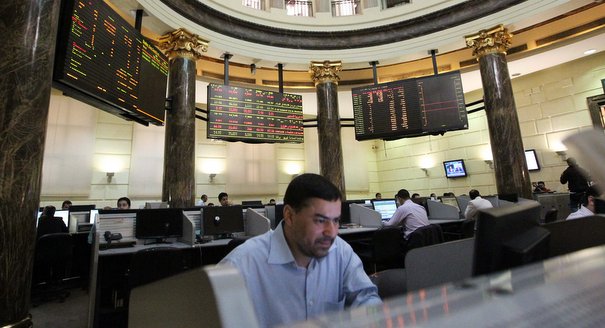
The reaction of Arab countries to the economic crisis has been patchy, uneven, and deficient. Cushioning the blow, protecting the hardest hit, and reigniting regional growth will all be best achieved by an urgent and coordinated response that does not compromise important long-term goals like increased transparency and stability.
The reaction of Arab countries to the economic crisis has been patchy, uneven, and deficient. Cushioning the blow, protecting the hardest hit, and reigniting regional growth will all be best achieved by an urgent and coordinated response that does not compromise important long-term goals like increased transparency and stability, concludes a new commentary from Ibrahim Saif and Farah Choucair.
Saif and Choucair examine the policy responses of Gulf countries, the Maghreb, and Egypt, Lebanon, Syria, Jordan, and Yemen. Faced with declining oil revenues and heavy financial-sector losses, Gulf countries increased spending to sustain growth, but only focused on a few sectors. Other Arab countries, threatened by shrinking exports, remittances, and foreign aid, have adopted ad hoc national policies after an initial period of denial.
Recommendations:
Saif and Choucair conclude:
“The policy responses of Arab countries thus far are simply deficient. Characterized by an initial state of denial, the policy measures that followed are highly arbitrary and lack a clear vision. Many governments are not dealing with the crisis with the needed degree of urgency. Since the crisis is global in nature, no single country can face its ramifications alone; a more collective effort should be pursued at both governmental and private sector levels.”

Former Senior Associate, Middle East Center
Saif is an economist specializing in the political economy of the Middle East. His research focuses on international trade and structural adjustment programs in developing countries, with emphasis on Jordan and the Middle East.
Farah Choucair
Carnegie does not take institutional positions on public policy issues; the views represented herein are those of the author(s) and do not necessarily reflect the views of Carnegie, its staff, or its trustees.

With its public finances in shambles, the far right polling at 35 percent ahead of the 2027 presidential election, and a growing protest movement, is France’s crisis a threat to the EU’s geopolitical awakening?

Rym Momtaz, ed.

The European Commissioner for Trade is headed to China. But after President Xi’s bridge-building visit to Washington, can a more isolated EU overcome Beijing’s stranglehold on critical raw materials? Who will blink first?
Rym Momtaz, ed.

The domestic impacts of how long it is taking to end the war in Ukraine have pushed the French electorate to the political extremes and compromised the country’s diplomatic capacity.
Rym Momtaz

A summer of escalation in the Black Sea has hurt Ukraine economically and is exacerbating world food security. A truce is needed—as is a broader reframing of Europe’s Ukraine strategy.

Thomas de Waal

As geopolitical rivalry weaponizes global supply chains, the EU’s true vulnerability lies in emerging-risk imports. For these goods, suppliers are growing more concentrated, substitution more difficult, and political risk is looming.

Sinan Ülgen