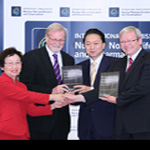
Need we regard non-nuclear-weapon states (NNWS) as skeptics in relation to the U.S. Nuclear Posture Review (NPR)? Certainly, many NNWS, especially those in the Non-Aligned Movement, have been dismayed with what they perceive as a lack of progress on disarmament by the five permanent members of the UN Security Council. But NNWS are far from being a monolithic group. Australia, for instance, is a close ally of the United States but also a historically strong advocate for disarmament and nonproliferation. It has most recently sought to reinvigorate global debate in this area through establishment, with Japan, of the International Commission on Nuclear Non-proliferation and Disarmament (ICNND).
Neither Australia nor Japan speaks for the ICNND, nor is the ICNND bound by the policies of these countries’ governments. It is an independent forum whose unique virtue is that its international membership, representing diverse strategic constituencies, was able to produce a report that makes highly pragmatic recommendations. The report’s value, it might be said, lies in seeking to present the golden mean of the politically tenable, not the gold standard of the ideally desirable. As such, it provides a useful benchmark against which to measure the NPR’s likely impact on the Obama administration’s efforts to broaden international support for the Prague agenda.
What makes the 2010 NPR different from its predecessors is its attentiveness to broader foreign policy considerations and willingness to look beyond a ten-year timeframe. It directly invests in shorter-term disarmament goals outlined by President Obama in his Prague speech—notably, warhead reductions with Russia, recommitment to multilateral treaties, and revised negative security assurances for states in non-compliance with the Nuclear Non-Proliferation Treaty (NPT)—which are shared by the ICNND. Where it fails to match the ICNND’s level of ambition, the NPR nonetheless indicates a way forward. An undertaking to work to create conditions for eventually adopting a policy making deterrence of nuclear attack the sole purpose of U.S. nuclear weapons—an important ICNND objective—is a case in point. The trajectory indicated in the NPR references several key goals that coincide with longer-term ICNND objectives, even if in a broadly stated, non-prescriptive fashion.
Points of intersection between goals set out by the NPR and the ICNND, albeit in varying timeframes of ambition, attest to the latter’s sensitivity to geopolitical realities. For its part, the NPR makes a concerted effort to define more closely post-Cold War security threats as well as the factors that will shape the United States’ ability to reduce the role of nuclear weapons in the future. Appreciating the international and domestic context in which the United States must operate constitutes an important reality check for those advocating loftier and speedier disarmament goals. In this respect, the ICNND’s geographically balanced and politically eminent membership lends particular authority to its report’s underlying approach of ambition tempered by realism.
The ICNND report and the NPR have usefully complemented each other’s efforts to broaden and make more sophisticated the debate on extended deterrence, a debate that has hitherto been subject to occasional overstatement for political ends. Allies and partners have special responsibilities to prevent U.S. transparency from being used as an excuse for accusations that the United States is not meeting its Article VI obligations under the NPT. The new NATO Strategic Concept will provide an important opportunity to redefine further post-Cold War deterrence requirements, as will ongoing bilateral consultations between the United States and its allies in the Asia-Pacific region. Current and emerging threats, which are of a radically smaller order of magnitude than was the possibility of a massive Soviet nuclear attack, clearly do not justify maintaining the status quo. For its part, Australia would be comfortable if the United States were to reach its objective of a sole purpose policy, although the NPR notes that significant work is required to establish the conditions to do so safely.[1]
The ICNND report and the NPR are impeccably timely for having the maximum possible impact on this second chance, as it were, to advance away from Cold War-era default positions on nuclear weapons. This timeliness has to be exploited by an approach that balances a transformational opportunity with the reality of uncertain strategic circumstances, as well as a clear acknowledgement of nuclear disarmament being a long-term process. In this sense, and bearing in mind the various external factors currently holding more forward-leaning U.S. positions in check, the 2010 NPR does not fall impossibly short of the level of ambition driving the ICNND’s recommendations. It is attentive to uncertainties in international security without compromising the more visionary aspects of the Prague agenda. The onus is now on NNWS and nuclear-weapon states alike to assist the United States to create the conditions which might facilitate further movement from rhetoric to reality along the long path to a world free of nuclear weapons.
Peter Sawczak is a Political Counsellor at the Embassy of Australia in Washington.
Notes
1. See April 7 statement by the Australian Minister for Foreign Affairs and Minister for Defence.