

Article
Hesham Alghannam
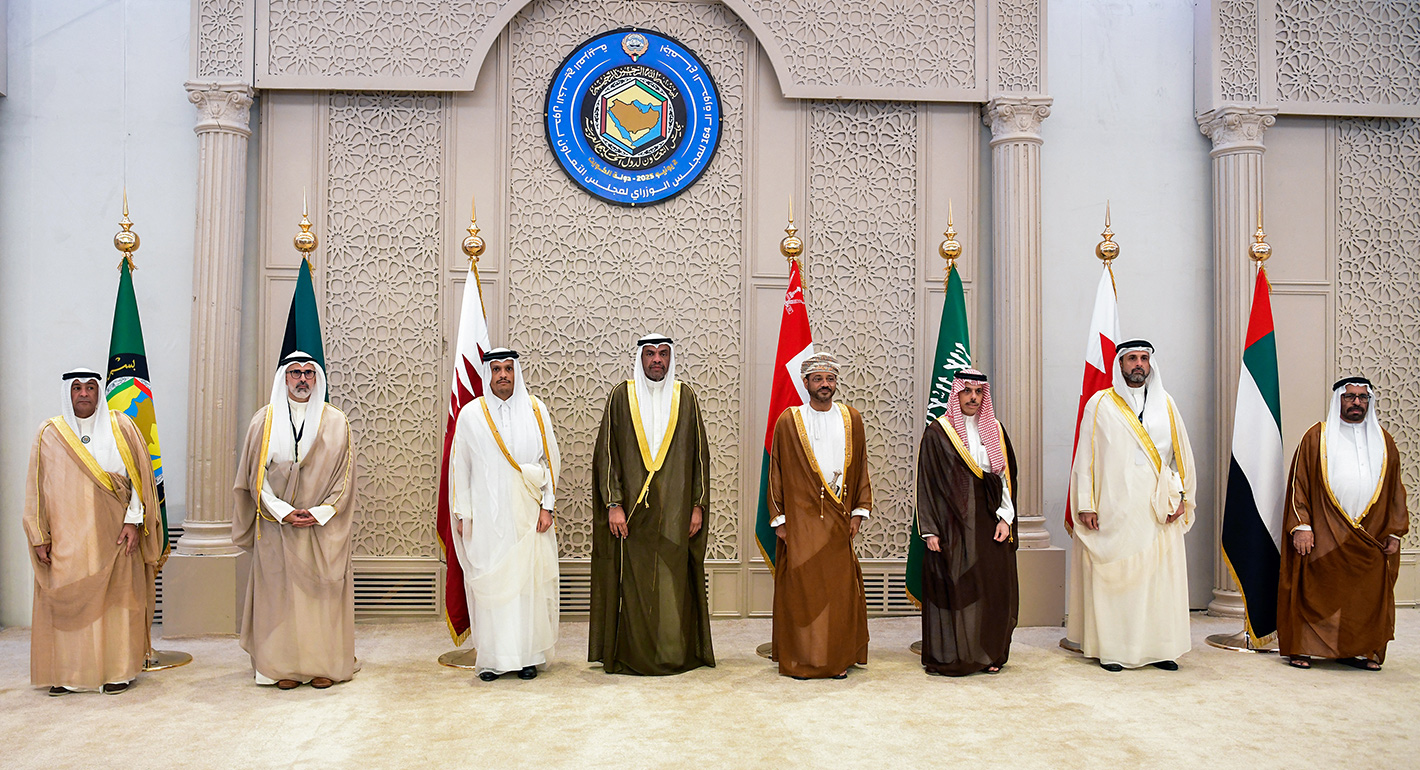
Source: Getty
Without structural reform, the organization, which is racked by internal rivalries, risks sliding into irrelevance.
Despite billing itself as an organization dedicated to “achieving coordination, integration, and interconnection among member states in all fields,” the Gulf Cooperation Council (GCC) lacks unifying frameworks for economic and political pursuits. This means that even in the matter of shared goals, such as economic diversification, each of its six constituent countries—Saudi Arabia, the United Arab Emirates (UAE), Qatar, Kuwait, Oman, and Bahrain—often goes its own way. Moreover, when it comes to the political realm, the various GCC states pursue distinct, and sometimes conflicting, objectives. Add to this the fact that the countries making up the council have uneven levels of economic wealth and regional political leverage, and it is not difficult to understand why they are at loggerheads over several issues of geostrategic importance, and why they remain susceptible to the influence of external powers.
Without structural reform, the current state-of-affairs will continue. And without more dependable troubleshooting and problem-solving mechanisms, differences between Gulf states will sometimes escalate into costly and destabilizing political stand-offs. The GCC will have to find a way to strike a balance between formulating bloc-wide policies and respecting member states’ sovereignty, and also close ranks to fend off external powers’ attempts at meddling or encroachment.
The GCC was established in 1981, during the Iran–Iraq war (1980–1988), in order for the Gulf states to collaborate on security. For over a decade, this was an easy issue on which to agree. Five members of the council supported Iraq against Iran (Oman adopted a neutral stance). And then, after that war had ended and Iraq invaded Kuwait in 1990, the other five GCC states rallied to the latter’s defense, joining the U.S.-led military coalition that dislodged Iraqi forces in 1991.
By this time, the respective leaderships of the six GCC states had already begun to conceive of the council as having a political as well as an economic dimension. Initially, it was rare for differences between the member states, both in terms of economic capacity and political orientation, to evolve into outright competition. However, as the 1990s progressed, and particularly once the new century got underway, rivalries between the GCC countries emerged. These rivalries have since become a defining feature of the Gulf’s politico-economic landscape.
Mindful of dwindling oil reserves, all six GCC states have in the past two decades engaged in (ongoing) attempts to diversify their economies. Their varied circumstances and capacities, however, have translated into varied approaches. Saudi Arabia, Qatar, the UAE, and Bahrain have invested their oil wealth in extensive development undertakings, with Riyadh, Abu Dhabi, and Doha additionally projecting political power across the region. Kuwait and Oman have adopted a more cautious tack, with the former impeded by political gridlock and the latter restricted financially. This has meant that Saudi Arabia, Qatar, and the UAE have forged ahead in diversifying their economies—as has Bahrain, though it has the smallest economy in the GCC—whereas Kuwait and Oman have lagged behind.
In 2016, Saudi Arabia launched Vision 2030, a project to steer its economy away from overreliance on the oil sector and facilitate investment in tourism and entertainment. This has already borne fruit, with Saudi Arabia’s non-oil revenue increasing its share of Gross Domestic Product (GDP). Additionally, under Crown Prince Mohammed bin Salman, Saudi Arabia has pursued a particularly assertive foreign policy. This has included military intervention in Yemen as well as shaping energy markets worldwide. All these factors have enabled the kingdom, which is also the largest state by land in the Gulf and holds great religious importance for Muslims worldwide, to position itself as the GCC’s natural leader.
The United Arab Emirates has made substantial steps in terms of economic diversification. Leveraging Dubai and Abu Dhabi as global gateways for technology, finance, and tourism has enabled non-oil sectors to contribute around 78 percent of real GDP by 2025, which is the highest proportion among GCC countries. Dubai has become a major maritime player, with around 14 million shipping containers passing through Jebel Ali port in 2022. This economic advancement has complemented the UAE’s growing political role. The UAE formalized its ties with Israel in 2020, is enhancing its relationship both with Western powers and China, and has intervened militarily in Libya and in Yemen, in addition to supporting one side in the ongoing Sudanese civil war.
Qatar, the third of the three GCC heavyweights, is home to the world’s third largest natural gas reserves. Despite this major source of revenue, Doha has increasingly sought to diversify both its economy and image. The country has established Education City to host branches of leading Western universities and has turned Qatar Airways into a major international airline, one that rivals the UAE’s globally successful Emirates airline. Additionally, Qatar houses a U.S. central command forward headquarters at al-Udeid Air Base, mediated a negotiated agreement between the United States and the Taliban over the former’s military withdrawal from Afghanistan, and in 2022 became the first Middle Eastern country to host the World Cup.
Economic diversification is also imperative for Kuwait and Oman, with the former having formulated Vision 2035 and the latter Vision 2040 to that end. Yet for reasons of domestic political friction (Kuwait) and limited resources (Oman), their efforts in this regard have been modest. Additionally, neither country has proven able to keep pace with the growing regional and even international clout of Saudi Arabia, Qatar, and the UAE. Notably, however, both Oman and Kuwait have sought to enhance their political relevance by striving to resolve disputes between other states.
Political gridlock between Kuwait’s government and its National Assembly (the only fully elected parliament of any GCC country) has continuously paralyzed economic reform, which has in turn limited progress on Vision 2035. In the early 2020s, the wholesale resignation of one government after another, followed by the ruling emir’s four-year suspension of the National Assembly in 2024, caused major delays in development projects and deterred foreign investment. Although Kuwait boasts the world’s oldest sovereign wealth fund—with assets of around $700 billion—as well as 6 percent of the world’s proven oil reserves, its annual non-oil GDP averaged no more than 4 percent between 2021 and 2023, which is below that of Saudi Arabia and the UAE. Additionally, with 76 percent of Kuwaiti citizens employed in the public sector, private-sector growth has remained limited.
Oman’s economic diversification efforts face challenges of a different sort. To begin with, the country’s public debt is high, having reached 60 percent of GDP in 2020. Also, at the current rate of use, and without accounting for future reserve additions or technological improvements, the country’s oil reserves of around 5 billion barrels have a lifespan of no more than thirteen to fifteen years. Exploration efforts to detect more oil reserves are underway, but there is no guarantee that they will yield a positive outcome.
For these reasons, Muscat is engaging in strict cost-cutting measures. In 2021, the government levied a value added tax on several goods and services, scaled back financial support for utilities (mainly electricity and water), and phased out large subsidies for non-residential consumers and expatriate households. Additionally, Oman is developing a tourism sector and has also expanded the Duqm seaport. Yet overall progress has been limited, with the country’s non-oil share of GDP standing at just 3.8 percent in 2024.
Oman and Kuwait may not have the resources that enable their ambitious neighbors to host global events, build pre-planned cities, and utilize military power regionally, or the desire to do so. Nonetheless, both have parlayed their reputations as neutral countries into important mediation roles. With rivalries between GCC member states on the rise, and U.S.-Iranian disputes escalating into military conflict, this has become a significant attribute.
The strained relationship among the Gulf states has in recent years enabled external actors to enter into separate, and sometimes competing, economic and even political agreements with them. The strain stems from several factors. Disparities in resources and differences in how member states tackle challenges have increasingly caused GCC-birthed mutual institutions to fall by the wayside, with countries often choosing to go it alone in pursuing their national interests, and wealthier members ignoring their peers. Additionally, rivalry among the states has grown, especially between Saudi Arabia and the UAE. Finally, and most alarmingly, the Qatar diplomatic crisis demonstrated that feuding between GCC members could explode into outright confrontation.
On the economic side, external powers insinuating their way into gaps between Gulf countries is perhaps most apparent with the inroads China has made in entering into projects with individual GCC states—sometimes as part of its transcontinental Belt and Road initiative—rather than with the council as a whole. Deals with the UAE have led to the Chinese-constructed Khalifa port in Abu Dhabi (which caused a U.S.-Emirati diplomatic flap) and the availability of 5G infrastructure across the country. Separately, Beijing has provided Saudi Arabia with nuclear technology for a planned reactor.
On the political or even security side, the United States has long taken advantage of the lack of a unified GCC defense strategy to maintain separate security relationships with the bloc’s members. And, in 2020, the United States succeeded in convincing the UAE and Bahrain—outside the framework of the GCC—to join the Abraham Accords with Israel. Earlier, in 2017, following the eruption of the Qatar diplomatic crisis, Türkiye was able to leverage Qatar’s fears of isolation at the hands of its then-adversaries into an agreement that saw the expansion of the Turkish military presence on Qatari soil.
The Qatar diplomatic crisis had its background in Doha’s efforts since the mid-1990s to chart a foreign policy course independent of that of Saudi Arabia, to which it had previously deferred on regional matters. In 2017, Qatar refused to accede to demands by Riyadh, Abu Dhabi, Manama, and Cairo that it downgrade ties with Tehran and Ankara and permanently close Al Jazeera television station. The Saudi-led coalition promptly cut diplomatic and commercial ties with Qatar, and the United States intervened to avert more drastic measures considered by Riyadh and Abu Dhabi. When the stand-off was finally resolved in 2021, it was due to Kuwaiti (and U.S.) mediation.
The crisis’ duration meant that, by the time it was resolved, Kuwait’s stature may have risen, but the GCC had been weakened considerably. Moreover, having developed new supply routes and strengthened its ties to Türkiye and Iran, Qatar emerged less reliant than ever on relationships with fellow Gulf states for its economic stability and geostrategic clout. A few years later, in 2025, it fell upon Oman to host talks between the United States and Iran over the latter’s nuclear program. The GCC remained very much on the sidelines, despite the fact that any U.S.-Iranian military flare-up could easily jeopardize the security of the Gulf as a whole. The scenario repeated itself in early 2026, with U.S. and Iranian officials meeting in Muscat to resume negotiations.
For all the attention paid to the Qatar diplomatic crisis, it was only the most media-covered of the rivalries that repeatedly overshadow the GCC. One such rivalry is that between Saudi Arabia and the UAE. Riyadh may have traditionally been closer to Abu Dhabi than to Doha, but it nonetheless views the former’s assertive foreign policy push with alarm, particularly when Emirati and Saudi positions diverge—as they often do when the issue is ready access to the Arabian Sea and the Bab al-Mandab Strait. In December 2025, Saudi Arabia went so far as to bomb military supplies delivered by the UAE to the Southern Transitional Council (STC), following the latter’s seizure of much of Hadramawt and Mahra governorates, which lie on the Arabian Sea; the STC is at odds with the Saudi-backed internationally recognized government of Yemen.
The Saudi attack had an immediate effect. The UAE announced a suspension of its support for the STC and even a withdrawal of its remaining military forces in Yemen. (Saudi-backed Yemeni military units would subsequently roll back the STC’s territorial gains in Hadramawt and Mahra.) Farther afield, though, matters are unlikely to change in the near future. Saudi Arabia and the UAE remain at odds over foreign policy vis-à-vis Israel, Egypt, and the countries of the Horn of Africa. Worse yet, Riyadh and Abu Dhabi arm opposing sides in the ongoing conflict in Sudan.
Despite the differences between GCC countries, there is room for them to cooperate in certain spheres even as they separately pursue divergent national goals. One major criterion for success is identifying those elements over which all six member states can theoretically agree. Another is establishing diplomatic mechanisms to ensure that disputes do not escalate into political stand-offs, let alone military confrontation. In both cases, the larger aim must be to prevent external powers from exploiting gaps that compromise the Gulf countries’ collective security or economic interdependence.
Widening the base of cooperation between member states would obviously strengthen the GCC as a whole. Tying such cooperation to an agreement, even if tacit, over where and how divergences occur can confine the latter to certain spheres. The realm of cooperation includes, but is not restricted to, creating a joint defense framework and sharing intelligence on security threats; coordinating energy practices; ensuring food and water stability; and combating the effects of climate change caused by global warming.
Thus far, persistent tension between collective security aspirations and intra-GCC political rivalries has hampered joint defense and intelligence-sharing initiatives. Other complicating factors include a fear of antagonizing Iran, concerns over the erosion of state sovereignty, and individual GCC countries’ bilateral security arrangements with the United States. Ironically, the basis for a joint defense (and, to a certain extent, intelligence-sharing) architecture already exists in the form of a body called the Unified Military Command. Established in 1984 as the Joint Peninsula Shield Forces (it was renamed in 2021), the Unified Military Command is the foundation upon which the GCC countries can further build.
When it comes to matters of energy, food and water stability, and climate change, the establishment of a GCC-wide sovereign wealth fund, to be managed by the organization’s Secretariat General or a similar institution. For one thing, such a fund would direct capital specifically toward the less diversified economy of Oman and the smaller economy of Bahrain. This would ensure that the gap in economic diversification between the member states would not lead to a two-tiered GCC. And, for another, it would bind the GCC states together in pursuits that, by their very nature, are sure to last for decades.
Energy strategies should go beyond coordinating oil production quotas through the Organization of the Petroleum Exporting Countries Plus (OPEC+). Over and above managing price volatility and protecting individual revenue streams, which is what the GCC states do through OPEC+, they should think about long-term energy cooperation and reducing their reliance on oil-based revenues. The idea is to establish common standards for solar and wind deployment as well as green hydrogen use, and coordinate positioning vis-à-vis both European regulatory integration and Chinese industrial partnerships. This would serve to provide the GCC with more influence collectively and ensure that its member states’ economies achieve long-term economic stability.
Another arena wherein much room for cooperation exists is that of food and water stability. The GCC should create a food reserve bank and build a region-wide desalination grid. The former would provide a framework for the stockpiling of food items such as grains and other staples, and the latter would do much the same for potable water. In a region where 85 percent of foodstuffs are imported and natural water is in short supply, this is common sense.
Climate change is of particular concern in the Gulf, where the summer months are already debilitatingly hot. Collaboration between the countries of the region would enhance the effectiveness of measures to combat the phenomenon’s effects, which include even higher temperatures. Sourcing renewable energy components, which entails investing in solar, wind, and related green technologies, is a good place to begin. It would also dovetail with the Gulf countries’ efforts to wean themselves off their dependence on fossil fuels.
To prevent disputes among members from escalating into political or military conflict, the GCC should formulate a crisis management procedure, one that includes a mediation team that swoops in before it is too late. This would differ from the Commission for Settlement of Disputes in that it would not exist only on paper. The team’s members would always be drawn from non-disputant states. Moreover, all six GCC countries would have to commit to accepting mediation before taking drastic action such as severing diplomatic ties. The same crisis management procedure, if faithfully utilized, could block external powers from capitalizing on division between GCC states. In the larger scheme of things, this would help to keep the GCC united and protect its collective security.
The main question facing the GCC is whether it is serious about reaching and maintaining a baseline level of internal cooperation regarding transnational economic imperatives and, to a lesser extent, regional political challenges. There is potential for the former, given that all six countries making up the council are striving to diversify their economies. As for political cooperation, it is possible for member states to arrive at binding GCC-wide policies regarding certain overarching matters, even as they pursue separate agendas in narrower domains. To achieve either of these objectives, let alone both, a more precise definition of the GCC’s purpose, remit, and prerogatives would have to be formulated. Additionally, the organization would have to lay out more structured and timebound mechanisms for resolving, or at least mitigating, disagreements. Should the GCC fail to muster the collective will to engage in such an ameliorative undertaking—and with Saudi Arabia, Qatar, and the UAE jostling each other on the regional stage—the council is liable to suffer increased internal dissension and possibly a drift toward inconsequentiality.
Nonresident Scholar, Malcolm H. Kerr Carnegie Middle East Center
Hesham Alghannam is a nonresident scholar at the Malcolm H. Kerr Carnegie Middle East Center.
Recent Work
Hesham Alghannam
Hesham Alghannam
Carnegie does not take institutional positions on public policy issues; the views represented herein are those of the author(s) and do not necessarily reflect the views of Carnegie, its staff, or its trustees.

When the U.S.-Iran memorandum of understanding was announced, the UK, France, Germany, and Italy declared their readiness to help demine the Strait of Hormuz and lift nuclear sanctions on Tehran. But does Europe need new tools to recover a diplomatic role?

Rym Momtaz, ed.
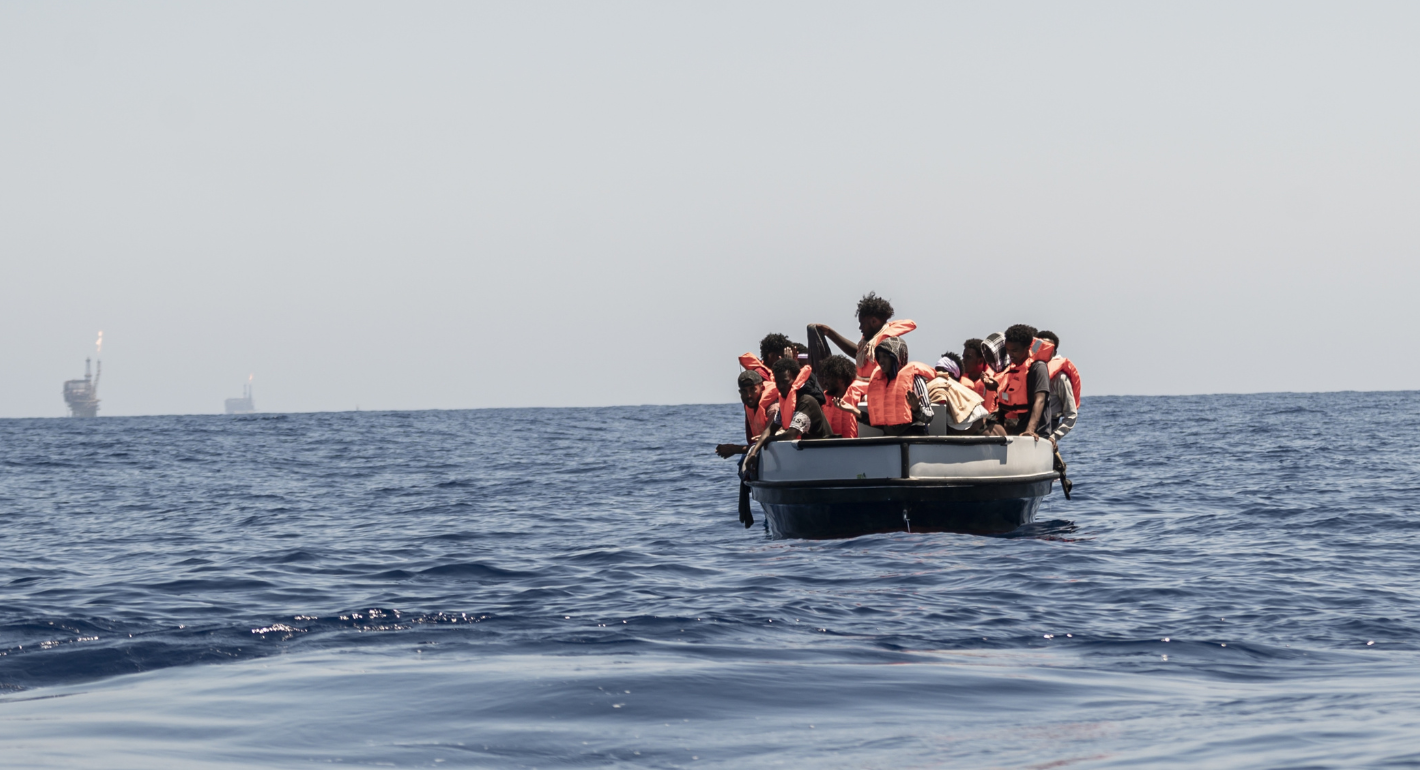
The EU’s new migration policy is not suited to today’s realities. With climate change increasingly becoming a driver of displacement, Europe needs to rethink its deterrence-focused approach.

Shana Tabak
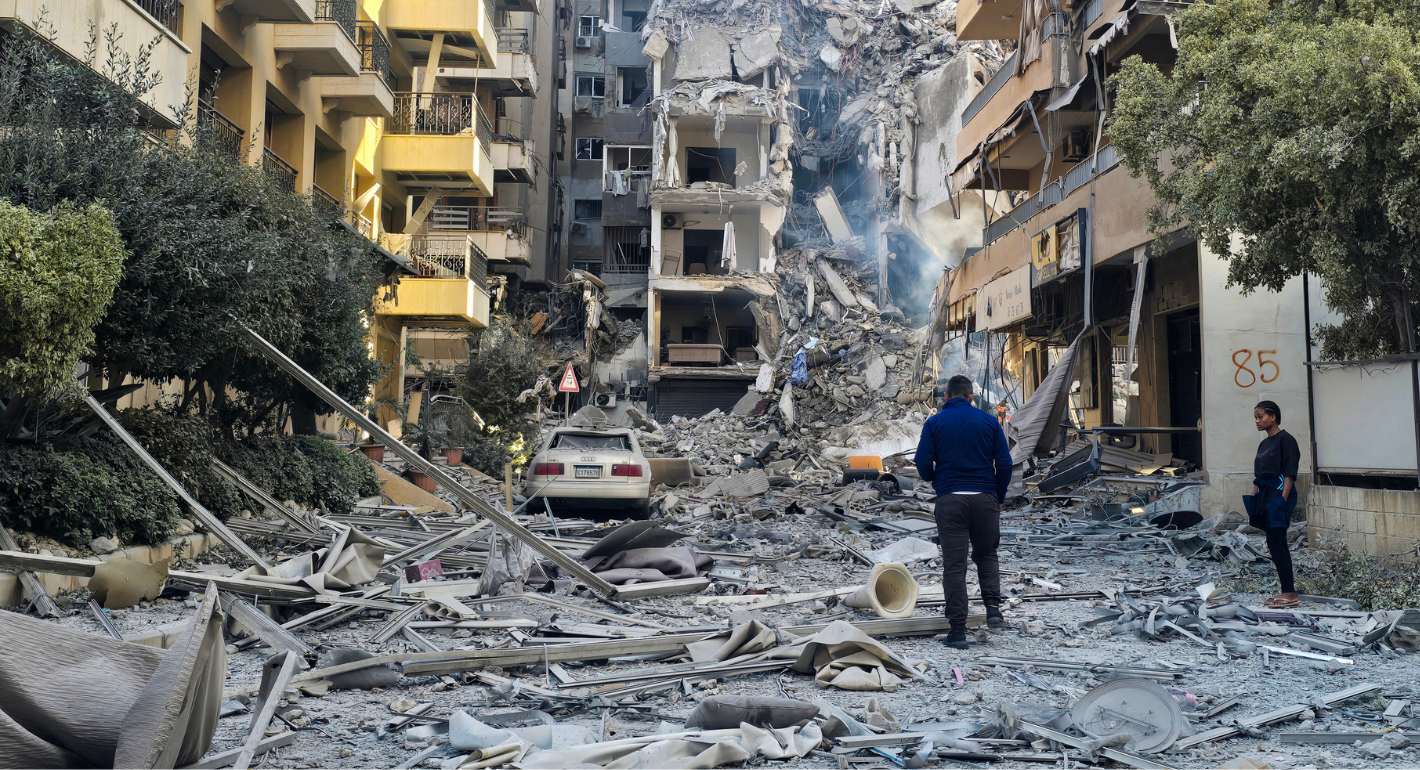
Europe seems to have accepted its sidelining in the Middle East. The EU must reassert its support for the international rules-based order and step up engagement.
Rym Momtaz
Europe has been standing by while its Southern neighborhood is being redrawn by force. To establish a path to peace between Israel and Lebanon, it’s time for Europeans to get involved with hard power.
Rym Momtaz
Donald Trump has demanded that European allies send ships to the Strait of Hormuz while his war of choice in Iran rages on. He has constantly berated NATO while the alliance’s secretary-general has emphatically supported him.
Rym Momtaz, ed.