Arab-Israeli diplomacy has left the Middle East littered with a collection of ad hoc structures, all of which valiantly soldier on to avoid proclaiming failure. One of those—the Quartet comprised of the United States, Russia, the EU, and the UN—has recently attempted to escape such a fate by issuing a strongly worded report designed to entice, scold, and scare Israelis and Palestinians into reviving a so-called peace process.
Strong language should not be a substitute for new ideas, but in this case it seems to be. At first glance, the report appears to contribute an air of urgency with frank and hard-hitting prose. Yet a closer look reveals something different: an attempt to bolster familiar bilateral diplomacy in a manner that continues to ignore the power asymmetry and offers little to either side but hectoring. The report condemns Israeli settlement construction and Palestinian incitement but not in terms likely to induce any real change. It calls on parties to do what they either cannot or will not do on their own but offers them no new reason to do what they have been unwilling or unable to do for two decades.
While Europe is often seen as an ineffectual actor in Arab-Israeli diplomacy, the historical reality has been a bit different. The EU pushed for engaging the Palestinians as a national community and accepting the idea of a Palestinian state, decades before other key actors were willing to do so.
The Quartet was founded as much to contain a new round of European diplomacy as to carry it forward. The ad hoc structure was born not simply to endorse its first (and only) accomplishment, the 2002 road map toward a two-state solution, but also to ensure that the document would give only a nominal role to other actors without supplanting U.S. oversight of bilateral Israeli-Palestinian diplomacy. The EU-inspired plan was supposed to be “performance-based and goal-driven,” with clear phases, timelines, and benchmarks that would lead to the establishment of a Palestinian state by the end of 2005.
The complete end of Israeli-Palestinian diplomacy and the failure of U.S. initiatives have led to a revival of the Quartet’s energies and helped produce the new, toughly worded report, which warns for the umpteenth time that the situation is still unsustainable. The constant Cassandra-like international warnings have been right all along—the situation has not been sustained but has markedly worsened.
But when the report proclaims that “current trends are imperiling the viability of the two-state solution,” hoping to goad the parties into action, it does not recognize how much the ground has shifted. Similarly, when Federica Mogherini, the EU’s foreign policy high representative, declares that “the perspective that Oslo opened up is seriously at risk of fading away,” she discerns an opportunity that few Israelis and Palestinians see.
Frank Quartet talk is not only old news, it also ignores the fact that support for a two-state solution is decreasing. Defenders of this approach are not merely shrinking in number; they seem quite irrelevant to current politics. The window opened in 1993 by the Oslo process is now locked shut by the growth of the Israeli Right, the continued expansion of settlements, the deep decay of most Palestinian institutions, and the disengagement of Palestinians from formal politics more generally.
One of the recommendations in the new report is that the “Palestinian leadership should continue their efforts to strengthen institutions, improve governance, and develop sustainable economy”—as if a bit more time and effort would deliver such gains. But Palestine has been moving in the opposite direction. Palestinian economic and institutional development can hardly be a precondition for new diplomatic efforts; indeed, it was a major past diplomatic achievement (the 1994 Paris Protocol on economic relations) that led to the dependence of Palestinian finances on Israel. Attempts to build Palestinian institutions in the current context have always been much more circumscribed than international backers were willing to recognize.
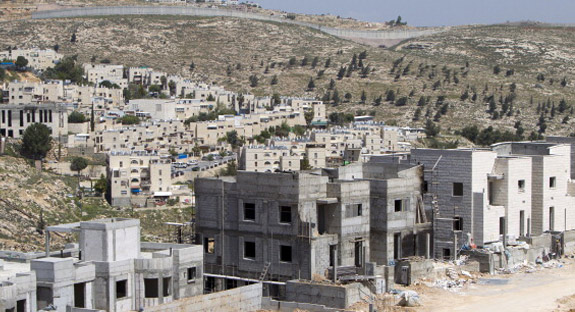
The report acknowledges this to an extent when it boldly wades into the area of the construction of Israeli settlements and the denial of Palestinian development. But past Quartet efforts—such as those led by former Quartet special envoy Tony Blair—foundered not because they were quiet but because they worked only on the margins of Israeli policy and debate.
Effectively, the controversy in Israel is between those who advocate more building in the West Bank and those who would restrict it. The first side, which is dominant at present, rejects a two-state solution, with only a few paying lip service to the idea. The weaker second side proceeds as if negotiations were unnecessary because, this side claims, everyone knows borders will annex most settlements to Israel—even though they were built without Palestinian consent and in defiance of international law. The sole contribution of the current Quartet report seems to be to tell Palestinians in public they are right to be bothered by settlements.
The Quartet report continues this pattern of appearing to hit hard but leaving the parties to themselves when it addresses so-called incitement, an issue long raised by the Israeli Right to criticize the peace process. Use of the term “incitement” suggests that leaders are encouraging violence and that without their words, violence would not occur. But no evidence is adduced for this claim. It may reverse cause and effect, with leaders not so much encouraging action as seeking to stay in line with public opinion in angry times.
Palestinian and Israeli leaders and publics say and do hateful things at times. Palestinians find much Israeli political discourse noxious, and for good reason: Israeli political leaders regularly talk about Palestinians in harsh terms and treat attacks on Palestinians in the West Bank with documented diffidence—reserving their harshest language for those doing the documentation. Palestinian official bodies also regularly do not distinguish between those who are killed attacking civilians and those killed other ways—both are martyrs to the national cause. When the Israeli Right has sought to derail the peace process, it has regularly held up incendiary statements from the other side as evidence of Palestinian bad intentions.
By raising the issue, the Quartet appears to be toeing the Israeli line—that incitement mainly concerns the Palestinians and must stop without discussion. But it offers nothing but demands for change. The harshest denunciation is devoted to Hamas—as if scolding the Palestinian Islamist movement will bring it into the fold. No reference to any process is included, past documents (which did take up the issue) are forgotten, and no inducement, penalties, or clear standards are provided.
The report seems designed to shove, persuade, and cajole the parties back to the negotiating table without addressing the power asymmetry between them. Placing them alone together as if they were on an equal footing will leave them on the same slope toward a set of Israeli-imposed realities and ineffectual but damaging Palestinian attempts to disrupt the deeply entrenched realities. Direct peace talks that sidestep or ignore international law on refugees and occupation will only camouflage this downward trajectory.
In its latest global strategy, the EU committed itself to “promote full compliance with European and international law in deepening cooperation with Israel and the Palestinian Authority.” Indeed, the EU has managed in the past to inject the Quartet with ideas. Now is the time to forcefully insist on legal frameworks and inject them with actions. Past tendencies—equating the occupier with the occupied, allowing each side to pursue its own interpretation of agreements and obligations, and telling the parties what to do—must be reversed. Otherwise, both the Quartet and its constitutive parts will remain in quest of relevance.
Dimitris Bouris is assistant professor at the Department of Political Science at the University of Amsterdam and the author of The European Union and Occupied Palestinian Territories: State-building without a state.