• Research
  • About
  • Experts
Carnegie India logoCarnegie lettermark logo
AI
Podcast Episode
Carnegie India

Cybersecurity in Outer Space: A Growing Concern

In this episode of Interpreting India, host Tejas Bharadwaj is joined by P. J. Blount, an assistant professor of space law at Durham University. Together, they delve into the critical topic of cybersecurity in outer space, exploring the challenges and implications of protecting space-based assets amidst rising geopolitical tensions and technological advancements. Blount shares insights from his extensive research in international space law and cyberspace governance, highlighting the complexities of legal attribution and the evolving landscape of space security.

Link Copied
By Tejas Bharadwaj and P. J. Blount
Published on Oct 31, 2025

Subscribe on

SpotifyApple PodcastsAmazon MusicYoutube
Project hero Image

Project

Technology and Society

This program focuses on five sets of imperatives: data, strategic technologies, emerging technologies, digital public infrastructure, and strategic partnerships.

Learn More

In this episode of Interpreting India, host Tejas Bharadwaj is joined by P. J. Blount, an assistant professor of space law at Durham University. Together, they delve into the critical topic of cybersecurity in outer space, exploring the challenges and implications of protecting space-based assets amidst rising geopolitical tensions and technological advancements. Blount shares insights from his extensive research in international space law and cyberspace governance, highlighting the complexities of legal attribution and the evolving landscape of space security.

Episode Notes

The conversation explores how cybersecurity is integral to space operations, drawing parallels with traditional air defense strategies. Blount discusses the historical context of cybersecurity in space, the role of international law, and the challenges posed by non-state actors. He emphasizes the need for a holistic approach to cybersecurity that includes both space-based and terrestrial components, and the importance of international cooperation in addressing these challenges.

Blount warns of the increasing threats from cyber-attacks on space assets and the need for robust legal frameworks to ensure accountability and security. He calls for the development of comprehensive cybersecurity strategies that integrate space and cyberspace, ensuring resilience against a wide range of threats.

How can nations protect their space assets from cyber threats? What role does international law play in governing space cybersecurity? How should countries collaborate to enhance global space security?

Episode Contributors

P. J. Blount is assistant professor of space law at Durham University. He is also a visiting scholar at Mae Fah Luang University in Chiang Rai, Thailand. Previously, he served as a Lecturer in Law at Cardiff University, an adjunct professor for the LL.M. in the Air and Space Law at the University of Mississippi School of Law, a Postdoctoral Researcher at the University of Luxembourg, an adjunct professor at Montclair State University, and a Visiting Scholar at the Beijing Institute of Technology School of Law. 

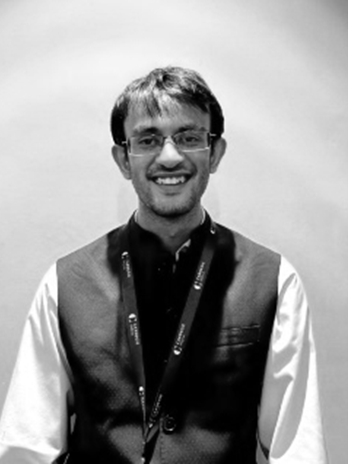
Tejas Bharadwaj is a senior research analyst with the Technology and Society Program at Carnegie India. He focuses on space law and policies and also works on areas related to AI in military domain, Defence tech and Cybersecurity. 

Hosted by

Tejas Bharadwaj
Senior Research Analyst, Technology and Society Program
Tejas Bharadwaj

Featuring

P. J. Blount

Carnegie India does not take institutional positions on public policy issues; the views represented herein are those of the author(s) and do not necessarily reflect the views of Carnegie, its staff, or its trustees.

More Work from Interpreting India

  • Podcast Episode
    Subsea Cables, Trusted Networks, and India's Strategic Opportunity

    In this episode of Interpreting India, Charukeshi Bhatt speaks with Pooja Bhatt, associate professor, Jindal School of International Affairs, O.P. Jindal University, on a piece of infrastructure that is easy to overlook and very difficult to protect: subsea cables. Stretching over 1.5 million kilometres across ocean floors and carrying nearly 99% of global data traffic, these cables underpin everything from financial systems and cloud infrastructure to the everyday digital services that billions of people rely on. For India, a fast-growing digital economy with expanding data center ambitions, getting this right is not optional.

      Charukeshi Bhatt, Pooja Bhatt

  • Podcast Episode
    AI Literacy and the Future of Work in India

    In this episode of Interpreting India, Adarsh Ranjan, research analyst at Carnegie India, speaks with Jaspreet Bindra, founder of AI&Beyond and Tech Whisperer Limited, UK, and author of 'Winning with AI: Your Guide to AI Literacy.' Jaspreet brings a practitioner's perspective to questions that often get lost in the noise around AI: not just what is changing, but whether people, organizations, and policymakers are actually prepared for it.

      Adarsh Ranjan, Jaspreet Bindra

  • Podcast Episode
    Can AI Resources Be Democratized? AI Summit Special

    In this episode of Interpreting India, Nidhi Singh, speaks with Saurabh Garg, secretary at the Ministry of Statistics and Programme Implementation, Government of India, who chaired the working group on democratizing AI resources at the India AI Impact Summit.

      Nidhi Singh, Saurabh Garg

  • Podcast Episode
    Space Security in the Age of AI

    In this episode of Interpreting India, Tejas Bharadwaj is joined by Almudena Azcárate Ortega, senior program analyst at Secure World Foundation, for a wide-ranging conversation on how emerging technologies, particularly AI, are reshaping the landscape of space security. A space lawyer and policy scholar with deep experience in multilateral processes, Almudena brings both technical nuance and diplomatic realism to questions that most space conversations still treat as hypothetical.

      Tejas Bharadwaj, Almudena Azcárate Ortega

  • Podcast Episode
    An African Perspective for Building AI for Global South | AI Summit Special

    In this episode of Interpreting India, Nidhi Singh is joined by Raymond Ononiwu, founder and CEO of Horus Labs, for a conversation that cuts through the noise around compute, data centres, and AI infrastructure to ask a more fundamental question: who is this all actually being built for?

      Nidhi Singh, Raymond Ononiwu

Get more news and analysis from
Carnegie India
Carnegie India logo, white
Unit C-4, 5, 6, EdenparkShaheed Jeet Singh MargNew Delhi – 110016, IndiaPhone: 011-40078687
  • Research
  • About
  • Experts
  • Projects
  • Events
  • Contact
  • Careers
  • Privacy
  • For Media
Get more news and analysis from
Carnegie India
© 2026 Carnegie Endowment for International Peace. All rights reserved.