• Research
  • About
  • Experts
Carnegie India logoCarnegie lettermark logo
AI
Podcast Episode
Carnegie India

Unbundling AI Openness: Beyond the Binary

In this episode of Interpreting India, host Shruti Mittal speaks with Chinmayi Sharma, associate professor of law at Fordham Law School. Together, they explore the evolving and often misunderstood debate on openness in artificial intelligence. Drawing from her forthcoming paper, Unbundling AI Openness, in the Wisconsin Law Review, Sharma explains why the traditional “open versus closed” framing oversimplifies the reality of modern AI development.

Link Copied
By Shruti Mittal and Chinmayi Sharma
Published on Oct 16, 2025

Subscribe on

SpotifyApple PodcastsAmazon MusicYoutube
Project hero Image

Project

Technology and Society

This program focuses on five sets of imperatives: data, strategic technologies, emerging technologies, digital public infrastructure, and strategic partnerships.

Learn More

In this episode of Interpreting India, host Shruti Mittal, research analyst in the Technology and Society Program at Carnegie India, speaks with Chinmayi Sharma, associate professor of law at Fordham Law School and nonresident fellow at the Stoss Center, the Center for Democracy and Technology, and the Atlantic Council. Together, they explore the evolving and often misunderstood debate on openness in artificial intelligence. Drawing from her forthcoming paper, Unbundling AI Openness, in the Wisconsin Law Review, Sharma explains why the traditional “open versus closed” framing oversimplifies the reality of modern AI development. She introduces the concept of “differential openness,” a framework that views AI systems as composed of multiple interdependent components—each existing along its own spectrum of openness and carrying distinct implications for innovation, safety, democratic accountability, and national security.

Episode Notes

The episode challenges the familiar “open versus closed” framing of AI systems. Sharma argues that openness is not inherently good or bad—it is an instrumental choice that should align with specific policy goals. She introduces a seven-part taxonomy of AI—compute, data, source code, model weights, system prompts, operational records and controls, and labor—to show how each component interacts differently with innovation, safety, and governance. Her central idea, differential openness, suggests that each component can exist along a spectrum rather than being entirely open or closed. For instance, a company might keep its training data private while making its system prompts partially accessible, allowing transparency without compromising competitive or national interests. Using the example of companion bots, Sharma highlights how tailored openness across components can enhance safety and oversight while protecting user privacy. She urges policymakers to adopt this nuanced approach, applying varying levels of openness based on context—whether in public services, healthcare, or defense. The episode concludes by emphasizing that understanding these layers is vital for shaping balanced AI governance that safeguards public interest while supporting innovation.

How can regulators determine optimal openness levels for different components of AI systems? Can greater transparency coexist with innovation and competitive advantage? What governance structures can ensure that openness strengthens democratic accountability without undermining safety or national security?

Episode Contributors

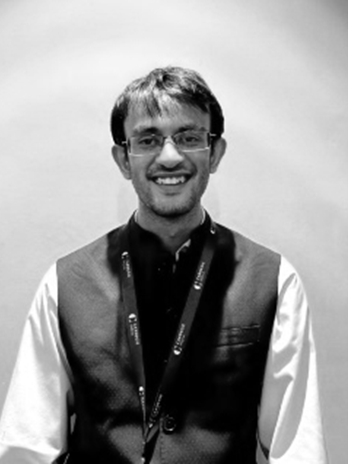
Chinmayi Sharma is an associate professor of law at Fordham Law School in New York. She is a nonresident fellow at the Stoss Center, the Center for Democracy and Technology, and the Atlantic Council. She serves on Microsoft’s Responsible AI Committee and the program committees for the ACM Symposium on Computer Science and Law and the ACM Conference on Fairness, Accountability, and Transparency.

Shruti Mittal is a research analyst at Carnegie India. Her current research interests include artificial intelligence, semiconductors, compute, and data governance. She is also interested in studying the potential socio-economic value that open development and diffusion of technologies can create in the Global South.

Suggested Readings 

Unbundling AI Openness by Parth Nobel, Alan Z. Rozenshtein, and Chinmayi Sharma. 

Tragedy of the Digital Commons by Chinmayi Sharma. 

Hosted by

Shruti Mittal
Research Analyst, Technology and Society Program
Shruti Mittal

Featuring

Chinmayi Sharma

Carnegie India does not take institutional positions on public policy issues; the views represented herein are those of the author(s) and do not necessarily reflect the views of Carnegie, its staff, or its trustees.

More Work from Interpreting India

  • Podcast Episode
    Subsea Cables, Trusted Networks, and India's Strategic Opportunity

    In this episode of Interpreting India, Charukeshi Bhatt speaks with Pooja Bhatt, associate professor, Jindal School of International Affairs, O.P. Jindal University, on a piece of infrastructure that is easy to overlook and very difficult to protect: subsea cables. Stretching over 1.5 million kilometres across ocean floors and carrying nearly 99% of global data traffic, these cables underpin everything from financial systems and cloud infrastructure to the everyday digital services that billions of people rely on. For India, a fast-growing digital economy with expanding data center ambitions, getting this right is not optional.

      Charukeshi Bhatt, Pooja Bhatt

  • Podcast Episode
    AI Literacy and the Future of Work in India

    In this episode of Interpreting India, Adarsh Ranjan, research analyst at Carnegie India, speaks with Jaspreet Bindra, founder of AI&Beyond and Tech Whisperer Limited, UK, and author of 'Winning with AI: Your Guide to AI Literacy.' Jaspreet brings a practitioner's perspective to questions that often get lost in the noise around AI: not just what is changing, but whether people, organizations, and policymakers are actually prepared for it.

      Adarsh Ranjan, Jaspreet Bindra

  • Podcast Episode
    Can AI Resources Be Democratized? AI Summit Special

    In this episode of Interpreting India, Nidhi Singh, speaks with Saurabh Garg, secretary at the Ministry of Statistics and Programme Implementation, Government of India, who chaired the working group on democratizing AI resources at the India AI Impact Summit.

      Nidhi Singh, Saurabh Garg

  • Podcast Episode
    Space Security in the Age of AI

    In this episode of Interpreting India, Tejas Bharadwaj is joined by Almudena Azcárate Ortega, senior program analyst at Secure World Foundation, for a wide-ranging conversation on how emerging technologies, particularly AI, are reshaping the landscape of space security. A space lawyer and policy scholar with deep experience in multilateral processes, Almudena brings both technical nuance and diplomatic realism to questions that most space conversations still treat as hypothetical.

      Tejas Bharadwaj, Almudena Azcárate Ortega

  • Podcast Episode
    An African Perspective for Building AI for Global South | AI Summit Special

    In this episode of Interpreting India, Nidhi Singh is joined by Raymond Ononiwu, founder and CEO of Horus Labs, for a conversation that cuts through the noise around compute, data centres, and AI infrastructure to ask a more fundamental question: who is this all actually being built for?

      Nidhi Singh, Raymond Ononiwu

Get more news and analysis from
Carnegie India
Carnegie India logo, white
Unit C-4, 5, 6, EdenparkShaheed Jeet Singh MargNew Delhi – 110016, IndiaPhone: 011-40078687
  • Research
  • About
  • Experts
  • Projects
  • Events
  • Contact
  • Careers
  • Privacy
  • For Media
Get more news and analysis from
Carnegie India
© 2026 Carnegie Endowment for International Peace. All rights reserved.