

Other
Fiona Hill, Anatol Lieven, Thomas de Waal
{
  "authors": [
    "Anatol Lieven"
  ],
  "type": "legacyinthemedia",
  "centerAffiliationAll": "dc",
  "centers": [
    "Carnegie Endowment for International Peace"
  ],
  "collections": [],
  "englishNewsletterAll": "ctw",
  "nonEnglishNewsletterAll": "",
  "primaryCenter": "Carnegie Endowment for International Peace",
  "programAffiliation": "russia",
  "programs": [
    "Russia and Eurasia",
    "Nuclear Policy"
  ],
  "projects": [],
  "regions": [
    "South Asia",
    "India"
  ],
  "topics": [
    "Security",
    "Military",
    "Foreign Policy",
    "Nuclear Policy"
  ]
}
REQUIRED IMAGE
Source: Carnegie
Originally published in The New York Times, October 21, 2001.
If the United States is serious about removing the sources of anti-American
terrorism, then at some stage Washington will have to tackle the conflict in
Kashmir. At present this is the last thing American officials want to do. They
have enough on their plate in Afghanistan. But as Secretary of State Colin Powell's
experiences in Islamabad and New Delhi illustrated, the Kashmir dispute has
the potential both to infuriate India and to weaken the regime of our Pakistani
ally, President Pervez Musharraf.
A strong behind-the-scenes American diplomatic initiative needs to begin now, because the context created by the campaign in Afghanistan offers unique opportunities, as well as great dangers, in India and Pakistan. One of the chief dangers is presented by the Jaish-e-Muhammad, the leading Islamist force active in Kashmir. It has been labeled a terrorist organization by Washington and faces a probable sharp reduction in Pakistani support. This means it has little to lose — and the Jaish-e-Muhammad has indeed threatened a terror campaign not just in Kashmir but across India.
This could incite both communal strife within India and even harsher Indian repression in Kashmir, thereby contributing to radical Islamist unrest in Pakistan. It could also lead to renewed fighting between India and Pakistan across the line of control that divides their respective Kashmirs, as shown in recent days by heavy Indian bombardments.
The opportunities are provided by the sea change that has taken place in Pakistani policies as a result of the Sept. 11 attacks and President Musharraf's decision to support the American campaign in Afghanistan. For the first time, there is a real willingness among leaders of the Pakistani state and army to cut back or end support for the Islamist elements based in Pakistan who fight in Kashmir; and for the first time, in private at least, some are willing to concede that Pakistan's entire Kashmir strategy of the past 54 years has proved fruitless, damaging to Pakistan and in need of radical revision. This is really striking, because support for Kashmiri independence from India has been at the core of the Pakistani army's ideology since the army was founded. It presents a chance that we must encourage India and Pakistan to seize.
The struggle against Islamist terrorism makes finding a settlement in Kashmir very important to America's national interest. As long as the conflict there continues, it will suck in terrorist elements from elsewhere in the Muslim world, and these will find sympathy and protection from the Pakistani population and some in the armed forces.
Besides, while the rivalry between India and Pakistan is very damaging to both countries, it is increasingly ruinous to Pakistan. The effort to maintain adequate defenses against a country with seven times Pakistan's population has led to military spending averaging around 30 percent of the budget in recent years, dwarfing the amounts spent on education, health, welfare or infrastructure and severely reducing economic growth. Lack of education also contributes to a level of population growth that is among the highest in Asia and continually nullifies improvements in living standards.
These factors create a real danger that Pakistan could follow Afghanistan into collapse — but on a much larger scale, and with nuclear weapons. Few more menacing scenarios for the growth of Islamist terrorism could be imagined.
If a settlement is to be found to Kashmir, the greatest initial concession has to come from Pakistan. Islamabad must publicly recognize that the greater part of Kashmir will remain under Indian sovereignty, and must drop its demand for the implementation of United Nations resolutions calling for a Kashmiri plebiscite on national status. These resolutions may be justified in principle, but there is simply no way India will accept them. It cannot be forced by Pakistan or anyone else to do so.
In return, New Delhi must drop its pretense that the Kashmir problem is not
central to Indo-Pakistani relations and is a purely internal Indian matter in
which the world community has no legitimate role. The international terrorist
threat, and the possession of nuclear weapons by both India and Pakistan, have
rendered these propositions obviously absurd.
If both countries could get over these initial hurdles, then the way might open
for a settlement involving partial demilitarization, open borders, new administrative
units and internationally supervised regional elections on both sides of the
Indo- Pakistani frontier.
Unfortunately, past experience suggests that the parties are unlikely to get over these hurdles without a lot of help from their friends, and above all from the United States.

Former Senior Associate
Recent Work

Fiona Hill, Anatol Lieven, Thomas de Waal
Carnegie India does not take institutional positions on public policy issues; the views represented herein are those of the author(s) and do not necessarily reflect the views of Carnegie, its staff, or its trustees.

This piece argues that the present Indian strategy, based on opportunistic diversification and utilization of limited strategic reserves, remains inadequate when confronting supply disruptions. It evaluates India’s options in the short, medium, and long terms.

Vrinda Sahai
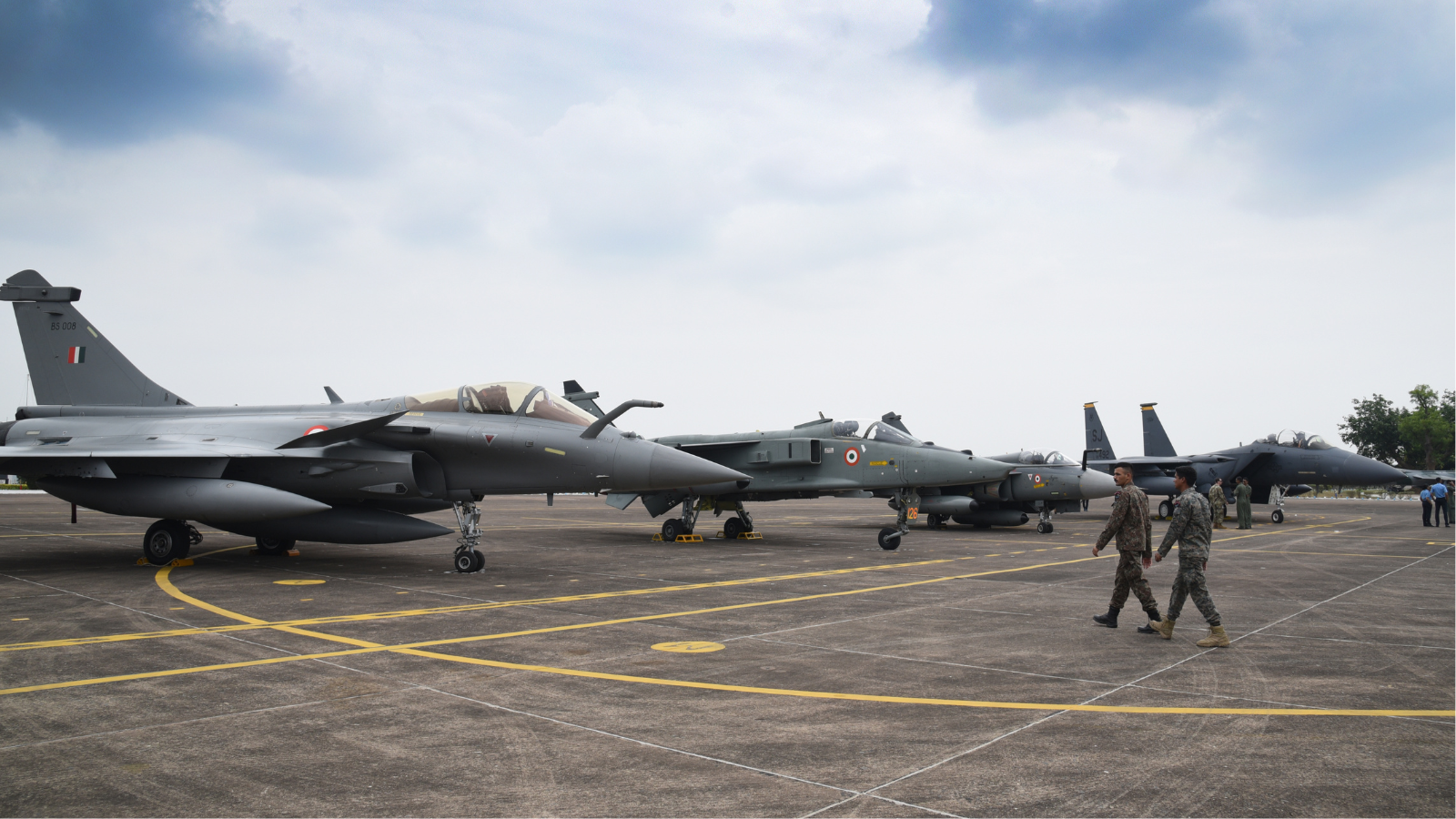
India and the United States are close to concluding a Reciprocal Defense Procurement Agreement (RDPA) that will allow firms from the two countries to sell to each other’s defense establishments more easily. While this may not remedy the specific grievances both sides may have regarding larger bilateral issues, an RDPA could restore some momentum, following the trade deal announcement.

Konark Bhandari

On the last day of the India AI Impact Summit, India signed Pax Silica, a U.S.-led declaration seemingly focused on semiconductors. While India’s accession to the same was not entirely unforeseen, becoming a signatory nation this quickly was not on the cards either.
Konark Bhandari

On January 12, 2026, India's "workhorse," the Polar Satellite Launch Vehicle, experienced a consecutive mission failure for the first time in its history. This commentary explores the implications of this incident on India’s space sector and how India can effectively address issues stemming from the incident.

Tejas Bharadwaj
Connecting real-world AI use cases across sectors such as health, education, agriculture, and livelihoods can help policymakers, innovators, and institutions align around a shared goal. This article looks at a framework ensuring that AI works for everyone.


Shalini Kapoor, Tanvi Lall