

Report
Mr. Husain Haqqani, Ashley J. Tellis
{
  "authors": [
    "Husain Haqqani"
  ],
  "type": "legacyinthemedia",
  "centerAffiliationAll": "dc",
  "centers": [
    "Carnegie Endowment for International Peace"
  ],
  "collections": [],
  "englishNewsletterAll": "democracy",
  "nonEnglishNewsletterAll": "",
  "primaryCenter": "Carnegie Endowment for International Peace",
  "programAffiliation": "DCG",
  "programs": [
    "Democracy, Conflict, and Governance"
  ],
  "projects": [],
  "regions": [
    "Middle East",
    "North Africa",
    "Egypt",
    "South Asia"
  ],
  "topics": [
    "Political Reform",
    "Democracy",
    "Economy",
    "Foreign Policy"
  ]
}
Source: Getty
The U.S. government repeatedly makes the mistake of defining as “moderate” those authoritarian Muslim rulers who fulfill America’s foreign policy goals, and U.S. officials have been muted in their criticism of the rulers they finance. But American officials must recognise the contradiction in their simultaneous support for democracy and dictatorial Muslim regimes.
Source: The Indian Express

As Egypt, which accounts for a quarter of the Arab world’s population and is the second-largest recipient of US aid, demonstrated at the Bahrain meeting of the Forum for the Future last week, Muslim dictators want to control the democratisation process and would love to get more American money in the name of building democracy. If Hosni Mubarak had his way, the way forward for the US and the Muslim world would be for the US to increase aid for the authoritarian Muslim regimes and declare these very regimes as democratic.
Officially, of course, Egypt neither objected to democracy nor to fostering civil society. It spoke in the name of national sovereignty and its officials emphasised that peace in the Middle East must precede full democracy. From North Africa to Pakistan , such arguments have always been the grounds for potentates to thwart real change in the way their countries are governed.
Slogans of “Palestine before democracy” or “Kashmir before normalisation” enable America’s authoritarian allies to carry on business as usual. For its part, Washington knows the game but continues to play along. Even after the setback at the Forum for the Future in Bahrain, US officials were muted in their criticism of the rulers they finance. For the sake of stability in the region, the US is willing to pursue a dichotomous policy. It keeps on defining democratisation as its priority but refuses to condemn those that obstruct its democratisation agenda, namely the Muslim potentates Washington trusts with ensuring stability.
The US government repeatedly makes the mistake of defining as “moderate” those authoritarian Muslim rulers who fulfill America’s foreign policy goals. These strategic American allies are not the force for ideological moderation that would change the Muslim world’ s longer term direction. Authoritarian governments in the Muslim world do not want democracy as that would amount to the potentates giving up their power. It is the democratic movements opposed to governments in the Muslim world who are likely to be the real engines of social and political change in the Middle East and South Asia.
American officials must recognise the contradiction in their simultaneous support for democracy and dictatorial Muslim regimes. For example, Mali is the only Muslim country described by Freedom House as “free” based on its adherence to all criteria for freedom, democracy and respect for human rights. But Mali is not a major recipient of western aid whereas Egypt and Pakistan , characterised by Freedom House as “not free” or “partly free”, are.
While the governments drag their feet on reform, ordinary Muslims continue to take brave steps to prove that despite all odds civil society in the Muslim world has both vision and the potential to initiate real change. Mukhtaran Mai, the Pakistani rape victim with little education and no prior exposure outside her village has become an international advocate for the rights of Muslim women oppressed by tribal customs. An ordinary Palestinian family has recently demonstrated the kinder, gentler side of Islam through action, succeeding where Muslim leaders and intellectuals have generally failed in recent years.
Ismail and Abla Khatib lost their 12-year old son, Ahmed, when the boy was mistakenly shot by Israeli soldier s last week at the entrance of the Jenin refugee camp. Ahmed was playing with a toy gun on Eid al-Fitr, the Muslim holiday marking the end of Ramadan. Israeli troops involved in a raid to arrest suspected terrorists came under fire, mistook Ahmed Khatib for a militant and shot him dead. The Israeli military immediately apologised for the mistake.
The Khatibs did not join the long list of Palestinian parents who, upon losing one child in war, pledge their other sons’ “martyrdom” in suicide operations. He donated his son’s organs to be transplanted to any Israeli awaiting an organ donor. “It didn’t matter to me whether they were Jewish, Muslim or Christian,” Ismail Khatib later told reporters.
Ahmed Khatib’s heart now beats in the chest of a 12-year old Druze girl from northern Israel , who had waited 5 years for a transplant. His lungs were transplanted to a 14-year old while his kidneys benefited a 4-year old boy and a 5-year old girl. Sections of Ahmed Khatib’ s liver helped save the lives of a 7-month old female child and a 58-year old woman. The Khatib family of Jenin has shown the way for Muslims who are fed up with their contemporary culture’s acceptance of violence and hatred as the only way of dealing with humiliation and helplessness. If the US is serious about transforming the Muslim world, it must embrace people like the Khatibs and the hundreds of thousands believers in peace and democracy among ordinary Muslims. Muslim rulers, who have created the problem of intolerance in the Muslim world in the first place, cannot bring the enlightenment or moderation that President Bush claims is his goal for the world’s 1.4 billion Muslims.
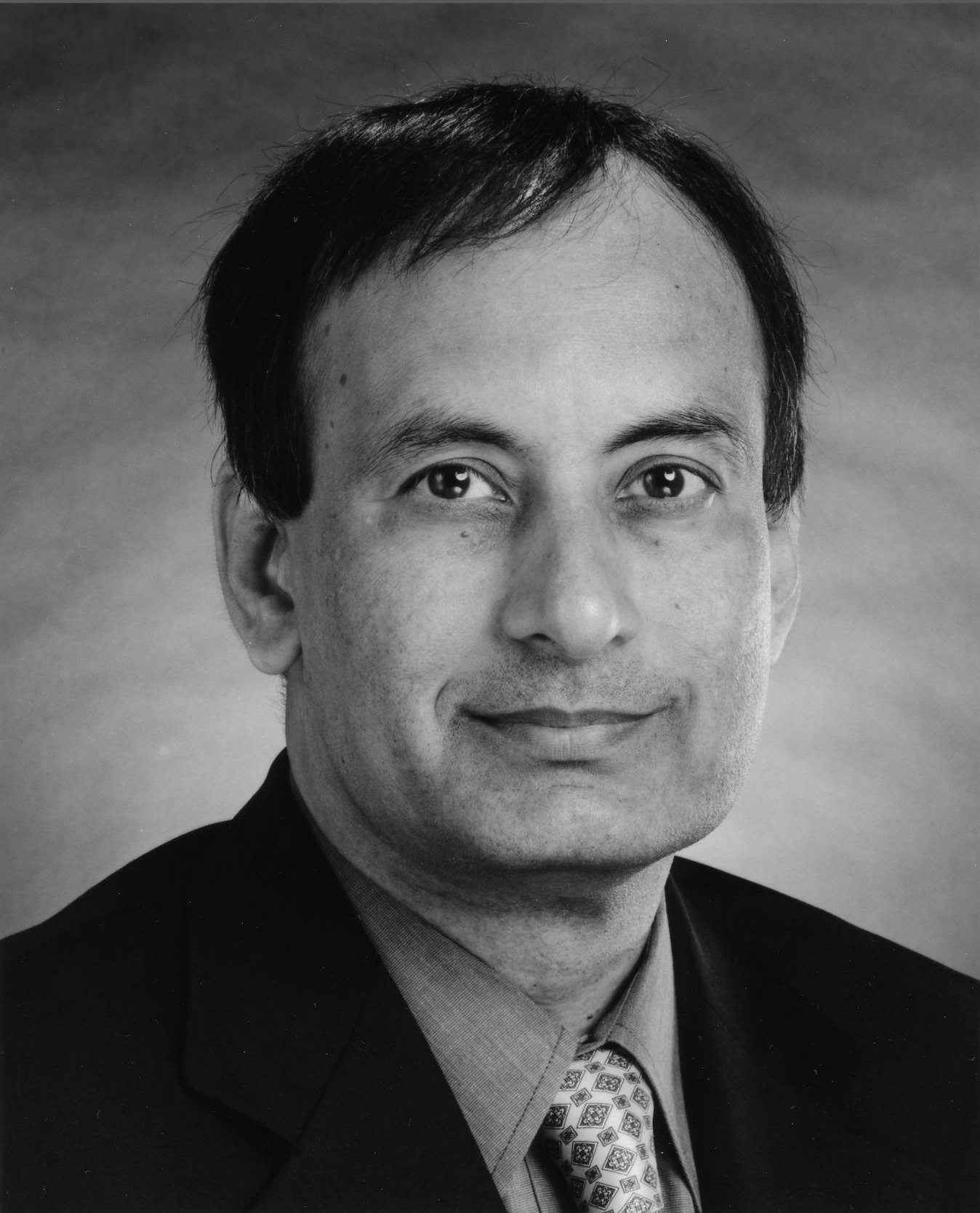
Former Visiting Scholar
Recent Work
Mr. Husain Haqqani, Ashley J. Tellis
Mr. Husain Haqqani
Carnegie India does not take institutional positions on public policy issues; the views represented herein are those of the author(s) and do not necessarily reflect the views of Carnegie, its staff, or its trustees.

After the chill in ties between 2020 and 2024 that brought India–China relations to their lowest point in several decades, the two countries have engaged each other afresh. This paper argues that there are predominantly four imperatives guiding India’s approach to China, and they exist in an order of priority.

Saheb Singh Chadha

This piece argues that India’s central challenge is not managing a single flashpoint but resolving the underlying tension between expansion and institutional coherency of the BRICS grouping.

Vrinda Sahai

A partnership between India, a country of subcontinental size, and Africa, a continent of fifty-four countries, may seem asymmetric until one notes that both are home to nearly the same number of people—1.4 billion. This essay spells out the existing challenges to the partnership, its optimal potential, and the possible pathways to realize it over the next quarter-century.

Rajiv Bhatia

The India–EU Free Trade Agreement (FTA) is shaping up to be one of the most consequential trade negotiations, both economically and strategically. But, what’s in the agreement, what’s missing, and what will determine its success in the years ahead
Vrinda Sahai, Nicolas Köhler-Suzuki

On March 10, 2026, India’s Union Cabinet approved amendments to Press Note 3, a regulation that mandated government approval on all foreign direct investment (FDI) from countries sharing a land border with India. This amendment raises questions primarily about whether its stated benefits will materialize and if the risks have been adequately weighed. This piece will address the same.

Konark Bhandari