

Commentary
Thomas de Waal
{
  "authors": [
    "Thomas de Waal"
  ],
  "type": "legacyinthemedia",
  "centerAffiliationAll": "dc",
  "centers": [
    "Carnegie Endowment for International Peace",
    "Carnegie Europe",
    "Carnegie Russia Eurasia Center"
  ],
  "collections": [],
  "englishNewsletterAll": "ctw",
  "nonEnglishNewsletterAll": "",
  "primaryCenter": "Carnegie Europe",
  "programAffiliation": "russia",
  "programs": [
    "Russia and Eurasia"
  ],
  "projects": [],
  "regions": [
    "Caucasus",
    "Azerbaijan",
    "Armenia"
  ],
  "topics": [
    "Security"
  ]
}
Source: Getty
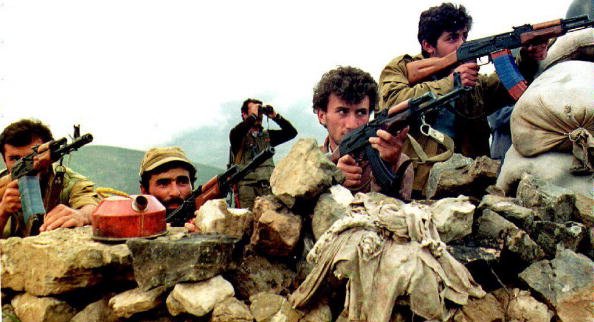
If Armenians and Azerbaijanis want to resolve their conflict peacefully, they need to start facing up to the acts of violence committed by both sides.
Source: National Interest

Each year there are now Khojali vigils, demonstrations, concerts and Facebook petitions. Azerbaijani television broadcasts the hideous footage of the dead bodies which littered the fields outside the town. Azerbaijan’s recently acquired energy riches are used to hire PR firms to promote events in Western capitals.
When I say I don’t want to take part it’s not because I deny the gravity of what happened. Khojali was the bloodiest massacre in the Armenian-Azerbaijani conflict over Nagorny Karabakh. According to the official parliamentary investigation in Azerbaijan, 485 people were killed, of whom only a few dozen were military men.
There is a mass of supporting evidence. Human Rights Watch, the Russian rights group Memorial and foreign journalists interviewed survivors in the immediate aftermath and put together a consistent picture of how Armenian armed men fired at columns of Azerbaijani civilians fleeing a besieged town. Memorial concluded, “The mass killing of civilians in the ‘free corridor’ zone and adjacent territory cannot be justified by any circumstances.”
The overwhelming evidence of what happened has not stopped some Armenians, in distasteful fashion, trying to muddy the waters. The then Azerbaijani president Ayaz Mutalibov made a bitter remark accusing his political opponents of involvement in the killings, which he later disavowed. But that has not stopped his quotation being endlessly cited in Armenia. More disturbing is the evidence of the Czech journalist Dana Mazalova, whom I met briefly last year in Armenia and have since corresponded with. Mazalova saw the original footage shot by the Azerbaijani cameraman Chingiz Mustafiev of the dead bodies and says that she did not see there the signs of mutilation that were in later footage. That has the grisly implication that someone interfered with the corpses afterwards.
But if you want corroborating sources that Azerbaijani civilians were killed by Armenians how about the most famous Armenian warrior of the Karabakh war and the current Armenian president? According to the memoir of his brother, Californian-born Armenian nationalist commander Monte Melkonian, was on the scene shortly afterwards and was disgusted by what he saw, blaming the killings on the “indiscipline” of two fanatical paramilitary units named Arabo and Aramo. And Serzh Sarkisian, now president of Armenia, confirmed to me in an interview in December 2000 that Armenian armed men had indeed killed Azerbaijani civilians. As a result of that interview, which I quoted in my book Black Garden, my name is also invoked in Azerbaijan every day on the Khojali anniversary, even though in the first paragraph of the book I ask readers “not to quote some of the information here selectively, to suit their own political agendas.”
And this is still the point. The Azerbaijani victims of Khojali deserve commemoration and justice. But so do Armenian victims, such as the kindergarten pupils, who died in the Azerbaijani artillery bombardment of the town of Stepanakert in 1991-92 and the more than 40 Armenian civilians who were reported massacred in the village of Maragha two months after Khojali.
Yet the commemorations of Khojali in Azerbaijan get bigger every year and have turned into a whole day of rehearsed national trauma. Inexcusably, the footage of the dead bodies is shown in schools to children as young as 10. The message is not just about remembering the dead but, “Armenians are aggressors and fascists and their deeds must be avenged. Anyone who dissents from this is a traitor.”
This is an especially dangerous message in 2011, as the 16-year-old ceasefire that halted the Karabakh conflict is more fragile than ever and there is an increasing risk of new fighting. Bloodshed is being used to call for more bloodshed. But two obvious points need to be made. First, Khojali was a terrible massacre but it was far from unique in the world. From Rwanda to Gujarat to Bosnia, other acts of mass bloodshed have occurred since. So the memory of the dead of Khojali should be honored alongside many others. Secondly, if Armenians and Azerbaijanis want to resolve their conflict peacefully, and not start a new one, they need to start facing up to the acts of violence they committed and not just talk about what they suffered at the hands of the other.

Senior Fellow, Carnegie Europe
Thomas de Waal is a senior fellow at Carnegie Europe, specializing in Eastern Europe and the Caucasus.
Recent Work
Thomas de Waal
Thomas de Waal
Carnegie India does not take institutional positions on public policy issues; the views represented herein are those of the author(s) and do not necessarily reflect the views of Carnegie, its staff, or its trustees.

In any defense establishment, change is an ongoing process. However, despite the best of intentions, existing bureaucracies, bound by habit and years of socialization, have their limits in implementing transformative change.

Anit Mukherjee

After the chill in ties between 2020 and 2024 that brought India–China relations to their lowest point in several decades, the two countries have engaged each other afresh. This paper argues that there are predominantly four imperatives guiding India’s approach to China, and they exist in an order of priority.

Saheb Singh Chadha

This piece argues that the present Indian strategy, based on opportunistic diversification and utilization of limited strategic reserves, remains inadequate when confronting supply disruptions. It evaluates India’s options in the short, medium, and long terms.

Vrinda Sahai

This piece examines India’s response to U.S. sanctions and tariffs, specifically assessing the immediate market consequences, such as alterations in import costs, and the broader strategic implications for India’s energy security and foreign policy orientation.
Vrinda Sahai
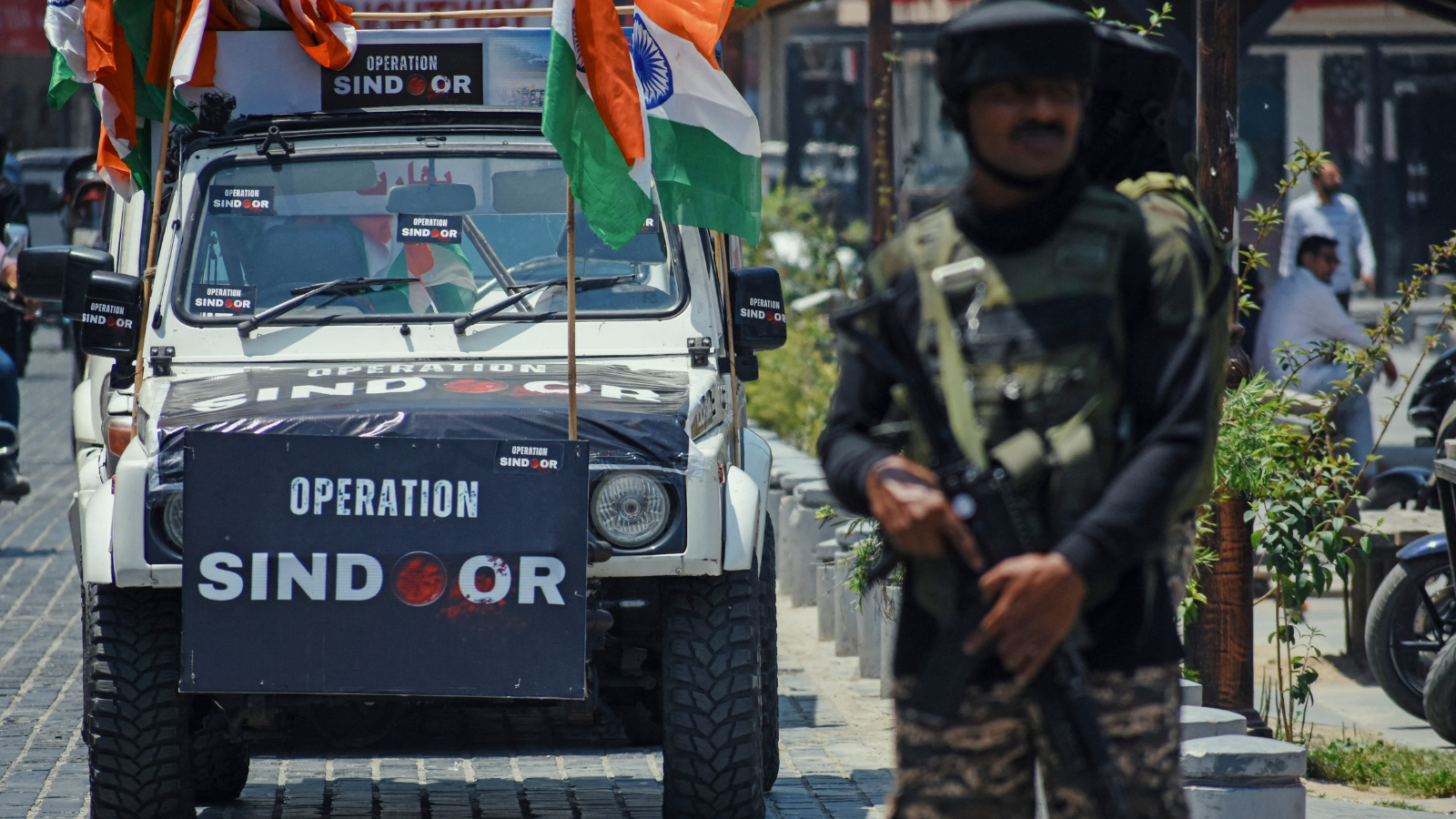
The India-Pakistan conflict that played out between May 6 and May 10, 2025, offers several military lessons. This article presents key takeaways from Operation Sindoor and breaks down how India’s preparations shaped the outcome and what more is needed to strengthen future readiness.

Dinakar Peri