

In The Media
David Rothkopf
{
  "authors": [
    "David Rothkopf"
  ],
  "type": "legacyinthemedia",
  "centerAffiliationAll": "",
  "centers": [
    "Carnegie Endowment for International Peace"
  ],
  "collections": [
    "Arab Awakening"
  ],
  "englishNewsletterAll": "",
  "nonEnglishNewsletterAll": "",
  "primaryCenter": "Carnegie Endowment for International Peace",
  "programAffiliation": "",
  "programs": [],
  "projects": [],
  "regions": [
    "Middle East",
    "Israel",
    "North Africa",
    "Egypt",
    "Palestine",
    "Bahrain"
  ],
  "topics": [
    "Political Reform",
    "Security",
    "Foreign Policy"
  ]
}
Source: Getty
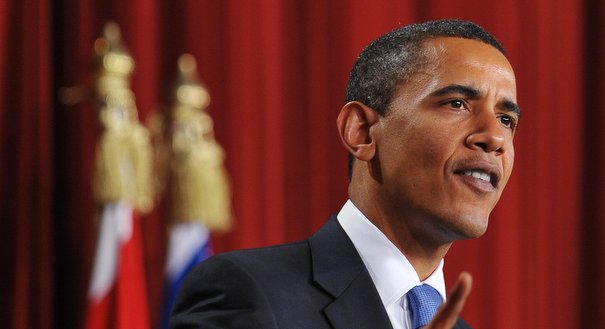
In his speech in response to the Arab Spring, President Obama indicated that the United States will seek to avoid being trapped into false trade-offs between stability and supporting repressive regimes, describing a significant shift in U.S. policy toward the region.
Source: Foreign Policy

It was a speech that revealed his strengths and weaknesses, his aspirations and his frustrations. It was the speech of an intelligent, ambitious president buffeted by two kinds of events in the world's most volatile region: those beyond his control and those over which he has only a modest amount of influence.
The two places in the Middle East over which Obama as commander in chief has the most direct influence -- Iraq and Afghanistan -- warranted only two lines in the 45 minute remarks. Even his signal military triumph, the raid that killed Osama bin Laden, was accorded only three short paragraphs. They were pointed, at the beginning of his talk. But it was clear, this was not primarily the talk of the man at the head of the U.S. military chain of command. These were remarks by America's diplomat-in-chief, an aspiring statesman.
The leitmotif of the address was the momentum of the moment. Drawing upon well-crafted anecdotes describing the Arab uprisings of this extraordinary season of discontent, Obama sought to underscore not divisions or conflicts with the region's leaders or our enemies, but rather kinship with the vast majority of its people. He spoke of Tunisia but then drew analogies to the Boston Tea Party or the defiance of Rosa Parks. Clearly, he is moved by the courage of the demonstrators throughout the region and the primary thrust of this speech was to make support for them and the reforms they seek a more formal centerpiece of America's policies in the region.
While many are focused on the nuanced shift in U.S. policy with regard to Israel and the Palestinian territories expressed toward the end of the address, by far the most significant shift in U.S. policy within the speech was its shift in emphasis. No more is U.S. policy going to be dominated by Iraq or Afghanistan. Terror and Iranian nuclear proliferation and Israel and Palestine are important but they will all be viewed in a broader context of resetting America's relations with the people of the region. This speech was truly Cairo Two, as some have already called it. While the president clearly acknowledged the impossibility of cookie-cutter approaches to each of the conundrums the region presents, he knit those approaches together by identifying and emphasizing our common aspirations with the majority of average citizens in the region. The U.S. will deal with leaders as we must but, acknowledging both the region's volatility and the legitimate right of its people to representative government, we will seek wherever practicable to avoid being trapped as we have been into false trade-offs between stability and repression.
Here, of course, we saw not only the distinctions between the subtle mind of this president and the impulse-driven, blunt instrument of his predecessor, but we also saw Obama's recognition of the limitations within which he must work. He was tough on Bahrain's leaders and sent an implicit message to the unnamed Saudi royal family that they need to address directly and soon the fundamental rights of their citizens, but it was also clear that he knew he could do little more than jaw-bone on this issue and that U.S. interests would obligate us to be at least as patient as we were insistent. He also underscored the sanctions announced yesterday against the Assad regime in Syria but in so doing, he signaled that despite the egregious behavior of Assad and his thugs, there would be no more Libyas, no more interventions.
The president's announcement of significant debt relief and aid for Egypt and Tunisia illustrated another facet of Obama-era statesmanship. Not only does he want to move away from the big stick approach of the Bush era and not only does he recognize the fact that only smaller sticks are available as tools for him and his allies, but he wants to move where he can to a different stance focused on incentives and positive reinforcement when real reform is possible. Further, by mentioning his desire to work with international financial institutions and our allies to create other financing, trade and technical assistance programs for reforming nations, he showed yet again his preference to work multilaterally and his recognition that the deficit-burdened U.S. would have to leverage its commitments with concurrent support from our friends.
On the issue of Israel and Palestine, his express support for a peace based on the 1967 borders of Israel was an instant lightning rod. But again, it was all done with a flick of the wrist, a minor but resonant adjustment, offset by strong statements of support for key Israeli goals, and thus balanced. With a small gesture therefore he was able to both send a strong message to Bibi Netanyahu and to the Palestinians that this was a different U.S. regime, open to different approaches to peace and cognizant of the changing balance of power in the region, and at the same time that despite that, Barack Obama's administration would remain Israel's staunchest supporter. In my view, it was pitch-perfect and, at the same time, pure Obama.
It was not only a microcosm that contained many of the elements of subtlety, calculation, idealism and pragmatism of the rest of the speech … but like the speech, was a microcosm containing many of the same elements of the man giving it. Obama is not where past presidents have been on Israel or Palestine or the Middle East. He is different from his predecessors in that he clearly feels more kinship with the people of the region as a whole and does not see it as the cartoonish world of good and evil or of a few leaders standing in the place of whole nations. He recognizes that he is living at a pivotal time not only in the history of the Middle East but also in the history of U.S. foreign policy. He must work within new constraints and yet he wants to find ways to use what leverage he does have to remain relevant. And he is a cagy, cerebral, finesse player -- the Roger Federer of politics and diplomacy, all grace and angles. (An analogy made sharper by the fact that Federer's dominance is fading in much the same way America's is.)
The speech was not exceptionally bold or creative because that is not this man. It was instead carefully crafted, balanced, realistic, thoughtful, and hopeful. It was not a thunderbolt. It was flawed in that it did not address in any way the energy dependency that tethers America to the problems of the region, glossed over the Iranian nuclear issue and ignored related core issues like Pakistan. But review it carefully and it will demonstrate strikingly how much has changed in a few short years in U.S. Mideast policy and, at the same time, it will give a clear idea what to expect from the man who is at the helm of an America working hard to find new approaches to leadership in very challenging times.
Former Visiting Scholar
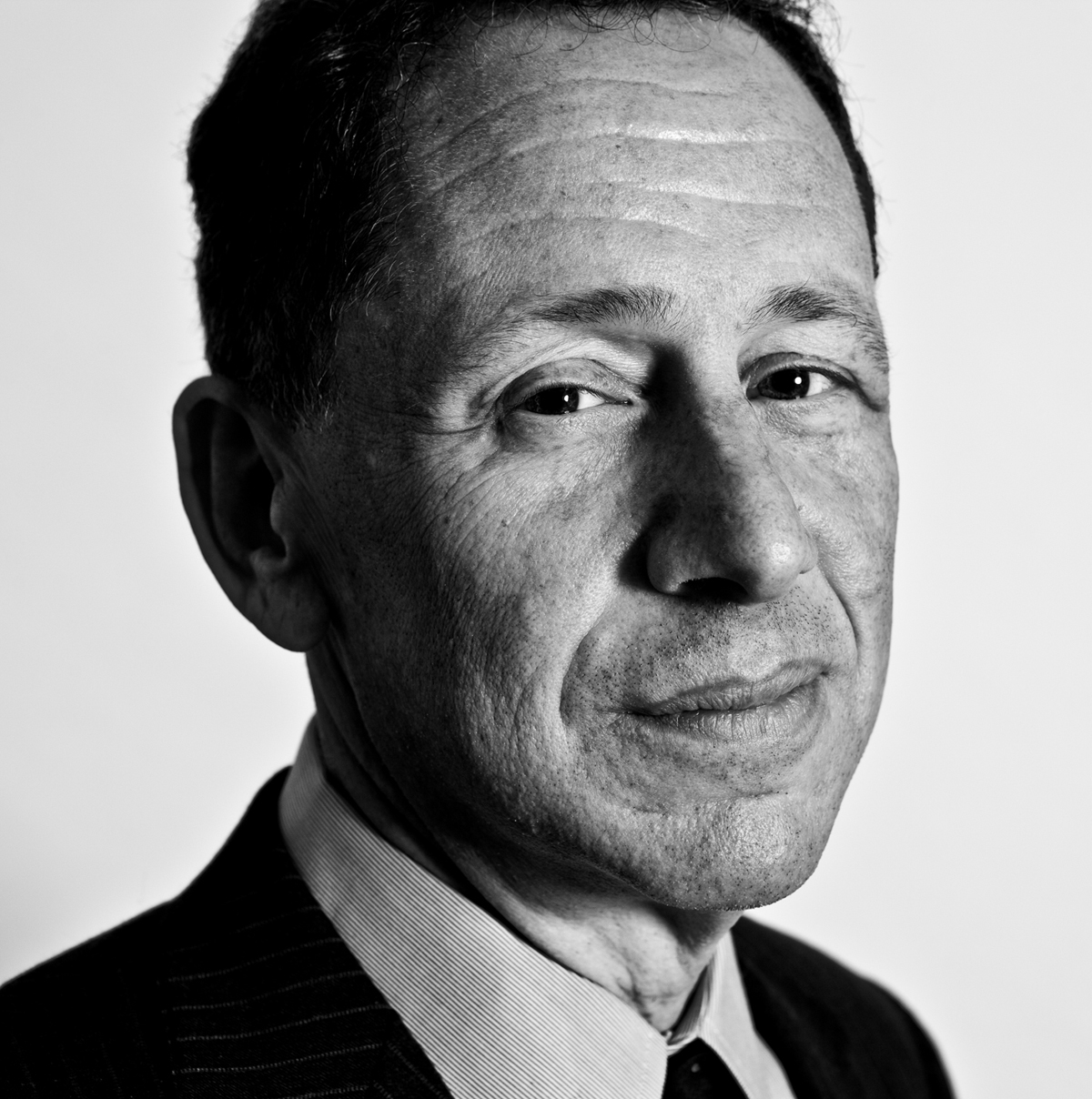
David Rothkopf was a visiting scholar at the Carnegie Endowment as well as the former CEO and editor in chief of the FP Group.
Recent Work
David Rothkopf
David Rothkopf
Carnegie India does not take institutional positions on public policy issues; the views represented herein are those of the author(s) and do not necessarily reflect the views of Carnegie, its staff, or its trustees.

This piece argues that the present Indian strategy, based on opportunistic diversification and utilization of limited strategic reserves, remains inadequate when confronting supply disruptions. It evaluates India’s options in the short, medium, and long terms.

Vrinda Sahai

This piece examines India’s response to U.S. sanctions and tariffs, specifically assessing the immediate market consequences, such as alterations in import costs, and the broader strategic implications for India’s energy security and foreign policy orientation.
Vrinda Sahai
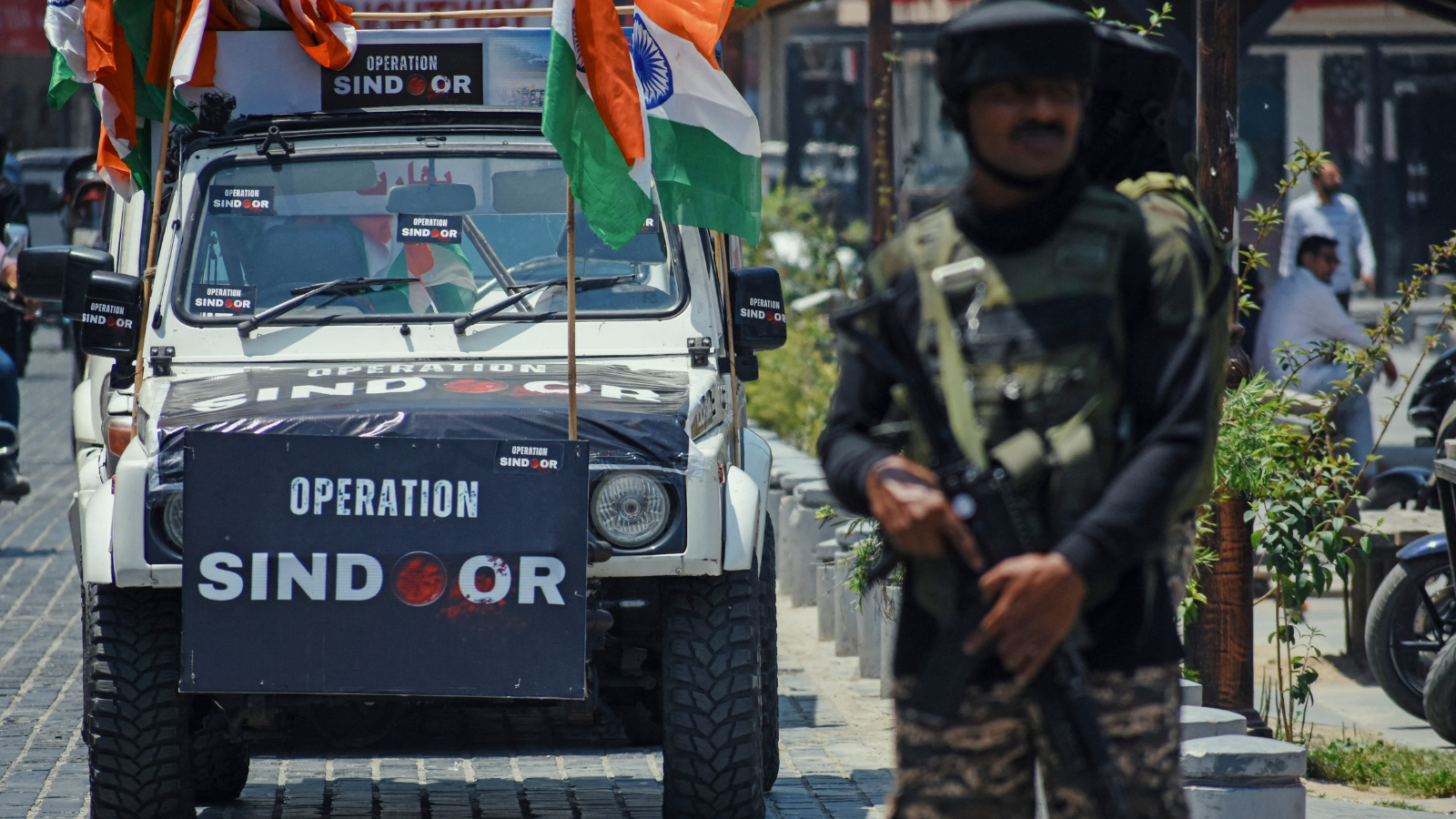
The India-Pakistan conflict that played out between May 6 and May 10, 2025, offers several military lessons. This article presents key takeaways from Operation Sindoor and breaks down how India’s preparations shaped the outcome and what more is needed to strengthen future readiness.

Dinakar Peri
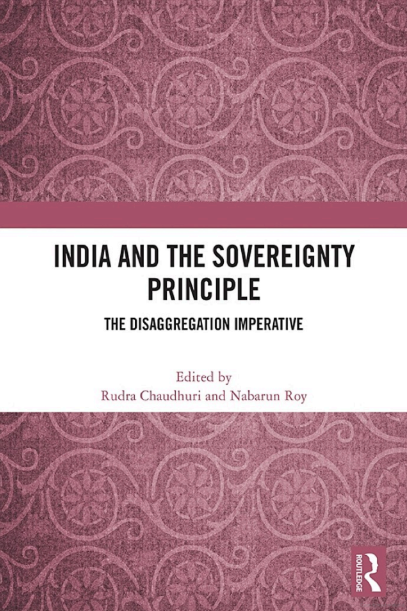
This book offers a comprehensive analysis of India's evolving relationship with sovereignty in a complex global order. Moving beyond conventional narratives, it examines how the sovereignty principle shapes India's behavior across four critical domains—from traditional military power to contemporary data governance.

Rudra Chaudhuri, Nabarun Roy
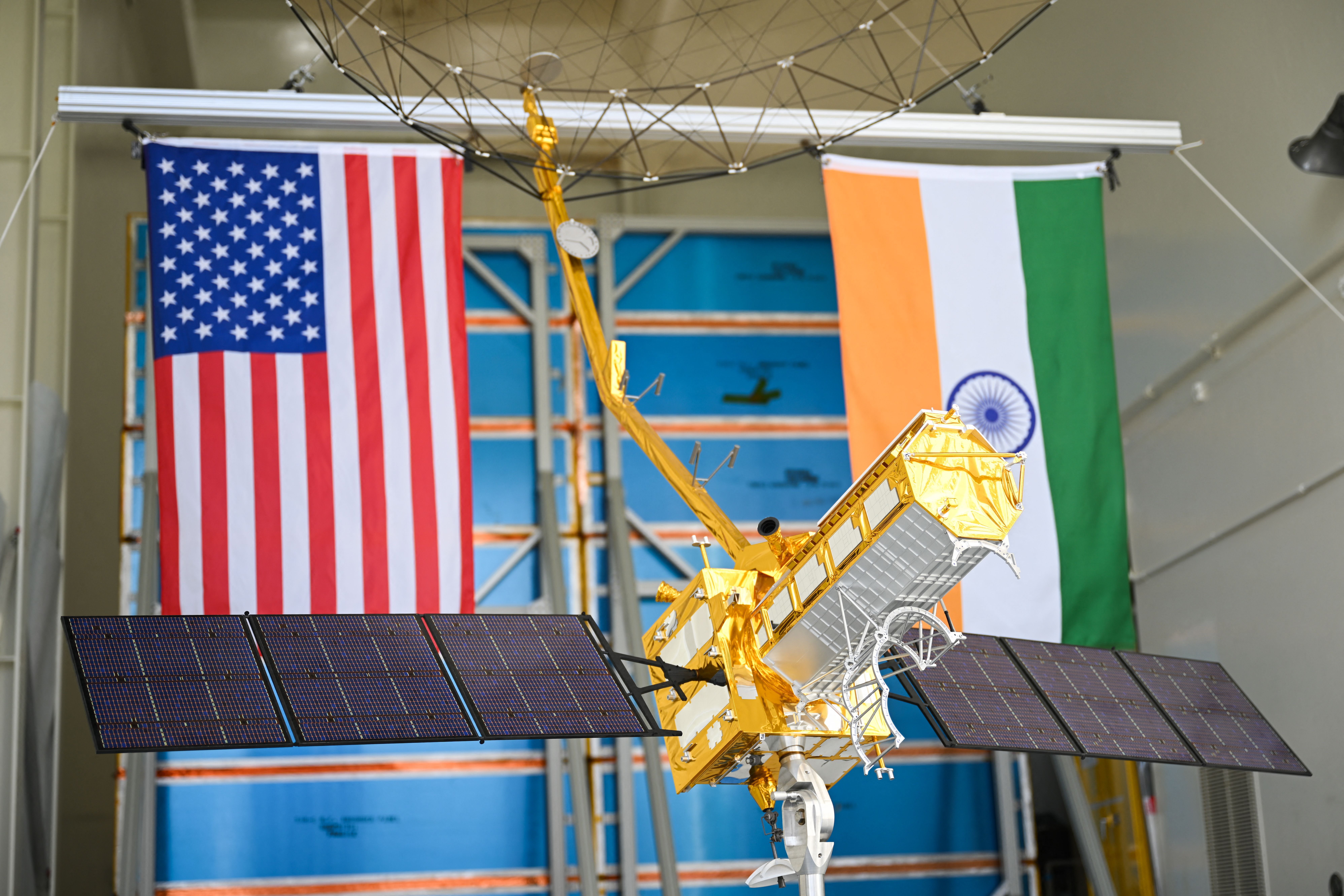
On July 30, 2025, the United States announced 25 percent tariffs on Indian goods. While diplomatic tensions simmered on the trade front, a cosmic calm prevailed at the Sriharikota launch range. Officials from NASA and ISRO were preparing to launch an engineering marvel into space—the NASA-ISRO Synthetic Aperture Radar (NISAR), marking a significant milestone in the India-U.S. bilateral partnership.

Tejas Bharadwaj