

Commentary
Katherine Wilkens
{
  "authors": [
    "Katherine Wilkens"
  ],
  "type": "legacyinthemedia",
  "centerAffiliationAll": "dc",
  "centers": [
    "Carnegie Endowment for International Peace",
    "Malcolm H. Kerr Carnegie Middle East Center"
  ],
  "collections": [],
  "englishNewsletterAll": "menaTransitions",
  "nonEnglishNewsletterAll": "",
  "primaryCenter": "Carnegie Endowment for International Peace",
  "programAffiliation": "MEP",
  "programs": [
    "Middle East"
  ],
  "projects": [],
  "regions": [
    "North America",
    "United States",
    "Middle East",
    "Iraq",
    "Syria",
    "Levant"
  ],
  "topics": [
    "Political Reform",
    "Security",
    "Military",
    "Foreign Policy"
  ]
}
Source: Getty
The U.S. experience in Iraq suggests that foreign military involvement could not have prevented the scenario we now see unfolding in Syria.
Source: National Interest

As the Assad regime has turned its attention to restoring state control over Damascus and Aleppo, its grip on other areas of the country has weakened. The full centrifugal forces of an increasingly sectarian civil war have begun to break loose with predictable results—more civilian deaths, more refugees and a greater threat of instability to Syria's neighbors. De facto geographic partition and even warlordism are the most likely outcomes of a fractious fight for control of the country as the regime collapses.
For months, the signs have pointed in this direction. Significant portions of the Christian community have taken refuge in their traditional villages near the coast or left the country. More are sure to follow. Alawites, with fewer opportunities to move abroad, are believed to be considering the option of retreating to redoubts of their own in the western mountain region if opposition forces gain the upper hand. Kurds, encouraged by their own recent military successes, appear to be in the process of creating a Kurdish area of control along the Syrian and Turkish border.
The U.S. experience in Iraq suggests that foreign military involvement could not have prevented the scenario we now see unfolding. Despite a massive and extended troop presence in Iraq—two hundred thousand strong at its peak—the United States could not stop the violence that followed the end of Saddam's iron rule. Between 2003 and 2011, over 162,000 Iraqi lives were lost, most of the country's ancient Christian communities were decimated, and an estimated 2.4 million Iraqis were internally displaced; according to the UN refugee agency, another 4.7 million became refugees abroad. It was not until several years into the carnage that the so-called Sunni Awakening helped reduce the level of violence and opened the possibility of sectarian collaboration.
From the start, the deeply divided state of the Syrian opposition has been a major obstacle to more effective international engagement. Understanding that the Assad regime's brutality could lead to massive revenge killings in the days after its fall, the United States has abjured the provision of lethal weapons, focusing instead on trying to ensure that weapons and funding provided by others do not fall into the hands of extremists. At the same time, Washington has sought to aid local coordinating committees with nonlethal equipment and worked on the difficult task of building greater unity within the opposition.
This strategy has met with modest results. Personal ambition as well as tactical and ideological differences have prevented the external opposition from forging a common agenda. In addition, key groups like the Syrian National Congress have been unsuccessful in building a national front that includes groups such as the Kurds, who are critical to maintaining the territorial integrity of the new Syrian state.
Lack of unity enabled Bashar al-Assad to play the Kurdish card last week by withdrawing his troops from key cities along the Turkish border and permitting his former ally, the Kurdish Democratic Union Party—a close partner of the militant PKK in Turkey—to move into the vacuum. In recent days, Kurdish forces in Kobane, Amude, Afrin and other "liberated" cities have engaged in violent clashes with the Free Syrian Army and prevented the FSA from entering these areas. These developments have strengthened the hand of the more extremist Kurdish elements and deeply embarrassed the Kurdish government in Iraq, which had provided military training and support to its Syrian cousins. It also has set off a predictable storm in Ankara and put Turkish prime minister Erdogan on the defensive. The fait accompli along the Turkish border will further complicate efforts to entice the Kurds to join the Syrian National Council and renounce demands for a semiautonomous zone in a post-Assad state.
In the days and weeks ahead, these and other developments will increase the sense of urgency for Turkey and neighboring countries. Pressure will build to endorse a strong figure that might be able to take the reins of the transition. But the United States should have learned from the experience in Iraq that national unity cannot be imposed from outside.
Washington should stay focused on four key objectives: preventing outside groups from benefiting from the power vacuum; denying weapons to extremists; providing humanitarian aid to those in need; and supporting efforts to build opposition unity. Through material, technical, communications and other nonlethal assistance, the United States should work with allies and neighboring countries to ensure that those who are organizing the courageous internal resistance against the regime and leading the revolution will have a key role in the transition to a new Syria.
This article was originally published in the National Interest.

Nonresident Fellow, Middle East Program
Katherine Wilkens is a nonresident fellow at the Carnegie Endowment for International Peace where she formerly served as deputy director of the Middle East Program.
Recent Work
Katherine Wilkens
Katherine Wilkens
Carnegie India does not take institutional positions on public policy issues; the views represented herein are those of the author(s) and do not necessarily reflect the views of Carnegie, its staff, or its trustees.

This piece argues that India’s central challenge is not managing a single flashpoint but resolving the underlying tension between expansion and institutional coherency of the BRICS grouping.

Vrinda Sahai

A partnership between India, a country of subcontinental size, and Africa, a continent of fifty-four countries, may seem asymmetric until one notes that both are home to nearly the same number of people—1.4 billion. This essay spells out the existing challenges to the partnership, its optimal potential, and the possible pathways to realize it over the next quarter-century.

Rajiv Bhatia

The U.S.–India semiconductor cooperation story is well-stocked with top-level strategic intent. What remains unresolved, however, are some underlying challenges that will determine whether the cooperation actually functions. Three such friction points stand out.

Shruti Mittal

The India–EU Free Trade Agreement (FTA) is shaping up to be one of the most consequential trade negotiations, both economically and strategically. But, what’s in the agreement, what’s missing, and what will determine its success in the years ahead
Vrinda Sahai, Nicolas Köhler-Suzuki
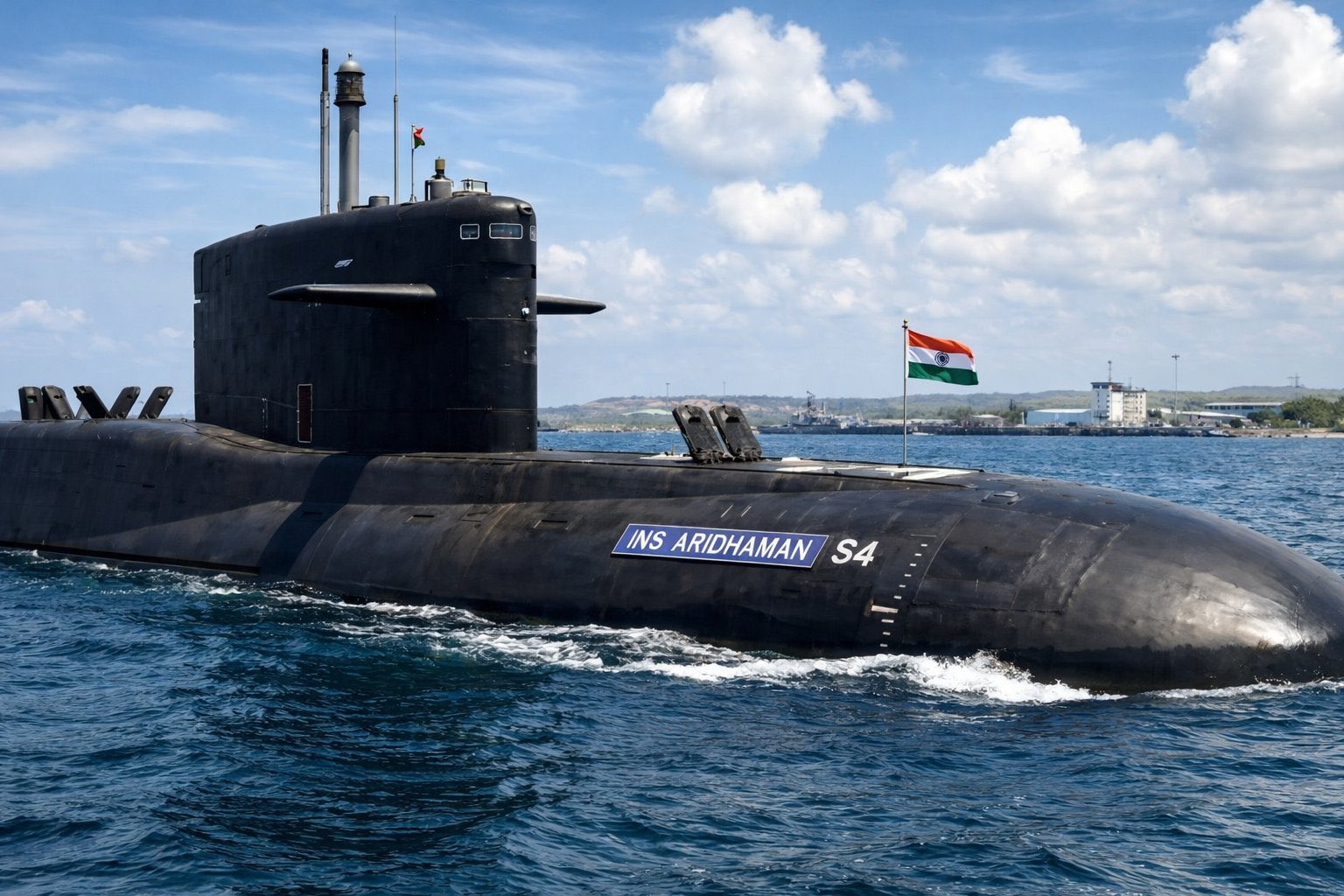
The induction of INS Aridhaman, which features several technological enhancements, now gives India the third nuclear ballistic missile submarine to ensure continuous at-sea deterrent.

Dinakar Peri