

Other
- +18
James M. Acton, Saskia Brechenmacher, Cecily Brewer, …
{
  "authors": [
    "James M. Acton"
  ],
  "type": "questionAnswer",
  "centerAffiliationAll": "dc",
  "centers": [
    "Carnegie Endowment for International Peace",
    "Carnegie China"
  ],
  "collections": [
    "China’s Foreign Relations",
    "U.S.-China Relations",
    "U.S. Nuclear Policy",
    "Korean Peninsula"
  ],
  "englishNewsletterAll": "ctw",
  "nonEnglishNewsletterAll": "",
  "primaryCenter": "Carnegie Endowment for International Peace",
  "programAffiliation": "NPP",
  "programs": [
    "Nuclear Policy"
  ],
  "projects": [],
  "regions": [
    "North America",
    "United States",
    "East Asia",
    "North Korea"
  ],
  "topics": [
    "Nuclear Policy",
    "Arms Control",
    "Security"
  ]
}
Source: Getty
An evaluation of North Korea’s third nuclear test and its developing nuclear capability.
Following through on its threat, North Korea conducted its third nuclear test. In a Q&A, James M. Acton details what we know about the test and North Korea’s developing nuclear capability.
A significant earth tremor originating from the vicinity of North Korea’s test site was detected across Asia on Tuesday. It was immediately clear from the seismic data that the cause was an explosion rather than an earthquake.
Although seismic signals cannot unambiguously distinguish between conventional and nuclear explosions, there is effectively no doubt that the explosion was nuclear. Satellite imagery would have revealed a North Korean attempt to assemble the required quantity of conventional explosives.
Unfortunately, because the depth of the test is not known and the geology of the test site is uncertain, translating the seismic magnitude into yield is difficult. The U.S. director of national intelligence stated that the yield was “several kilotons,” which is equivalent to several thousand tons of TNT. The South Korean government placed it at 6–7 kilotons. My own back-of-the-envelope calculation suggests a yield of between 4 and 15 kilotons.
By way of comparison, the 2006 test had a yield of about 0.9 kilotons. There is much more uncertainty about the yield of the second test, but most estimates range from about 2 kilotons to 7 kilotons. Therefore, it is likely but not certain that the most recent test was the largest of the three.
There was extensive speculation before the test that Pyongyang would test a miniaturized device that could be fitted to a ballistic missile (most analysts believe North Korea’s goal is to be able to threaten South Korea, Japan, and, in the longer run, the United States with nuclear missiles). Moreover, Pyongyang has stated that it tested a “smaller and light A-bomb unlike the previous ones,” implying that it did indeed test a miniaturized device.
That said, there is not yet any independent confirmation of Pyongyang’s claims because neither the size nor the weight of a device can be extracted from seismic data. Moreover, in an interesting—and distinctly North Korean—twist, a separate and apparently contradictory statement from Pyongyang implied that, even before the test, it had already developed a miniaturized warhead.
A few weeks ago, North Korea announced its intention to conduct “a nuclear test of higher level.” This statement was generally interpreted to mean that it was aiming for a higher yield than either of its first two tests. While it may have achieved this goal, it is possible that Pyongyang was aiming for a significantly higher yield—on a par with early American weapons (15–20 kilotons) or perhaps even larger. If this was North Korea’s goal, then the test should be considered a partial failure.
A second alternative (not mutually exclusive with the first) is that North Korea tested a highly enriched uranium design. North Korea’s first test used plutonium. It is widely assumed that its second test also used plutonium, although this has not been definitively established. A third test, therefore, may have been intended to validate a design using highly enriched uranium.
A highly enriched uranium test would be a significant development. North Korea’s plutonium stockpile is small and has been depleted somewhat by earlier tests. Given the dilapidated state of its plutonium-production infrastructure, it would be both difficult and expensive to produce more. If, however, North Korea has mastered uranium enrichment, it could expand its arsenal relatively cheaply and quickly.
Unfortunately, we don’t yet have any evidence as to the device’s design yield or whether it was made from plutonium or highly enriched uranium.
Yes. It is technically harder to miniaturize a uranium device than a plutonium one. So, a test of a miniaturized uranium device would be particularly worrying. It would not only mean that Pyongyang had mastered uranium enrichment and developed (or was well on its way to developing) a warhead that could be mounted on a ballistic missile but also point to rapid improvement in North Korea’s technical prowess.
If radioactive material from North Korea’s test has leaked into the atmosphere, then it might be possible to learn more about the device. There are many air monitors capable of detecting minute amounts of radiation across the world (some of which are part of the monitoring system set up to verify the Comprehensive Nuclear-Test-Ban Treaty). In advance of the test, many governments deployed additional such assets to the region.
If radioactivity is detected, it should be possible to distinguish between a uranium and a plutonium device. It may also be possible to assess what other materials were present in the device and hence make educated guesses about its design (but the government is unlikely to be forthcoming with this information).
Unfortunately, there is no guarantee of radioactive leakage or that any radioactive leakage that does occur will be detected. No material from North Korea’s second test was detected, for instance. However, many U.S. and Russian tests leaked, even with those countries’ considerable experience in underground tests. So don’t assume that the 2013 test won’t leak.

Jessica T. Mathews Chair, Co-director, Nuclear Policy Program
Acton holds the Jessica T. Mathews Chair and is co-director of the Nuclear Policy Program at the Carnegie Endowment for International Peace.
Recent Work


James M. Acton, Saskia Brechenmacher, Cecily Brewer, …
James M. Acton
Carnegie India does not take institutional positions on public policy issues; the views represented herein are those of the author(s) and do not necessarily reflect the views of Carnegie, its staff, or its trustees.

The U.S.–India semiconductor cooperation story is well-stocked with top-level strategic intent. What remains unresolved, however, are some underlying challenges that will determine whether the cooperation actually functions. Three such friction points stand out.

Shruti Mittal

This piece argues that the present Indian strategy, based on opportunistic diversification and utilization of limited strategic reserves, remains inadequate when confronting supply disruptions. It evaluates India’s options in the short, medium, and long terms.

Vrinda Sahai
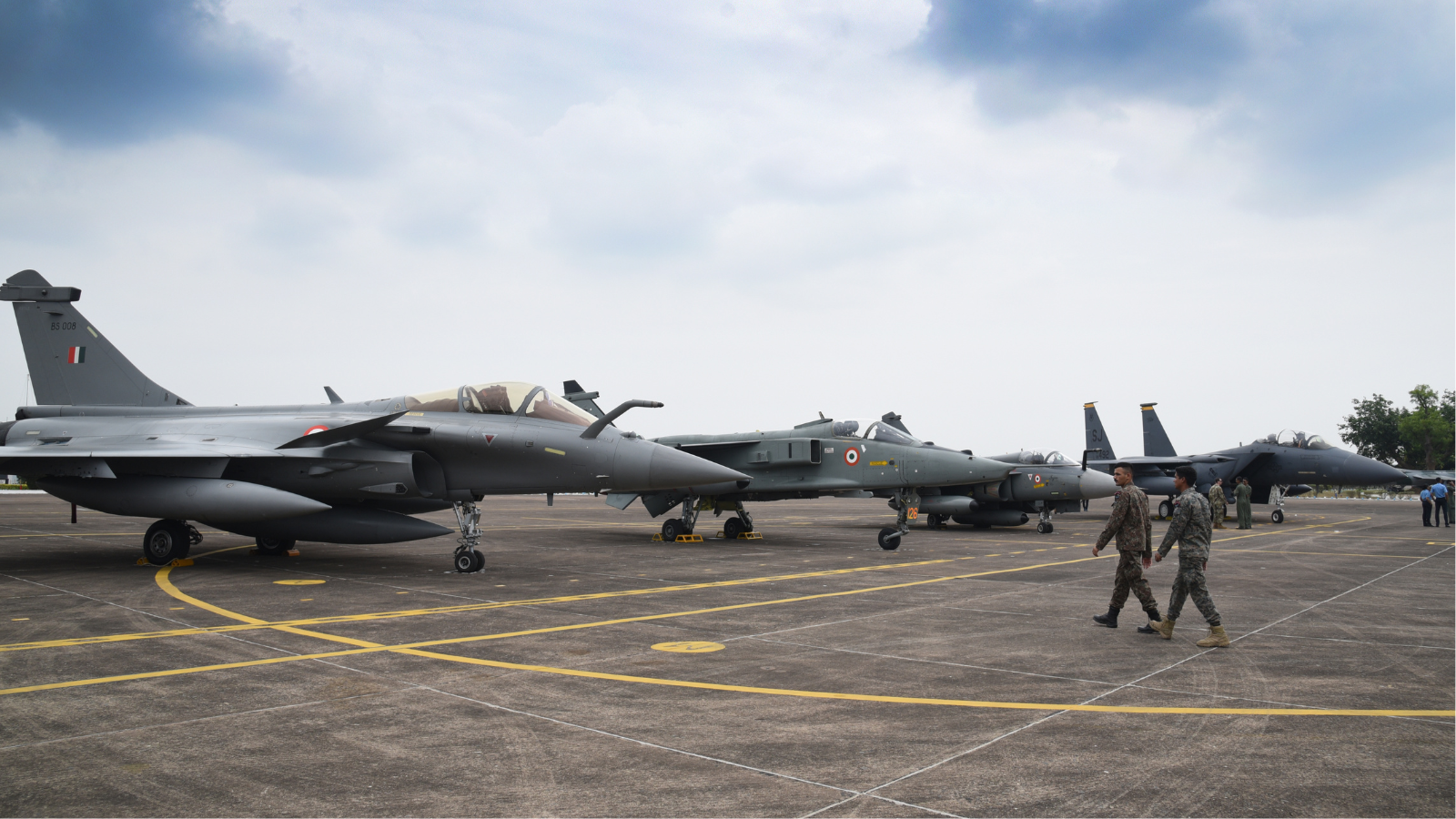
India and the United States are close to concluding a Reciprocal Defense Procurement Agreement (RDPA) that will allow firms from the two countries to sell to each other’s defense establishments more easily. While this may not remedy the specific grievances both sides may have regarding larger bilateral issues, an RDPA could restore some momentum, following the trade deal announcement.

Konark Bhandari

On the last day of the India AI Impact Summit, India signed Pax Silica, a U.S.-led declaration seemingly focused on semiconductors. While India’s accession to the same was not entirely unforeseen, becoming a signatory nation this quickly was not on the cards either.
Konark Bhandari

This piece examines India’s response to U.S. sanctions and tariffs, specifically assessing the immediate market consequences, such as alterations in import costs, and the broader strategic implications for India’s energy security and foreign policy orientation.
Vrinda Sahai