• Research
  • About
  • Experts
Carnegie India logoCarnegie lettermark logo
AI
{
  "authors": [
    "Alexandra McLees",
    "Matthew Kupfer"
  ],
  "type": "commentary",
  "centerAffiliationAll": "",
  "centers": [
    "Carnegie Endowment for International Peace",
    "Carnegie Russia Eurasia Center"
  ],
  "collections": [],
  "englishNewsletterAll": "",
  "nonEnglishNewsletterAll": "",
  "primaryCenter": "Carnegie Endowment for International Peace",
  "programAffiliation": "",
  "programs": [],
  "projects": [],
  "regions": [
    "North America",
    "United States",
    "Middle East",
    "Iraq",
    "Caucasus",
    "Russia",
    "Georgia",
    "Eastern Europe",
    "Ukraine"
  ],
  "topics": [
    "Security",
    "Foreign Policy"
  ]
}

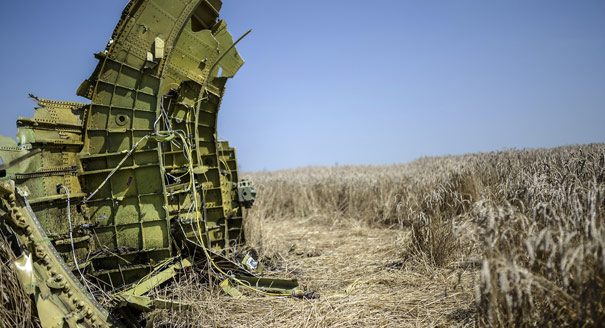
Source: Getty

Commentary

A Proxy War in Ukraine?

During the Cold War, both Washington and Moscow actively encouraged, financed, and supported proxy wars across Asia, Africa, and Latin America. In the eyes of many influential figures in Moscow, that is precisely what is happening in Ukraine today.

Link Copied
By Alexandra McLees and Matthew Kupfer
Published on Jul 31, 2014

Moscow appears to have sloughed off recent suggestions in the New York Times that the Pentagon might provide the Ukrainian government with tactical data that could help target surface-to-air missiles controlled by pro-Russian separatists in the country’s east. In a conflict known for polarizing rhetoric, accusations, and sweeping conspiracy, that’s a bit surprising but also seems consistent with Moscow’s blanket denials that it is providing advanced weaponry to the separatists.

In Washington, the debate on providing lethal aid to Ukraine is heating up, even though President Obama has staked out a clearly skeptical position.  While the Times was careful to note that the White House has not been asked to render a final decision about the targeting data, a top member of President Obama’s national security team Benjamin Rhodes has publicly acknowledged that the Administration has forged some form of intelligence-sharing relationship with Kyiv.  (This effort has essentially been an open secret since CIA Director John Brennan’s ill-timed visit to Kyiv in mid-April.)  Obviously, providing real-time data that allows Kyiv’s forces to target the separatist more effectively would represent a major escalation of U.S. involvement in the conflict.  The Times’ anonymous source acknowledged as much, noting “The debate is over how much to help Ukraine without provoking Russia.”

For its part, the Russian government has already made its anger about U.S. involvement in the Ukraine crisis abundantly clear.  But it has consistently left the world of fact-based analysis behind, relying instead on doctored YouTube videos allegedly showing Blackwater mercenaries in Ukraine and, more recently, inflammatory claims in a formal statement by the Ministry of Foreign Affairs that Washington “pushed the regime [in Kyiv] to organize a severe reprisal against the Russian-speaking population.”  

The sad reality is this kind of latter-day proxy war behavior has been visible in a number of conflict zones since the collapse of the Soviet Union. The most serious instance was in Georgia where the Bush administration helped train and equip the country’s military and intelligence services for a variety of peacekeeping and counter-terrorism missions.  In August 2008 at the height of the Russian-Georgian war, the U.S. Department of Defense helped airlift Georgian forces deployed in Iraq so that they could return to Tbilisi after Russian troops moved to seize the breakaway provinces of South Ossetia and Abkhazia. 

From Washington’s perspective, the most serious incident prior to the Ukraine crisis may have been Russia’s provision of sensitive military equipment and intelligence to Iraq before and during the U.S. invasion in 2003. At the start of the Iraq War, U.S. officials discovered that Saddam Hussein’s troops were using Russian-supplied jamming equipment capable of disrupting U.S. missile guidance systems—and receiving on-the-ground consultations from the manufacturer’s experts.  After the invasion, U.S. officials found documentary evidence that showed Moscow had also provided Iraq night-vision goggles and, according to a March 2006 U.S. Department of Defense study based on captured Iraqi documents, that Russian intelligence on American troop movements had been passed to Saddam Hussein during the early days of the war.

During the Cold War, both Washington and Moscow actively encouraged, financed, and supported proxy wars across Asia, Africa and Latin America.  In the eyes of many influential figures in Moscow, that is precisely what is happening in Ukraine today. To be sure, Washington and many key European allies are quick to reject such characterizations, focusing instead on President Putin’s outrageous behavior in eastern Ukraine and shocking land-grab in Crimea.  But from Putin on down, perception is often reality so it’s worth taking a close look at what the Cold War and post-Cold War period can teach us about the far-reaching and destabilizing effects of proxy wars on the overall east-west relationship.  The provision of intelligence data on separatist missile launch sites to Kyiv may be a sound step for shoring up the Ukrainian military’s position in the East in the short-term. But given the all too present risk of escalation, such a move seems unlikely to go without a serious response.  The Obama administration needs to be prepared.

Alexandra McLees is a junior fellow in the Carnegie Endowment for International Peace’s Russia and Eurasia Program. Follow her on Twitter: @OlaMcLees.

Matthew Kupfer is a junior fellow in the Carnegie Endowment for International Peace’s Russia and Eurasia Program. Follow him on Twitter: @Matthew_Kupfer.

About the Authors

Alexandra McLees

Former Junior Fellow, Russia and Eurasia and Energy and Climate Programs

Matthew Kupfer

Former Junior Fellow, Russia and Eurasia Program

Authors

Alexandra McLees
Former Junior Fellow, Russia and Eurasia and Energy and Climate Programs
Matthew Kupfer
Former Junior Fellow, Russia and Eurasia Program
SecurityForeign PolicyNorth AmericaUnited StatesMiddle EastIraqCaucasusRussiaGeorgiaEastern EuropeUkraine

Carnegie India does not take institutional positions on public policy issues; the views represented herein are those of the author(s) and do not necessarily reflect the views of Carnegie, its staff, or its trustees.

More Work from Carnegie India

  • Article
    India–Africa Strategic Partnership: Challenges, Potential, and Possible Pathways

    A partnership between India, a country of subcontinental size, and Africa, a continent of fifty-four countries, may seem asymmetric until one notes that both are home to nearly the same number of people—1.4 billion. This essay spells out the existing challenges to the partnership, its optimal potential, and the possible pathways to realize it over the next quarter-century.

      Rajiv Bhatia

  • Commentary
    The Unresolved Challenges in U.S.–India Semiconductor Cooperation

    The U.S.–India semiconductor cooperation story is well-stocked with top-level strategic intent. What remains unresolved, however, are some underlying challenges that will determine whether the cooperation actually functions. Three such friction points stand out.

      Shruti Mittal

  • Commentary
    Emerging From the “Zombie State” of Trade Agreements: The India-EU FTA

    The India–EU Free Trade Agreement (FTA) is shaping up to be one of the most consequential trade negotiations, both economically and strategically. But, what’s in the agreement, what’s missing, and what will determine its success in the years ahead

      Vrinda Sahai, Nicolas Köhler-Suzuki

  • Article
    India’s Oil Security Strategy: Structural Vulnerabilities and Strategic Choices

    This piece argues that the present Indian strategy, based on opportunistic diversification and utilization of limited strategic reserves, remains inadequate when confronting supply disruptions. It evaluates India’s options in the short, medium, and long terms.

      Vrinda Sahai

  • India and a Changing Global Order: Foreign Policy in the Trump 2.0 Era
    Research
    India and a Changing Global Order: Foreign Policy in the Trump 2.0 Era

    Trump 2.0 has unsettled India’s external environment—but has not overturned its foreign policy strategy, which continues to rely on diversification, hedging, and calibrated partnerships across a fractured order.

      • Sameer Lalwani
      • +6

      Milan Vaishnav, ed., Sameer Lalwani, Tanvi Madan, …

Get more news and analysis from
Carnegie India
Carnegie India logo, white
Unit C-4, 5, 6, EdenparkShaheed Jeet Singh MargNew Delhi – 110016, IndiaPhone: 011-40078687
  • Research
  • About
  • Experts
  • Projects
  • Events
  • Contact
  • Careers
  • Privacy
  • For Media
Get more news and analysis from
Carnegie India
© 2026 Carnegie Endowment for International Peace. All rights reserved.