

In The Media
Lina Khatib
{
  "authors": [
    "Lina Khatib"
  ],
  "type": "legacyinthemedia",
  "centerAffiliationAll": "dc",
  "centers": [
    "Carnegie Endowment for International Peace",
    "Malcolm H. Kerr Carnegie Middle East Center"
  ],
  "collections": [],
  "englishNewsletterAll": "menaTransitions",
  "nonEnglishNewsletterAll": "",
  "primaryCenter": "Malcolm H. Kerr Carnegie Middle East Center",
  "programAffiliation": "MEP",
  "programs": [
    "Middle East"
  ],
  "projects": [],
  "regions": [
    "Gulf",
    "Levant",
    "Middle East"
  ],
  "topics": [
    "Political Reform",
    "Security"
  ]
}
Source: Getty
There is consensus amongst the Arab news media, regardless of their country of origin or ideological leaning, that the Islamic State is a terrorist organization.
Source: NPR All Things Considered
ARUN RATH, HOST:
Arab countries like Saudi Arabia and the United Arab Emirates have joined the U.S.-led airstrikes against the so-called Islamic State, which got us wondering, how is the war on ISIS being covered in Arab countries? Lina Khatib is the director of the Carnegie Middle East Center in Beirut. I asked her first how news media in Arab countries are dealing with the problem of what to call the terrorist group - ISIS, ISIL, the Islamic State?
LINA KHATIB: There is one name that is basically the abbreviation of the Islamic State in Iraq and Syria, which in Arabic becomes (speaking Arabic). And in Arabic, Syria and the Levant are more or less the same name. So everybody just calls it ISIS basically.
RATH: So obviously a lot of the coverage in the West about ISIS has focused on the fate of several Western hostages who were recently murdered. What is the coverage like of ISIS in the Arab news media, as much as you can generalize?
KHATIB: There is consensus amongst the Arab news media, regardless of their country of origin or ideological leaning, that ISIS is a terrorist organization. ISIS does not have a single ally in the Middle East - not Iran, not any Arab country, not even, you know, Turkey. Everybody unanimously calls ISIS a terrorist organization in their coverage.
RATH: And are there any dramatic differences in coverage among Arab countries?
KHATIB: The dramatic differences are not about ISIS itself, but about the current attack by the coalition against ISIS. The different ways in which these channels are covering ISIS have more to do with the political position of each channel.
RATH: So can you run through say, like, the Syrian state media and the other media? Have they been supportive of the U.S. airstrikes?
KHATIB: Yes. They are broadly supportive. However, in the beginning, the Syrian state media was critical of the coalition's airstrikes, saying that they threaten Syrian sovereignty. But now we are seeing a shift in coverage. Al Mayadeen, for example, which is a TV station that reaches the whole of the Arab world but that is affiliated with the Lebanese paramilitary group Hezbollah, which is fighting alongside the Assad regime, talks about how Assad is basically helping the United States in this campaign by also bombing ISIS targets. The station wants to validate the role of Assad as a counterterrorism partner for the West.
RATH: Interesting. And what about the coverage from countries that are anti-Assad?
KHATIB: Qatar, for example, hosts Al Jazeera and it's a very vocal channel that is anti-Assad. And this channel is very much supportive of the coalition. And here we see a very blatant coverage of the brutality of ISIS. And there's a lot of coverage in other pan-Arab media, from countries affiliated with the coalition that present the Arab forces helping the U.S. in this campaign in a very positive light.
RATH: There were photographs released by Saudi Arabia of some of the pilots involved in the campaign. Also, we heard about a female pilot that was involved from the United Arab Emirates. I'm curious how that's played out in the media.
KHATIB: Both of these sets of images are about presenting Saudi Arabia and UAE as modern, progressive states. And also - especially in the case of the Saudi fighter pilots - trying to get Arab audiences to have heroes to identify with, which would counter the attraction of ISIS leaders, you know, when they appear in the media and their kind of exalted status that's meant to attract recruits. So this is definitely part of the propaganda against ISIS, using, in a way, similar strategies to ISIS itself.
RATH: Lina Khatib is the director of the Carnegie Middle East Center in Beirut. Thanks very much.
KHATIB: Thank you.
This interview was originally broadcasted on NPR's All Things Considered.
Former Director, Middle East Center
Khatib was director of the Carnegie Middle East Center in Beirut. Previously, she was the co-founding head of the Program on Arab Reform and Democracy at Stanford University’s Center on Democracy, Development, and the Rule of Law.
Recent Work
Lina Khatib
Lina Khatib
Carnegie India does not take institutional positions on public policy issues; the views represented herein are those of the author(s) and do not necessarily reflect the views of Carnegie, its staff, or its trustees.

In any defense establishment, change is an ongoing process. However, despite the best of intentions, existing bureaucracies, bound by habit and years of socialization, have their limits in implementing transformative change.

Anit Mukherjee

After the chill in ties between 2020 and 2024 that brought India–China relations to their lowest point in several decades, the two countries have engaged each other afresh. This paper argues that there are predominantly four imperatives guiding India’s approach to China, and they exist in an order of priority.

Saheb Singh Chadha

This piece argues that the present Indian strategy, based on opportunistic diversification and utilization of limited strategic reserves, remains inadequate when confronting supply disruptions. It evaluates India’s options in the short, medium, and long terms.

Vrinda Sahai

This piece examines India’s response to U.S. sanctions and tariffs, specifically assessing the immediate market consequences, such as alterations in import costs, and the broader strategic implications for India’s energy security and foreign policy orientation.
Vrinda Sahai
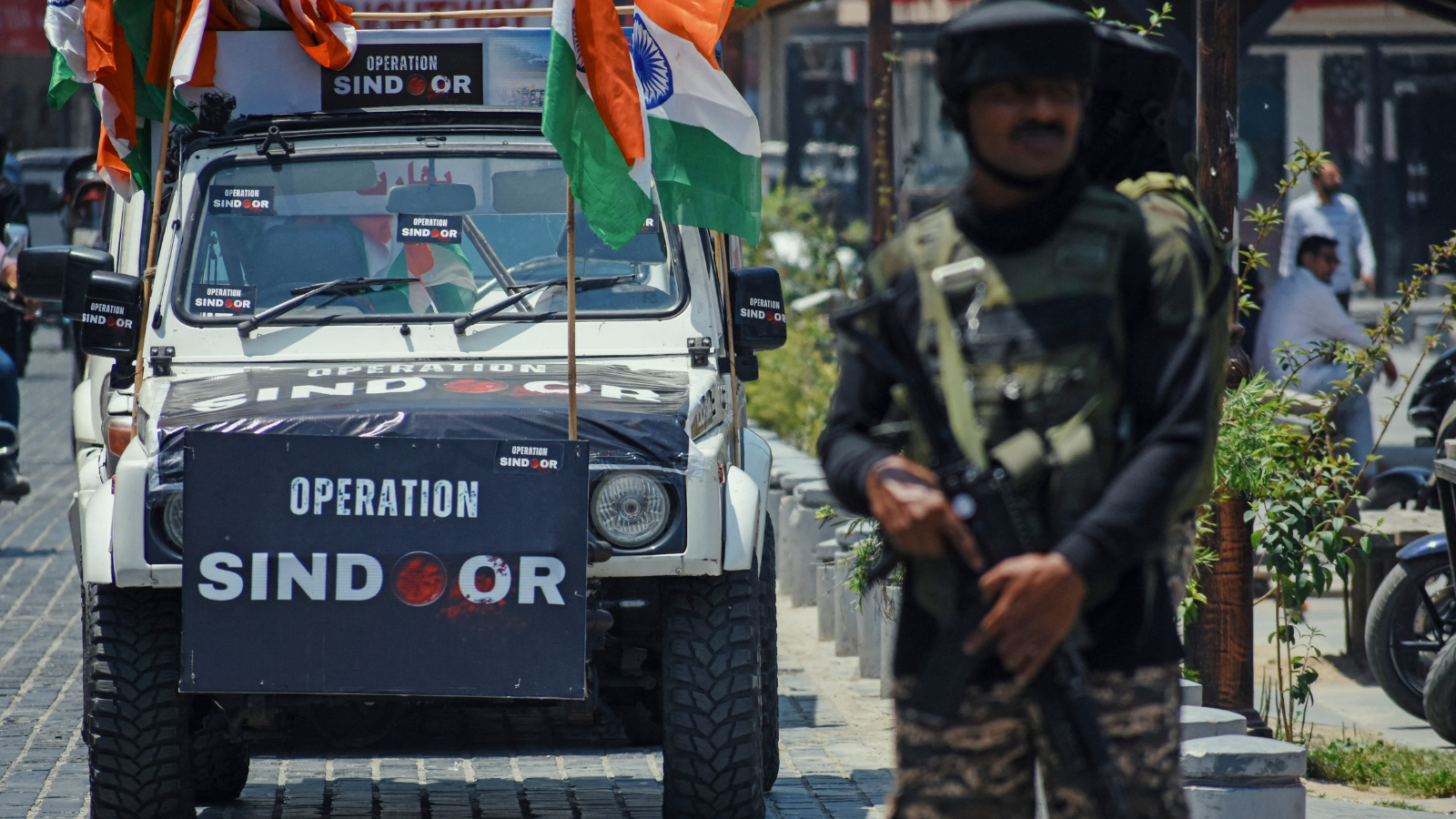
The India-Pakistan conflict that played out between May 6 and May 10, 2025, offers several military lessons. This article presents key takeaways from Operation Sindoor and breaks down how India’s preparations shaped the outcome and what more is needed to strengthen future readiness.

Dinakar Peri