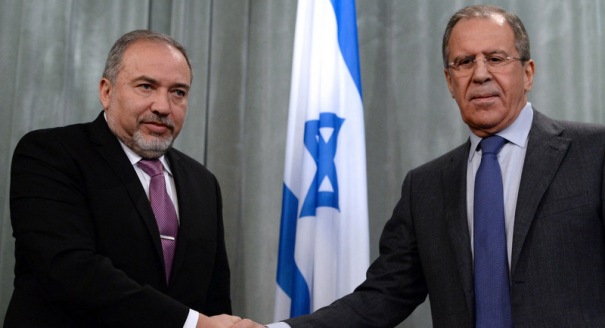
On 25—26 January 2015, Israeli Minister of Foreign Affairs Avigdor Lieberman visited Russia. The international community paid little attention to this event: from the beginning, Lieberman’s visit was planned as an ordinary working trip, meant to exchange views on existing regional problems and perspectives for bilateral relations with Moscow. Nothing was expected from it, and the visible results of the trip were also modest. Yet, the importance of this visit should not be underestimated. First of all, Russian analysts noticed that the overall atmosphere of the negotiations was very warm and friendly. Some of them even called it “cozy” (emphasizing both the comfortable environment of the meetings and their working format). During the dialogue, the sides tried to avoid discussion of the most difficult aspects of their bilateral relations and concentrated on those topics about which they could find a certain degree of mutual understanding.
It must be noted that, since the 1990s, Moscow has been on the lookout for opportunities to establish closer (if not strategic) relations with Tel Aviv. So far, this task has remained unachieved. However, Lieberman’s visit to Russia showed that the Kremlin’s hopes to upgrade its relations with Tel Aviv are not just baseless dreams. Approaching elections to the Knesset, the difficult situation in the Middle East, certain troubles in the U.S.—Israel dialogue, Moscow’s disagreement with the United States and the EU over Ukraine, and anti-Russian sanctions were the factors that suddenly nudged the sides toward each other. Indeed, the agenda of the Moscow talks was extremely broad. Topics discussed by Lieberman and his Russian counterparts (Russian Minister of Foreign Affairs Sergey Lavrov and Deputy Prime Minister Arkady Dvorkovich who also heads the joint Russian-Israeli trade and economic commission) ranged from bilateral economic cooperation to the situation in Syria and Ukraine.
For Moscow, Lieberman’s visit was quite important in and of itself. It provided the Kremlin with what the Russian authorities saw as another proof that existing Western sanctions and political efforts have failed to put Russia in international isolation. Under these circumstances, even the neutral position of the Israeli side on such international issues as the Ukrainian crisis and the activities of some nationalist forces in Eastern Europe were considered and, later on, propagated, by the Russians as a good sign. During the joint press conference with his Russian colleague, Lieberman was even compelled to comment on some of Lavrov’s answers to the press so that Israel would not be suspected of excessive pro-Kremlin sentiments.
However, these comments were very gentle: the Israeli authorities seemed also to be interested in a certain degree of cordiality in their relations with Moscow. First of all, this was determined by the overall situation in the broader Middle East. At this point, the outcomes of the Arab Spring and the rise of the Islamic State (IS) had seriously restructured the regional system of political relations. As Yuri Shcheglovin, one of the leading Russian experts on extremists movements in the Middle East, has said, whether Israel likes it or not, currently, IS represents a bigger threat than its traditional adversaries. So far, Tel Aviv has tried to deal with old challenges and sticks to its policy of relative non-involvement in the situation in Iraq as well as in the Syrian conflict. However, some experts believe that regional developments have already landed the Israeli authorities in the same trench as Bashar al-Assad, Abdel Fattah al-Sisi, Iranian ayatollahs, and Lebanon’s Hezbollah in the fight against the spread of jihadism and IS. According to them, it is only a question of time before Tel Aviv realizes as much. Under these circumstances, retaining temporary neutrality with the above-mentioned unexpected “allies” is one important factor to achieve a positive outcome in the struggle with IS and radical jihadists.
Within this framework, Moscow unexpectedly acquired additional importance for Tel Aviv because of the Kremlin’s close contacts with Damascus and Tehran. It is symbolic that Lieberman’s trip to Russia nearly coincided with the beginning of the Russian-organized talks between representatives of the Syrian opposition and official Damascus. Under these circumstances, the discussion of a wide range of regional issues (including the situation in Syria) during Lieberman’s trip to Moscow was inevitable. In the future, the Russian authorities may serve as an additional source of information for Israel regarding the intentions of the above-mentioned Middle Eastern countries, and play the role of a channel through which the Israelis can try to affect the behavior of their traditional opponents or, at least, send messages to them. This role would perfectly fit with Moscow’s self-perception as a potential mediator of the Middle Eastern affairs. And, to a certain extent, the Kremlin has already started to play such a role. Thus, shortly before Lieberman’s visit to Moscow, Israel requested that the Kremlin inform Tehran that Tel Aviv is not interested in the intensification of confrontation with the Iranians and Hezbollah following Brigadier General Mohammad-Ali Allah-Dadi’s death in Syria in January 2015.
Tensions between Israel and the Obama administration regarding Washington’s policy toward Iran have also compelled Tel Aviv to search for additional guarantees that Tehran’s nuclear research will not represent a threat to Israel. To a certain extent, such guarantees were received during Lieberman’s visit to Moscow. In his comments about the results of the meeting with his Israeli counterpart Russian Foreign Minister Sergey Lavrov emphasized that the Kremlin is set on settling the Iranian nuclear issue in such a way that any security threats for the countries of the region including Israel are eliminated. Apart from that, he also allayed Israeli concerns about the recent visit of Russian Minister of Defense Sergey Shoygu to Tehran. Lavrov stated that Russia does not break the limits imposed by the international community on military cooperation with Iran. This statement can probably be interpreted as a promise not to provide Tehran with S-300 missile complexes. Given the way that Moscow usually avoids making any declarations regarding Iran in its talks with Israeli officials these statements of Lavrov’s are quite bold and can be considered serious achievements for Lieberman.
Finally, the positive atmosphere of the Moscow talks may have been determined by a personal factor, or at least, this element should not be forgotten. Lieberman immigrated to Israel from the former USSR. He speaks perfect Russian and obviously understands Russian culture and reality. The way Lavrov and Lieberman addressed each other during their joint press conference also showed some degree of mutual respect. Apart from that, it is important to keep in mind that Lieberman is a leader of the Yisrael Beiteinu political party. Given the forthcoming elections to the Knesset, the Moscow trip provided him with opportunities to win additional support from the electorate. The Yisrael Beiteinu party traditionally counts on the Russian/Soviet expatriates, who, in spite of their mixed feelings about their ex-homeland, retain certain positive sentiments (and ties) to Russia. From this point of view, a trip to Moscow could elicit a positive reaction among some in the Russian-speaking Jewish community.
On the other hand, Lieberman also actively promotes his own ideas regarding the settlement of the Palestinian conflict as a part of his election campaign. The leader of the Yisrael Beiteinu periodically emphasizes that his movement is the only right wing political force in Israel that tries to solve the issue. Under these circumstances, the discussion of the Palestinian problem was inevitably raised during his visit to Moscow. Moreover, Lieberman used these talks to further demonstrate his attitude toward the Palestinian issue. It is notable that Russian officials refrained from comment when the Israel foreign minister accused the Palestinians of trying to turn the International Criminal Court into an instrument of their influence. Probably, by doing this, Moscow was paying Israel back for providing it with the chance to use Lieberman’s visit as another international platform for expressing its views on the situation in Ukraine.
As it is said in the film Lawrence of Arabia, “big things have small beginnings.” Lieberman’s trip may be such a small beginning. It is still unclear whether it will bring any deep changes in Russian-Israeli relations: to a certain extent, the quality of the visit was determined by the current state of international affairs, which may always change. However, the fact that Lieberman’s agenda in Moscow included such a wide range of questions shows that, at present, the two countries’ interests intersect at many points. Economic cooperation between the countries may also play a positive role in the development of political dialogue. From this point of view, Lieberman’s trip to Moscow was also a kind of follow up to the 11th session of the Joint Russian-Israeli Commission on Trade and Economic Cooperation held in October 2014. The sides discussed perspectives for bilateral cooperation in the fields of energy, oil and gas, agriculture, high-tech, and tourism. Apart from that they raised the question of the formation of a free-trade zone between Israel and the Eurasian Economic Union.