

Commentary
Alexander Gabuev
{
  "authors": [
    "Alexander Gabuev"
  ],
  "type": "legacyinthemedia",
  "centerAffiliationAll": "",
  "centers": [
    "Carnegie Endowment for International Peace",
    "Carnegie Russia Eurasia Center"
  ],
  "collections": [],
  "englishNewsletterAll": "",
  "nonEnglishNewsletterAll": "",
  "primaryCenter": "Carnegie Endowment for International Peace",
  "programAffiliation": "",
  "programs": [],
  "projects": [],
  "regions": [
    "North America",
    "South America",
    "South Asia",
    "India",
    "East Asia",
    "China",
    "Russia"
  ],
  "topics": [
    "Economy",
    "Foreign Policy",
    "Global Governance"
  ]
}
Source: Getty
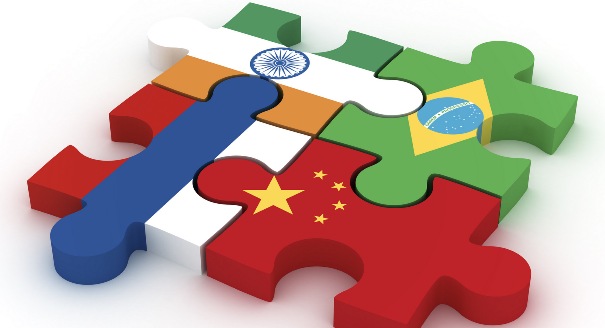
Presidency of the BRICS will allow Moscow to position itself as a participant of an association that offers an alternative to the global world order, and the grouping’s summit in Ufa will give the Russian government an opportunity to present the country as a leader of the non-Western world.
Source: Russia Beyond the Headlines
The BRICS Summit, to be hosted by Russia in Ufa from July 8-10, will be the seventh meeting for the organisation since its establishment and the fifth since the four Bric countries were joined by the Republic of South Africa. Until recently, the Bric countries were united only in the imagination of former Goldman Sachs economist Jim O’Neill, who created the abbreviation in 2001 to define the fastest developing economies in the world and to offer his clients new investment opportunities (the bank immediately began offering portfolios containing the four countries’ securities).
Russia has special relations with the BRICS. It was Moscow that breathed political life into the BRICS stock exchange chimera. Back in 2006, on the initiative of Russian president Vladimir Putin, the first ministerial meeting of the Bric countries was held in New York. Then in May 2009, in Ekaterinburg, Mr Putin’s successor Dmitry Medvedev hosted the bloc’s first summit. Even though there were no concrete results from that event, it had an important propaganda effect for Russia: relations with the West at the time were at a low and Moscow demonstrated to the US and the EU that it had other influential partners.
In recent years, the organisation has expanded its field of activity. Besides the political image, it also began creating new international regulations. For now, BRICS is most famous for its attempt to create an alternative to the Bretton Woods international finance architecture, which is dominated by the West. Countries actively coordinate their positions on these issues in the G20. However, in 2014, when it finally became clear that the US Congress had blocked the IMF reform approved by the G20 concerning the redistribution of votes in favour of the developing countries, BRICS participants agreed to create their own bank and a pool of national currencies. In the future, this should help reduce the dependence of international finance on the dollar-euro duopoly. So far these have been the BRICS’s main achievements.A key challenge to BRICS’s effectiveness is the international structure and the specifics of its bureaucratic system. BRICS is perhaps the only association in which the leaders’ summits do not represent the crowning of the presidency, but rather its beginning. Thus, one country prepares the agenda throughout the year, while another country make the decisions. Due to a lack of synchronisation, many initiatives remained poorly developed.
Russia decided to put an end to this. Russia’s presidency formally began in May, meaning it has less than three months to set up the summit; the 2016 summit in China will be the result of a fully fledged year-long presidency. Already within the framework of its management, Russia is doing its best to expand the agenda: the Kremlin has asked all federal agencies to present their proposals concerning co-operation with BRICS. As a result, the Ufa summit’s agenda has a total of 130 points.
Just as in 2009, in the prevailing international situation it is symbolism and not pragmatism that is important for Russia. After the annexation of Crimea and the start of the war in eastern Ukraine, the West actively tried to isolate Russia. Sanctions were introduced, Moscow was formally excluded from the G8 and leaders from the US, EU and their allies tried to avoid personal contact with Vladimir Putin during all international events. (In 2014, the Russian president left the G20 Summit in Australia ahead of schedule.)
The May 9 Victory Day Parade on Red Square became another important symbol of Russia’s international isolation. Now, in Ufa, the Russian administration will have an opportunity to present the country as a leader of the non-western world. Presidency of the BRICS will allow Moscow to position itself as a participant of an association that offers an alternative to the global world order. In the company of the largest economy in the world (at least that is how the IMF estimates China’s GDP in relation to its purchasing power parity) and the dynamic leaders of South Asia, Latin America and Africa, Moscow can confidently say that it does not intend to return to the G8, even if it is suddenly invited back. Therefore, any practical result obtained during the Ufa summit will be less significant than the symbolic meaning of the event, since the creation of new ideas has for now been the only field where the BRICS was able to prove itself.
This article originally appeared in Russia Beyond the Headlines.

Director, Carnegie Russia Eurasia Center
Alexander Gabuev is director of the Carnegie Russia Eurasia Center. Gabuev’s research is focused on Russian foreign policy with particular focus on the impact of the war in Ukraine and the Sino-Russia relationship. Since joining Carnegie in 2015, Gabuev has contributed commentary and analysis to a wide range of publications, including the Financial Times, the New York Times, the Wall Street Journal, and the Economist.
Recent Work
Alexander Gabuev
Alexander Gabuev
Carnegie India does not take institutional positions on public policy issues; the views represented herein are those of the author(s) and do not necessarily reflect the views of Carnegie, its staff, or its trustees.

The Indian Ocean Region hosts one of the densest concentrations of subsea cables in the world. Yet, despite accounting for a significant share of global internet traffic, India’s participation remains limited.

Charukeshi Bhatt

How is AI reshaping space security, creating governance challenges, and where does international diplomacy stand today?


Tejas Bharadwaj, Almudena Azcárate Ortega

After the chill in ties between 2020 and 2024 that brought India–China relations to their lowest point in several decades, the two countries have engaged each other afresh. This paper argues that there are predominantly four imperatives guiding India’s approach to China, and they exist in an order of priority.

Saheb Singh Chadha

This piece argues that India’s central challenge is not managing a single flashpoint but resolving the underlying tension between expansion and institutional coherency of the BRICS grouping.

Vrinda Sahai
The ASML MoU with Tata Electronics is an indicator of how far the Indian semiconductor ecosystem has come. This ecosystem has been years in the making and represents real commercial logic.

Konark Bhandari