

Research
- +4
Milan Vaishnav, Rahul Verma, Rukmini S., …
{
  "authors": [
    "Christophe Jaffrelot"
  ],
  "type": "legacyinthemedia",
  "centerAffiliationAll": "dc",
  "centers": [
    "Carnegie Endowment for International Peace"
  ],
  "collections": [],
  "englishNewsletterAll": "ctw",
  "nonEnglishNewsletterAll": "",
  "primaryCenter": "Carnegie Endowment for International Peace",
  "programAffiliation": "SAP",
  "programs": [
    "South Asia"
  ],
  "projects": [],
  "regions": [
    "South Asia",
    "Pakistan"
  ],
  "topics": [
    "Political Reform",
    "Democracy",
    "Security",
    "Military"
  ]
}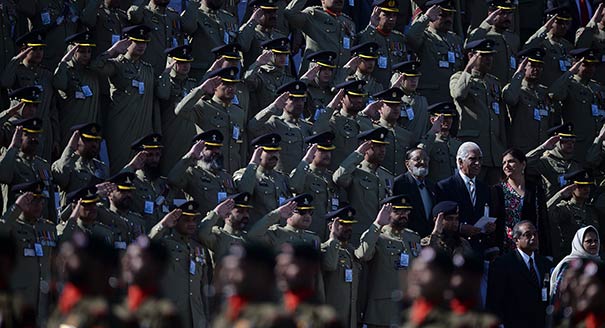
Source: Getty
The Pakistani government’s room to maneuver is clearly limited by the irresistible rise of the Pakistani army.
Source: Indian Express
After the Gurdaspur attack late last month by alleged Lashkar-e-Toiba (LeT) operatives, Pakistan has consistently been in the headlines — mainly because of several ceasefire violations in Jammu and Kashmir. This terrorist onslaught can be interpreted as an attempt by the Pakistani army to derail the India-Pakistan dialogue that was timidly resurrected by Nawaz Sharif and Narendra Modi in Ufa along the margins of the meeting of the Shanghai Cooperation Organisation. After all, wasn’t the Kargil operation a response to the meeting between Nawaz and then Prime Minister Atal Bihari Vajpayee in Lahore in 1999? But the Gurdaspur attack may also reflect the irresistible rise of the Pakistani army on the domestic scene.
When Nawaz became PM two years ago, the army — including Ashfaq Parvez Kayani, the about-to-retire army chief — seemed, for a time, to be on the defensive. Nawaz was determined to bring Pervez Musharraf before the court to face several cases, something the army could not contemplate without some nervousness; and the government as well as Imran Khan’s Pakistan Tehreek-e-Insaf (PTI, the new number two party) were in favour of negotiations with the Tehreek-e-Taliban Pakistan (TTP), whereas the army wanted to fight them.
Moreover, Nawaz was perceived by the military as prepared to make compromises with India — particularly to improve trade — and his attendance at Modi’s swearing-in ceremony was interpreted in this light.The army resisted Nawaz’s agenda. The PM resigned himself to not accepting New Delhi’s proposition regarding the mutual granting of “most favoured nation” status. Second, Kayani’s successor, Raheel Sharif, targeted the TTP by launching the North Waziristan operation in June 2014, making the government’s negotiation offer irrelevant. Third, the army — especially the ISI — supported the anti-Nawaz demonstrations orchestrated by Imran Khan in August 2014. The then president of the PTI, Javed Hashmi, has recently confirmed that the former director general of the ISI, Ahmed Shuja Pasha, had instrumentalised Imran to weaken the PM. This agitation launched by the PTI to protest the so-called rigging of the 2013 elections paralysed Pakistan and made Nawaz helpless. Certainly, the opposition parties came to his rescue and he was eventually cleared of electoral fraud by an ad-hoc commission. But August 2014 was a turning point.
Yet, probably not as much of a turning point as the Peshawar tragedy. The bloodbath in which 134 sons of militarymen were killed was almost a blessing in disguise for the army leaders. First, the loss of so many army children created an emotional urge for solidarity with the military. Second, it led many Pakistanis to prioritise the fight against terrorism, even at the expense of democracy.
On December 24, a National Action Plan (NAP) was shaped by representatives of the whole nation — including all the political parties and the army. Among the 20 points of the NAP figured the commitment that “execution of convicted terrorists will continue” and the plan also provided for the “establishment of special trial courts for two years for speedy trial of terror suspects”. Parliament amended the constitution in order to create military courts, which were contested thro-ugh legal procedures initiated by whistleblowers who feared the introduction of a parallel judicial system. But the Supreme Court has just validated this innovation in early August. Those who have been condemned and executed so far, after expeditive trials, are not necessarily jihadists — far from that. In fact, the army is using its new power to get rid of all kinds of “terrorists”, including Baloch nationalists and MQM activists.
In Karachi, the army’s new assertiveness has also translated into military interventions that call to mind the 1990s. But times have changed; in the 1990s, the army had had Benazir Bhutto and Nawaz dismissed at least once under the pretext that they could not maintain law and order in Karachi. Today, the army is not interested in replacing PMs but wants to rule anyway. The Rangers are not only running the show in the context of a paramilitary operation aimed at breaking the back of the MQM — a strategy that may also imply the creation of a mohajir alternative to Altaf Hussain’s party — but the army is also using the committees formed after Peshawar. Everywhere in Pakistan, “provincial apex committees” have been appointed to oversee the implementation of the NAP. These committees comprise senior local politicians, army commanders and ISI representatives. In most cases, the army chief has led the meeting — including in Punjab, in spite of the participation of the CM, Shahbaz Sharif, Nawaz’s brother. But in Sind, the corps commander of Karachi plays a particularly important role, undermining the authority of the PPP state government.
Clearly, the Pakistan army is more active than ever before since the 2008 “return to democracy”, but without taking the risk of a military coup. The way it relates to the jihadists is also not the same. The Peshawar tragedy has strengthened the resolve of the military to fight groups with which it has been at loggerheads since at least the Red Mosque episode of 2007. But, unsurprisingly, all groups are not equally targeted. While the TTP and sectarian groups, including the Lashkar-e-Jhangvi, whose leader has been recently eliminated in what seems to be a fake encounter with the blessing of the Sharif brothers, are targeted, other jihadists remain important to the Pakistan army. The LeT is a case in point. Its presence in the public sphere has hardly been affected, as is evident from the release of Zaki-ur-Rehman Lakhvi and the public meetings presided over by Hafiz Saeed. In December 2014, the organisation, under the name of Jamaat-ud-Dawa, for the first time since the 1980s, held its annual ijtema (congregation) in Punjab. Saeed addressed a four lakh-strong crowd. Five weeks later, when asked about the “ban” on his organisation just (surprisingly) announced by the US, Saeed declared that it was “nothing new”: “It has been going on over the past six years.”
In fact, the report on the working of the NAP that was submitted to the PM in March — and which has been leaked to the media — suggests that its impact has been selective. The madrasas that were supposed to be reformed have been left largely untouched. This selectivity can be explained tactically by the fact that the army (and the US) needs some of the madrasas’ Deobandi patrons (including Sami-ul-Haq) to bring the Afghan Taliban to the negotiation table. But there is a long-term strategy at work too: the LeT and other jihadist groups remain dear to the army. And while it is prepared to fight others more decisively after Peshawar, a “paradigmatic shift” remains unachieved. This means India may still be at the receiving end. While Pakistan National Security Advisor Sartaj Aziz, during his visit to India, may convey Nawaz’s wish to improve relations with India, the Pakistani government’s room for manoeuvre is clearly limited by the irresistible rise of the Pakistani army, in a context where all the parties seem to have resigned themselves to playing the democratic-façade game.
This article was originally published in the Indian Express.
Former Nonresident Scholar, South Asia Program
Jaffrelot’s core research focuses on theories of nationalism and democracy, mobilization of the lower castes and Dalits (ex-untouchables) in India, the Hindu nationalist movement, and ethnic conflicts in Pakistan.
Recent Work

Milan Vaishnav, Rahul Verma, Rukmini S., …
Christophe Jaffrelot
Carnegie India does not take institutional positions on public policy issues; the views represented herein are those of the author(s) and do not necessarily reflect the views of Carnegie, its staff, or its trustees.

In any defense establishment, change is an ongoing process. However, despite the best of intentions, existing bureaucracies, bound by habit and years of socialization, have their limits in implementing transformative change.

Anit Mukherjee

After the chill in ties between 2020 and 2024 that brought India–China relations to their lowest point in several decades, the two countries have engaged each other afresh. This paper argues that there are predominantly four imperatives guiding India’s approach to China, and they exist in an order of priority.

Saheb Singh Chadha
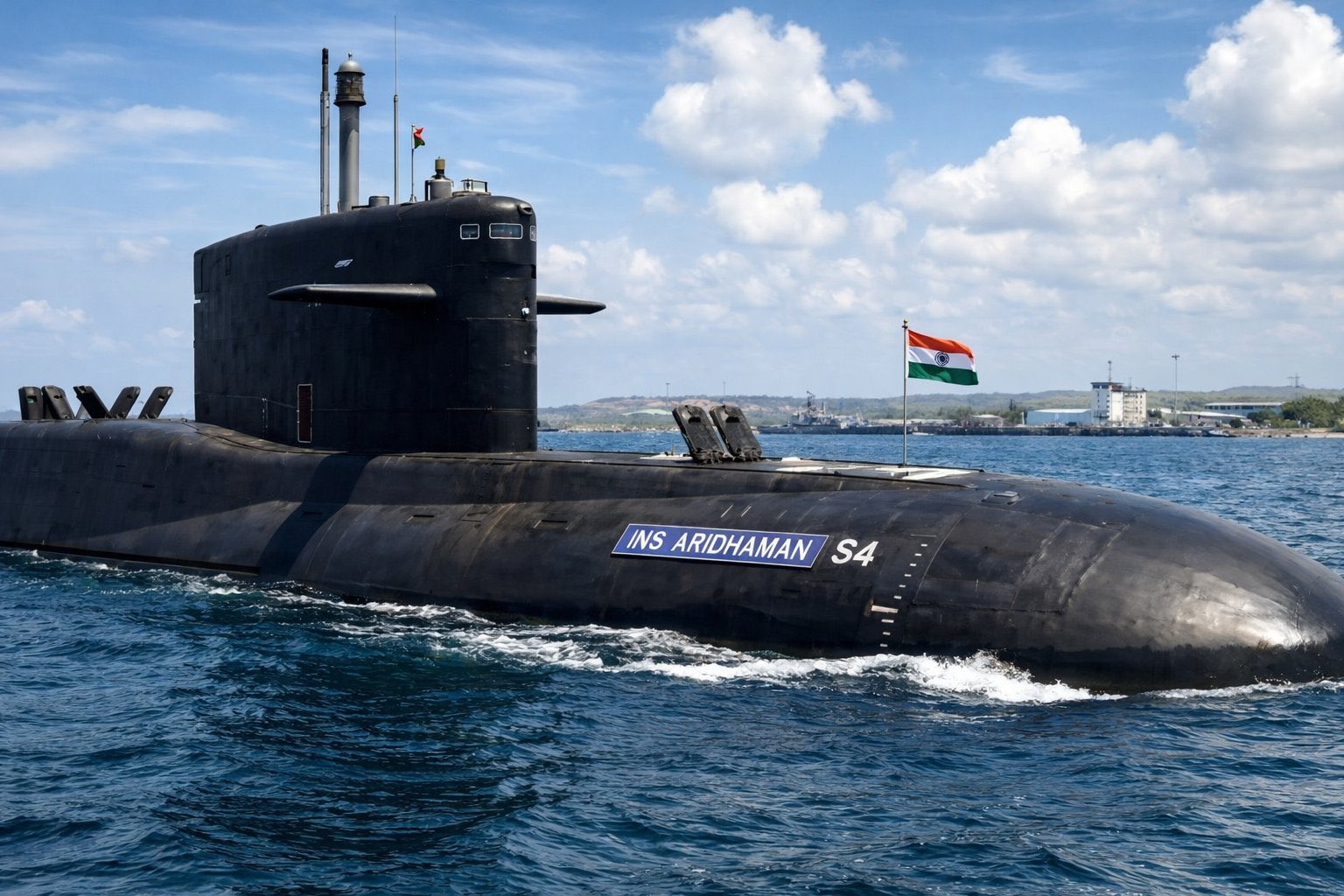
The induction of INS Aridhaman, which features several technological enhancements, now gives India the third nuclear ballistic missile submarine to ensure continuous at-sea deterrent.

Dinakar Peri

This piece argues that the present Indian strategy, based on opportunistic diversification and utilization of limited strategic reserves, remains inadequate when confronting supply disruptions. It evaluates India’s options in the short, medium, and long terms.

Vrinda Sahai

Trump 2.0 has unsettled India’s external environment—but has not overturned its foreign policy strategy, which continues to rely on diversification, hedging, and calibrated partnerships across a fractured order.


Milan Vaishnav, ed., Sameer Lalwani, Tanvi Madan, …