

Paper
Christopher S. Chivvis, Rohan Mukherjee, Milan Vaishnav
{
  "authors": [
    "Milan Vaishnav"
  ],
  "type": "legacyinthemedia",
  "centerAffiliationAll": "dc",
  "centers": [
    "Carnegie Endowment for International Peace"
  ],
  "collections": [],
  "englishNewsletterAll": "ctw",
  "nonEnglishNewsletterAll": "",
  "primaryCenter": "Carnegie Endowment for International Peace",
  "programAffiliation": "SAP",
  "programs": [
    "South Asia"
  ],
  "projects": [],
  "regions": [
    "South Asia",
    "India"
  ],
  "topics": [
    "Political Reform",
    "Democracy"
  ]
}
Source: Getty
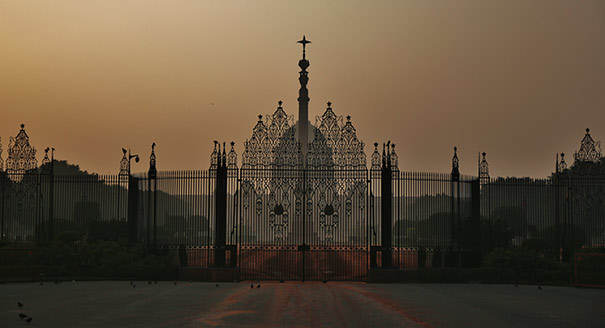
While Indians should be heartened by any decline in the level of political criminality, there are good reasons to treat this data with caution, especially in the case of Uttar Pradesh.
Source: NDTV
In his maiden appearance after being named Uttar Pradesh chief minister, Yogi Adityanath proclaimed that his Bharatiya Janata Party (BJP) government would maintain a laser-like focus on the twin themes of combating corruption and restoring law and order. "In the past 15 years," Adityanath noted, "UP lagged behind in the race of development as previous governments indulged in corruption, nepotism, and failed on the law order front." Indeed, one of the new CM's first moves was to instruct his ministers and top bureaucrats to furnish their financial details within 15 days.
Adityanath's strong statements are encouraging, but also ironic, given that he has a serious rap sheet himself; the five-time BJP MP is named in three ongoing cases - including one linked to his suspected involvement in the 2007 communal riots which inflamed his Gorakhpur constituency.
As Adityanath gets to work, a new report issued by the Association for Democratic Reforms (ADR) ostensibly brings some much-needed cheer to the discourse surrounding India's political class. ADR, arguably India's leading good governance watchdog, has scrutinized the affidavits submitted by the newly elected Members of the Legislative Assemblies (MLAs) in the five states where elections recently concluded. These affidavits, which have become mandatory thanks to a 2003 Supreme Court judgment in response to litigation filed by ADR, contain details pertaining to candidates' financial assets and liabilities, criminal records, and educational qualifications.
Of the 689 MLAs analyzed across the five states - Goa, Manipur, Punjab, Uttarakhand, and Uttar Pradesh - 28 percent face ongoing criminal cases. This represents a five percentage point decline from their corresponding level in 2012. While this share grew in Manipur and Uttarakhand, it fell in the other states-most notably in Uttar Pradesh, where the crime-politics nexus is deeply entrenched. In UP, the share of MLAs with declared criminal cases decreased by ten percentage points - from 46 to 36 percent.
While Indians should be heartened by any decline in the level of political criminality, there are good reasons to treat this data with caution - especially in the case of UP.
For starters, the absolute levels of suspected criminality remain high, with the exception of Manipur (where just 3 percent of the state's 60 MLAs are implicated in ongoing cases). In UP and Uttarakhand, one in three legislators boast cases, while more than one in five Goan MLAs and one in seven Punjabi MLAs are similarly situated.
Second, one should not extrapolate too much from one data point. The observed decline in Goa and UP might simply suggest a reversion to the mean. In UP, for instance, 35 percent of MLAs were named in criminal cases in 2007, which is roughly the current level. The same is true in Goa, where the share in 2007 is identical to today's share (23 percent). In both states, 2012 saw a jump in the proportion of MLAs facing cases.
Because the affidavit regime only began in 2003, we lack hard data on older elections. For UP, however, one can rely on private reports compiled by law enforcement and Election Commission sources. What these data show is that the trend level of criminality in the UP legislative assembly - dating back to 1991 - hovers around 30 percent. In the early post-independence era, individuals with criminal ties typically dwelled on the periphery of mainstream politics. Over time, they transitioned to centre-stage as electoral competition intensified. Goondas, who once worked in the employ of politicians, decided to become politicians themselves.
In UP, the share of MLAs with criminal cases was "just" 8 percent in 1984, rising to 12 percent in 1989. By 1991, that figure had jumped to 31 percent and has remained in that ballpark ever since. The two spikes the state has witnessed - in 2002 (51 percent) and 2012 (45 percent) - appear to be aberrations. Interestingly, both have coincided with periods of Samajwadi Party (SP) rule, which was widely known by its "Goonda Raj" moniker.
Third, while the share of MLAs with criminal cases has declined in these five states, there has actually been an uptick in the proportion of newly elected legislators who face "serious" cases. Serious cases involve criminal transgressions - including murder, kidnapping, and crimes against women - that would merit real jail time if a conviction were obtained. 20 percent of the nearly 700 MLAs ADR examined face serious criminal cases, which is a modest rise from their level five years ago (17 percent). In UP, this share has grown from 22 to 27 percent, while in Uttarakhand it has more than tripled, rising from 6 to 20 percent.
Therefore, the marriage between crime and politics is likely going nowhere fast. This is because the structural underpinnings of the market for criminality remain strong in many parts of the country.
Elections are a costly undertaking, so parties are continually on the hunt for candidates with deep pockets who can fund their own way. My own analyses, which I report in a recent book(When Crime Pays: Money and Muscle in Indian Politics), suggest that wealthy candidates have a decisive electoral advantage. Of the roughly 21,000 candidates who have contested general elections since 2004, the richest 20 percent are more than 20 times more likely to win election than their counterparts among the poorest 20 percent. A recent Hindustan Times analysis suggests that if the five recent state election results are anything to go by, very little has changed. The wealthiest candidate in a constituency won election one-third of the time. One important demographic with access to resources are, of course, individuals linked to serious wrongdoing. My calculations suggest that the median general election candidate with a serious case has a net worth four times larger than the median candidate with a clean record or who only faces minor transgressions. The money-muscle link runs deep.
But while individuals tied to serious crime have a financial advantage, they also find favor with the electorate. In parts of the country where government is ineffectual and social divisions are rampant, candidates often wear their criminal reputations as a badge of honor; their willingness and ability to flout the law is a sign of their ability to protect their constituents' interests. In a state like UP, this explains why Bahujan Samaj Party (BSP) leader Mayawati embraced the notorious gangster politician Mukhtar Ansari ahead of the election, hailing him as a Muslim hero. It also explains why Ansari handily won election from his Mau constituency; as one villager remarked to journalist Sreenivasan Jain, "He (Mukhtar) is present in our happiness and during our sorrows. He is a messiah for poor people." This presence was felt despite the fact Mukhtar was behind bars on murder charges, unable to campaign for his own seat.
If Adityanath is serious about purifying UP politics, he has an uphill road to climb. Assisting the new CM in his efforts - and to balance delicate caste equations - the BJP high command insisted that the new CM be accompanied by two deputies, former Lucknow mayor Dinesh Sharma and BJP state chief Keshav Prasad Maurya. Maurya himself is entangled in multiple criminal proceedings: his name figures in as many as nine pending cases. Given the new BJP leadership's track record, they might begin the cleansing by looking in the mirror and within their own party. Of the 107 MLAs with serious criminal cases, the ruling BJP is home to 83.

Director and Senior Fellow, South Asia Program
Milan Vaishnav is a senior fellow and director of the South Asia Program and the host of the Grand Tamasha podcast at the Carnegie Endowment for International Peace. His primary research focus is the political economy of India, and he examines issues such as corruption and governance, state capacity, federalism, and electoral behavior. He also conducts research on the Indian diaspora.
Recent Work
Christopher S. Chivvis, Rohan Mukherjee, Milan Vaishnav



Sophia Besch, Eric Ciaramella, Steve Feldstein, …
Carnegie India does not take institutional positions on public policy issues; the views represented herein are those of the author(s) and do not necessarily reflect the views of Carnegie, its staff, or its trustees.

In any defense establishment, change is an ongoing process. However, despite the best of intentions, existing bureaucracies, bound by habit and years of socialization, have their limits in implementing transformative change.

Anit Mukherjee

As AI grows more sophisticated, as the supply chains that power it become more contested, and as access to frontier models becomes geopolitically charged, India must begin to ask a different set of questions. Not what applications it can build on someone else’s infrastructure but what the world needs.

Konark Bhandari

The Indian Ocean Region hosts one of the densest concentrations of subsea cables in the world. Yet, despite accounting for a significant share of global internet traffic, India’s participation remains limited.

Charukeshi Bhatt

How is AI reshaping space security, creating governance challenges, and where does international diplomacy stand today?


Tejas Bharadwaj, Almudena Azcárate Ortega

After the chill in ties between 2020 and 2024 that brought India–China relations to their lowest point in several decades, the two countries have engaged each other afresh. This paper argues that there are predominantly four imperatives guiding India’s approach to China, and they exist in an order of priority.

Saheb Singh Chadha