

Report
- +2
George Perkovich, Jessica Tuchman Mathews, Joseph Cirincione, …
{
  "authors": [
    "Jon Wolfsthal"
  ],
  "type": "other",
  "centerAffiliationAll": "dc",
  "centers": [
    "Carnegie Endowment for International Peace",
    "Carnegie China"
  ],
  "collections": [
    "Korean Peninsula"
  ],
  "englishNewsletterAll": "ctw",
  "nonEnglishNewsletterAll": "",
  "primaryCenter": "Carnegie Endowment for International Peace",
  "programAffiliation": "NPP",
  "programs": [
    "Nuclear Policy"
  ],
  "projects": [],
  "regions": [
    "East Asia",
    "North Korea"
  ],
  "topics": [
    "Nuclear Policy",
    "Arms Control",
    "Security"
  ]
}
Source: Getty
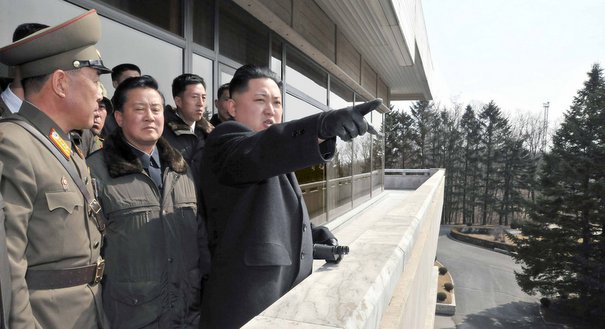
Increased risk-taking concerning North Korea’s nuclear ambitions could potentially pay off, but there’s a catch.
Source: Foreign Policy
North Korea has been the focus of global attention and anxiety over the past few weeks. The country’s nuclear and missile capabilities, and increasingly strong statements from U.S. officials, including President Donald Trump, have raised global concerns about the possibility of open war on the Korea Peninsula. While people are right to be worried, the seeds of a diplomatic solution could be forming — if the Trump administration is thoughtful and disciplined enough to seize the opportunity, and if the White House’s bluster is in fact calculated. Big ifs, to be sure, but the threat of military force may motivate both China and North Korea to consider deals in a way they have not been willing to up until now.
For well over a decade, North Korea has calculated (correctly) that Beijing, Seoul, and Washington would all choose relative stability and conflict avoidance over taking military action to end North Korea’s nuclear and missile programs. The threat of North Korean nuclear weapons, the argument goes, contains a risk of disaster — but attacking North Korea to prevent its programs from advancing is a sure-fire calamity. Casualty estimates from just the first few days of fighting the Korean War’s sequel is enough to sober up even the most bloodthirsty chest thumper.
For its part too, Beijing has bet (again correctly) that the United States was not prepared to put its economic and political relations with Beijing at risk in order to prevent a fully armed, nuclear Pyongyang from coming to be. Past statements from multiple administrations that North Korea’s nuclear actions are “unacceptable” have not proven true. Washington has been willing to accept them in order to not upset the economic vitality and military balance in the region. If these programs were truly “unacceptable,” efforts to convince China to throw North Korea under the bus would have included stronger trade sanctions and embargoes on China long ago.
What has changed? Well, to be sure, North Korean leader Kim Jong Un has accelerated and prioritized nuclear and missile programs even more than his father and grandfather did. There was a good chance that both of them were willing to trade nuclear missiles for real world security guarantees and economic assistance to ensure the survival of the regime. But nuclear-armed missiles are Kim Jong Un’s insurance policy. Finding anyone in the U.S. career political intelligence community who believes Kim will give up his nuclear program is like finding Red Sox fans in the bleachers at Yankee Stadium: They might be there, but they are not brave enough to brag about their beliefs.
Into this Korean standoff, America is now inserting Trump’s bellicose tweets and Secretary of State Rex Tillerson’s confused and conflicting statements. A combination of bravado and bad reporting by the media has created a dangerous dynamic in East Asia. People in Beijing, Seoul, and possibly even Pyongyang are worried about Trump being just irrational (or politically desperate) enough to take preventive military action. Ask any Korean expert how many calls he or she has taken from parents, friends, and long-lost college roommates asking if a war is about to happen, and you’ll see.
This increased risk-taking can, however, pay off. It is a classic game of chicken, where the driver willing to appear and act irrational can gain an advantage. Despite what many have said for decades, the North Koreans are dangerous and criminal, but they are neither crazy nor irrational. And now this regime in Pyongyang has to worry about just how far Trump’s America might go. Reports indicate that China is leaning on Pyongyang harder than in years and that Japan and planning to deal with a post-conflict or post-collapse North Korea. Maybe, just maybe, the instability caused by Trump can pay off.
But there is a catch. In chicken, playing the irrational actor can work to your advantage if you are, in fact, rational. While the president is being criticized for flipping on a variety of foreign and domestic policy issues, from the North American Free Trade Agreement to Syria to health care, North Korea is one issue where taking tough but then offering a diplomatic way out would make sense. The challenge now is that the Trump team, short of top officials and staff and still only now getting a policy process in place, have a lot of moving parts to coordinate — as evidenced by its failure to know whether the Carl Vinson aircraft carrier was going east or west. The administration also has to be willing to work its way out of the corner it has tweeted itself into. On this score, Trump’s supporters have been flexible, and it appears the president has the political space to make a deal with the North, and get credit for being willing to do so.
Trump has helped turn North Korea’s annual demonstrations of military capability into a crisis. Now the challenge is to turn the crisis into a solution. If not already done, the Trump administration needs to decide if it is prepared to negotiate with North Korea and to what end? Is the United States prepared to accept a freeze as an interim step toward denuclearization, or does the progress have to come all at once? If a freeze, how will it be verified and what will and won’t be permitted? And if a freeze is the goal, how will the Trump team navigate how a freeze that accepts some level of nuclear capability in the North will add to the growing pressure for nuclear weapons in South Korea. If the latter, then what is the United States prepared to give to North Korea and China to get it, how long would such a process take, and is the end state continued standoff or a truly new balance on the Korean peninsula? These are massively difficult questions. Despite criticism of the Obama administration’s approach of strategic patience (which looks a lot like the new team’s approach, regardless of what the White House wants to call it), the last administration spent a lot of time planning for what would happen if the United States failed on the Korean Peninsula and if, against our own predictions, we succeeded. It is past time for the Trump team to have similar plans in place.

Former Nonresident Scholar, Nuclear Policy Program
Jon Wolfsthal was a nonresident scholar with the Nuclear Policy Program.
Recent Work



George Perkovich, Jessica Tuchman Mathews, Joseph Cirincione, …
Jon Wolfsthal
Carnegie India does not take institutional positions on public policy issues; the views represented herein are those of the author(s) and do not necessarily reflect the views of Carnegie, its staff, or its trustees.

After the chill in ties between 2020 and 2024 that brought India–China relations to their lowest point in several decades, the two countries have engaged each other afresh. This paper argues that there are predominantly four imperatives guiding India’s approach to China, and they exist in an order of priority.

Saheb Singh Chadha

This piece argues that the present Indian strategy, based on opportunistic diversification and utilization of limited strategic reserves, remains inadequate when confronting supply disruptions. It evaluates India’s options in the short, medium, and long terms.

Vrinda Sahai

This piece examines India’s response to U.S. sanctions and tariffs, specifically assessing the immediate market consequences, such as alterations in import costs, and the broader strategic implications for India’s energy security and foreign policy orientation.
Vrinda Sahai
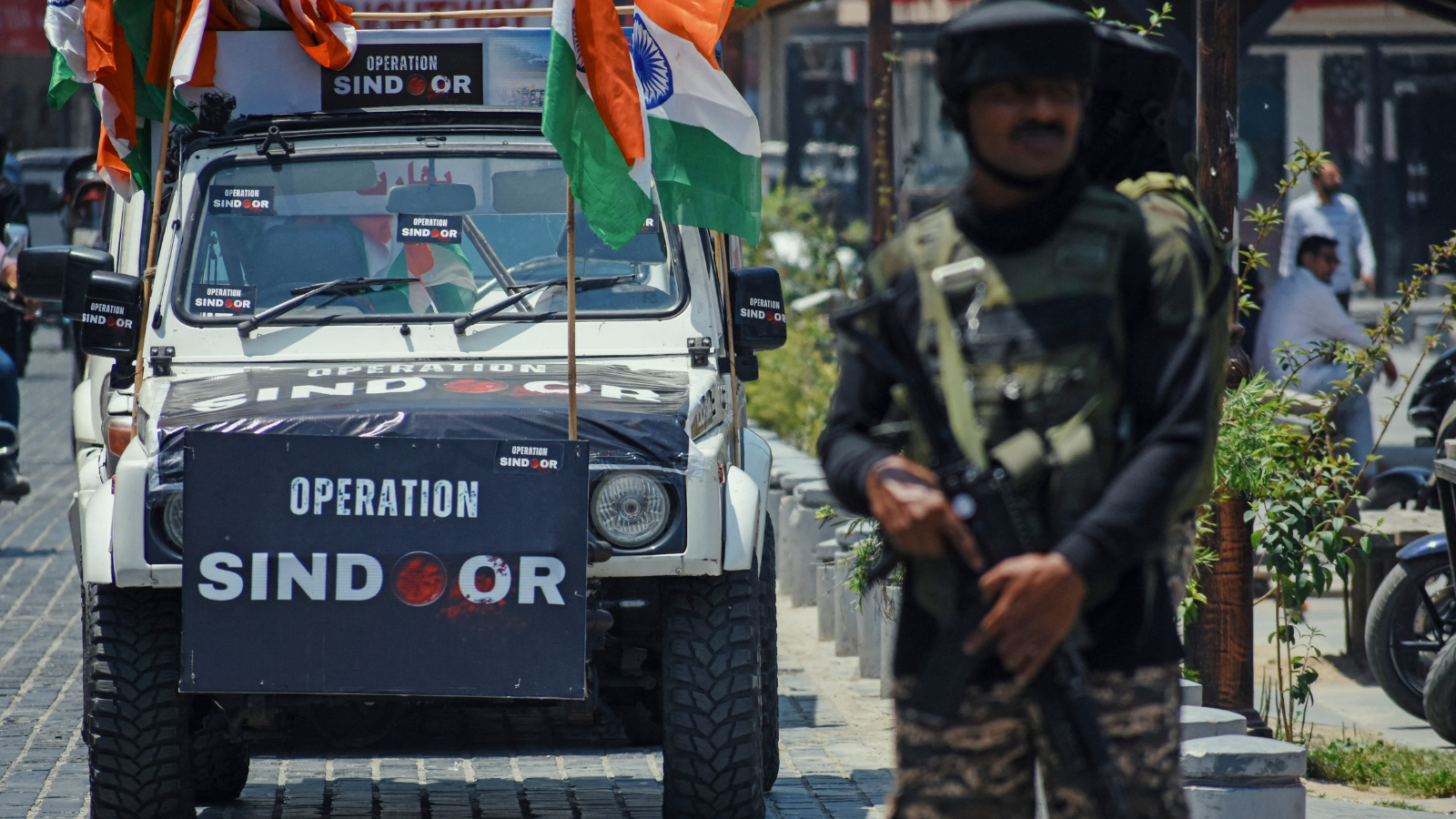
The India-Pakistan conflict that played out between May 6 and May 10, 2025, offers several military lessons. This article presents key takeaways from Operation Sindoor and breaks down how India’s preparations shaped the outcome and what more is needed to strengthen future readiness.

Dinakar Peri
This book offers a comprehensive analysis of India's evolving relationship with sovereignty in a complex global order. Moving beyond conventional narratives, it examines how the sovereignty principle shapes India's behavior across four critical domains—from traditional military power to contemporary data governance.

Rudra Chaudhuri, Nabarun Roy