

Research
- +8
William J. Burns, Michael Chertoff, Catherine Ashton, …
{
  "authors": [
    "William J. Burns"
  ],
  "type": "legacyinthemedia",
  "centerAffiliationAll": "",
  "centers": [
    "Carnegie Endowment for International Peace",
    "Carnegie China"
  ],
  "collections": [],
  "englishNewsletterAll": "",
  "nonEnglishNewsletterAll": "",
  "primaryCenter": "Carnegie China",
  "programAffiliation": "",
  "programs": [],
  "projects": [],
  "regions": [
    "North America",
    "United States"
  ],
  "topics": [
    "Political Reform",
    "Security",
    "Foreign Policy",
    "Military"
  ]
}
Source: Getty
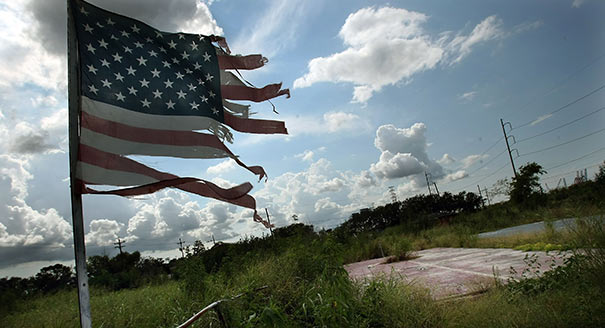
Through policy incoherence and not-so-benign neglect, the Trump team risks hollowing out the ideas, initiative, and institutions on which U.S. leadership and international order rest.
Source: Washington Post
On the surface, much of President Trump’s foreign policy seems to be reverting to the mainstream upon first contact with reality. Syrian dictator Bashar al-Assad’s horrific use of chemical weapons produced a quick military response, applauded across partisan lines in Washington. Relations with Russia have settled to predictably adversarial depths. The administration is full of appropriately reassuring words about NATO, and the one-China policy was safely back in place for the visit of Chinese President Xi Jinping. Senior national security appointments have been mostly traditionalist, with radical voices in retreat. In a Washington always impatient for sweeping judgments as a new administration wraps up its first 100 days, it is tempting to conclude that convention is ascendant.
Beneath the surface, however, lurk more troubling trend lines. Through policy incoherence and not-so-benign neglect, the Trump team risks hollowing out the ideas, initiative and institutions on which U.S. leadership and international order rest.
The idea of America has been at the heart of our success in the world for 70 years. For all our imperfections, we have embodied political and economic openness, respect for human dignity and a sense of possibility. The power of our example has mattered more than the power of our preaching, and enlightened self-interest has driven our strategy.
What we often saw during the Trump campaign, and still bubbling in the background of this administration, has been more “self” than “enlightened” — a nasty brew of mercantilism, unilateralism and unreconstructed nationalism, flavored by indiscipline and overpersonalization. At a moment when the international order is under severe strain, power is fragmenting and great-power rivalry has returned, the values and purpose at the core of the American idea matter more than ever. Against this backdrop, acting in defense of a critical international norm in Syria is reassuring; going mute on human rights issues in dealing with authoritarian leaders is not.
A second crucial asset has been American initiative — our willingness and ability to mobilize others to deal with shared problems. From regional challenges to wider global dilemmas such as climate change and trade, U.S. leadership has been critical to the unprecedented peace and prosperity of the post-World War II era. Of course we got a lot of things wrong, sometimes at grievous cost, most painfully in Vietnam and Iraq. And of course we need to make significant adjustments in a world in which the United States is no longer dominant but still preeminent.
But many in the new administration still seem to think much differently. Theirs is a United States held hostage by the very international order it created. Alliances are millstones, multilateral arrangements such as the Trans-Pacific Partnership and NAFTA are constraints rather than opportunities, and the United Nations and other international bodies are distractions, if not irrelevant. We’re Gulliver, in their view, and it’s time to break the bonds of the Lilliputians.
That is more than just an attitude, and more than just a re-articulation of a recurring isolationist instinct in U.S. politics. It’s already proving corrosive, by creating a trade vacuum in Asia that China is eagerly filling; threatening to squander hard-won gains in our own hemisphere and Africa; and unnerving European allies by indulging populist nationalists and encouraging more actions similar to Brexit. Others in the administration clearly understand the risks inherent in such views, but early policy inconsistency has created worries for friends and temptations for foes.
A third ingredient of American leadership is the institutions that sustain it. Trump’s first budget guts institutions responsible for translating our ideas and initiative into action. By relying so heavily on hard power, Trump’s budget reinforces a pattern over much of the difficult post-9/11 period in which we have often inverted the roles of force and diplomacy, underselling the virtue of diplomacy backed up by the threat of force, while relying more on lethal force as our tool of first resort, with diplomacy an under-resourced follow-up, untethered to strategy.
The issue here is not whether real reforms are needed in domestic or international agencies. They are long overdue. The State Department has too many layers and ought to be streamlined. But cuts of nearly 30 percent are not motivated by an interest in sensible change; they reflect a dismissiveness of the role of nonmilitary instruments, and a disruptive passion for neutering or dismantling existing institutions.
Likewise, draconian reductions in assistance programs are penny wise and pound foolish. Rather than helping key fragile states avoid the kinds of failures and conflicts that often drag in the U.S. military, at far greater cost, we will, through abdication, become less secure.
The frustrations that helped produce the Trump presidency are real. So is the profound fatigue about engagement with the world, after more than 15 years of wars in Iraq and Afghanistan, and almost a decade removed from the Great Recession. But overcompensating through general global detachment, episodic assertions of American muscle and “creative destruction” of institutions would be a dangerous illusion, not a workable strategy.
At home, we have checks and balances that cushion the domestic consequences of such illusions. The wider world lacks those brakes. Without U.S. leadership and its fundamental elements — the idea our country represents, the initiative animating alliances that set us apart from lonelier powers such as Russia and China, and the institutions that underpin our influence — the realities around us will grow more complicated and more threatening.
This article was originally published in the Washington Post.
Former Carnegie President (2015-2021)
A former career diplomat, William J. Burns served as director of the CIA, deputy secretary of State, and ambassador to Russia and Jordan. Burns was also president of the Carnegie Endowment for International Peace from 2015 to 2021.
Recent Work
William J. Burns, Michael Chertoff, Catherine Ashton, …
William J. Burns
Carnegie India does not take institutional positions on public policy issues; the views represented herein are those of the author(s) and do not necessarily reflect the views of Carnegie, its staff, or its trustees.

In any defense establishment, change is an ongoing process. However, despite the best of intentions, existing bureaucracies, bound by habit and years of socialization, have their limits in implementing transformative change.

Anit Mukherjee

How is AI reshaping space security, creating governance challenges, and where does international diplomacy stand today?


Tejas Bharadwaj, Almudena Azcárate Ortega

After the chill in ties between 2020 and 2024 that brought India–China relations to their lowest point in several decades, the two countries have engaged each other afresh. This paper argues that there are predominantly four imperatives guiding India’s approach to China, and they exist in an order of priority.

Saheb Singh Chadha

This piece argues that India’s central challenge is not managing a single flashpoint but resolving the underlying tension between expansion and institutional coherency of the BRICS grouping.

Vrinda Sahai

A partnership between India, a country of subcontinental size, and Africa, a continent of fifty-four countries, may seem asymmetric until one notes that both are home to nearly the same number of people—1.4 billion. This essay spells out the existing challenges to the partnership, its optimal potential, and the possible pathways to realize it over the next quarter-century.

Rajiv Bhatia