

Paper
Douglas H. Paal
{
  "authors": [
    "Douglas H. Paal"
  ],
  "type": "legacyinthemedia",
  "centerAffiliationAll": "dc",
  "centers": [
    "Carnegie Endowment for International Peace",
    "Carnegie China"
  ],
  "collections": [],
  "englishNewsletterAll": "asia",
  "nonEnglishNewsletterAll": "",
  "primaryCenter": "Carnegie China",
  "programAffiliation": "AP",
  "programs": [
    "Asia"
  ],
  "projects": [],
  "regions": [
    "North America",
    "United States",
    "East Asia",
    "South Korea",
    "North Korea",
    "China"
  ],
  "topics": [
    "Security",
    "Foreign Policy",
    "Arms Control"
  ]
}
Source: Getty
There is a serious risk that North Korea will use renewed dialogue tactically to drive a wedge between Washington and Seoul and to dilute the effects of recently imposed sanctions.
Source: Hill
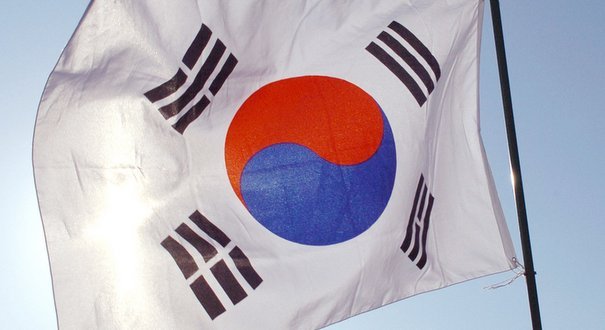
North Korean leader Kim Jong Un proposed resuming talks with South Korea in his New Year’s Day address, and Seoul leaped to grab the opportunity. South Korean President Moon Jae In has a ready reason to make the most of the talks: a successful Olympic winter games next month in Pyeongchang, with a presumed political payoff at home. Sports have provided the few opportunities to demonstrate something positive in inter-Korean relations in what has otherwise been a long saga of festering cold war antagonism, and Moon campaigned last year on improving relations with North Korea.
But as many commentators in and out of Korea have noted, there is a serious risk that North Korea will use renewed dialogue tactically to drive a wedge between Washington and Seoul and to dilute the effects of recently imposed sanctions. The U.S. alliance with South Korea has endured and provided stability since the Korean War ceased in 1953, but the underlying political support in the Korean population has long been conditional and uneven, difficult to manage even when tended by careful leaders.
Unlike under previous presidents, the Trump administration has introduced additional uncertainty, questioning Seoul’s alliance contributions, renegotiating the long fought U.S.-Korea Free Trade agreement, and threatening direct military action against the North for which the South would bear the bulk of the risk. Moreover, South Korean President Moon and his key aides are self-styled “progressives,” which in the Korean context presupposes skepticism about the alliance, largely due to American tolerance of past dictatorships before the Korean democratic transition in 1988. It is a volatile combination.
Both Trump and Moon have at least paid lip service to the alliance over the past months, but it is apparent that the old phrase “same bed, different dreams” still applies. The Trump priority, established early last year, is for maximum pressure to isolate North Korea economically and politically to get Pyongyang to end its nuclear and missile weapons programs. The North’s escalating testing and rhetoric helped win greater international support for sanctioning the regime than ever before.
But the United States has sent mixed signals about its willingness to use the new pressures to undertake a negotiating agenda, which is more the preference of Korean progressives and other diplomatic partners. The North’s own agenda certainly includes using talks to buy time for its weapons programs to proceed, try to extract bribes from the South to let the Olympics occur smoothly, blunt American temptations to strike militarily at targets of opportunity in the North, and certainly weaken the American alliance system.
For its part, China has mixed roles to play as well. Chinese impatience with Kim Jong Un’s impertinence has led to support for unprecedented sanctions against the North. But Beijing has also enforced unpublicized sanctions against the South for agreeing to American deployments of THAAD missile defenses, which the Chinese believe have potential to degrade their own strategic forces. Beijing has recently displayed a diplomatic velvet glove toward Seoul by receiving President Moon and relaxing its sanctions partially. Yet it reminded the South of the iron fist inside the glove by flying its air force unannounced through Seoul’s air defense identification zone.
To operate successfully in this complicated milieu, the United States requires deft diplomacy and a complete kit of policy tools. The Trump administration has signaled military threats and sanctions pressure very clearly, but it is less well equipped to integrate missing or underplayed components of a comprehensive policy for the Korean peninsula.
The other elements include seriousness about negotiations combined with new measures to address the new missile and nuclear threats from the North. There is time, probably months, to consult on various forms of talks, including the prospective inter-Korean talks about the Olympics, because the North needs time to make its offensive threats credible, and the United States undoubtedly wants to let time pass for the new sanctions to bite before sitting down to talk bilaterally or multilaterally with Pyongyang. But these months of preparing for talks could be a dangerous time, and new missile tests by the North could produce unpredictable outcomes.
Meanwhile, the United States should develop a thicker network of missile defenses for the region, prepare to deploy theater nuclear weapons on board American vessels there, ramp up covert action against the North, possibly develop medium range missiles to counter the North’s threats to our allies, South Korea and Japan. It is hard to imagine the North willing to give up much if it does not feel alliance counter pressure.

Distinguished Fellow, Asia Program
Paal previously served as vice chairman of JPMorgan Chase International and as unofficial U.S. representative to Taiwan as director of the American Institute in Taiwan.
Recent Work
Douglas H. Paal


Douglas H. Paal, Tong Zhao, Chen Qi, …
Carnegie India does not take institutional positions on public policy issues; the views represented herein are those of the author(s) and do not necessarily reflect the views of Carnegie, its staff, or its trustees.

In any defense establishment, change is an ongoing process. However, despite the best of intentions, existing bureaucracies, bound by habit and years of socialization, have their limits in implementing transformative change.

Anit Mukherjee

How is AI reshaping space security, creating governance challenges, and where does international diplomacy stand today?


Tejas Bharadwaj, Almudena Azcárate Ortega

After the chill in ties between 2020 and 2024 that brought India–China relations to their lowest point in several decades, the two countries have engaged each other afresh. This paper argues that there are predominantly four imperatives guiding India’s approach to China, and they exist in an order of priority.

Saheb Singh Chadha

This piece argues that India’s central challenge is not managing a single flashpoint but resolving the underlying tension between expansion and institutional coherency of the BRICS grouping.

Vrinda Sahai

A partnership between India, a country of subcontinental size, and Africa, a continent of fifty-four countries, may seem asymmetric until one notes that both are home to nearly the same number of people—1.4 billion. This essay spells out the existing challenges to the partnership, its optimal potential, and the possible pathways to realize it over the next quarter-century.

Rajiv Bhatia