

Q&A
- +1
Sheena Chestnut Greitens, Oriana Skylar Mastro, Yukon Huang, …
{
  "authors": [
    "Tong Zhao"
  ],
  "type": "questionAnswer",
  "centerAffiliationAll": "",
  "centers": [
    "Carnegie Endowment for International Peace",
    "Carnegie China"
  ],
  "collections": [
    "China’s Foreign Relations",
    "Carnegie China Commentaries"
  ],
  "englishNewsletterAll": "",
  "nonEnglishNewsletterAll": "",
  "primaryCenter": "Carnegie China",
  "programAffiliation": "",
  "programs": [],
  "projects": [],
  "regions": [],
  "topics": [
    "Arms Control",
    "Security"
  ]
}
Source: Getty
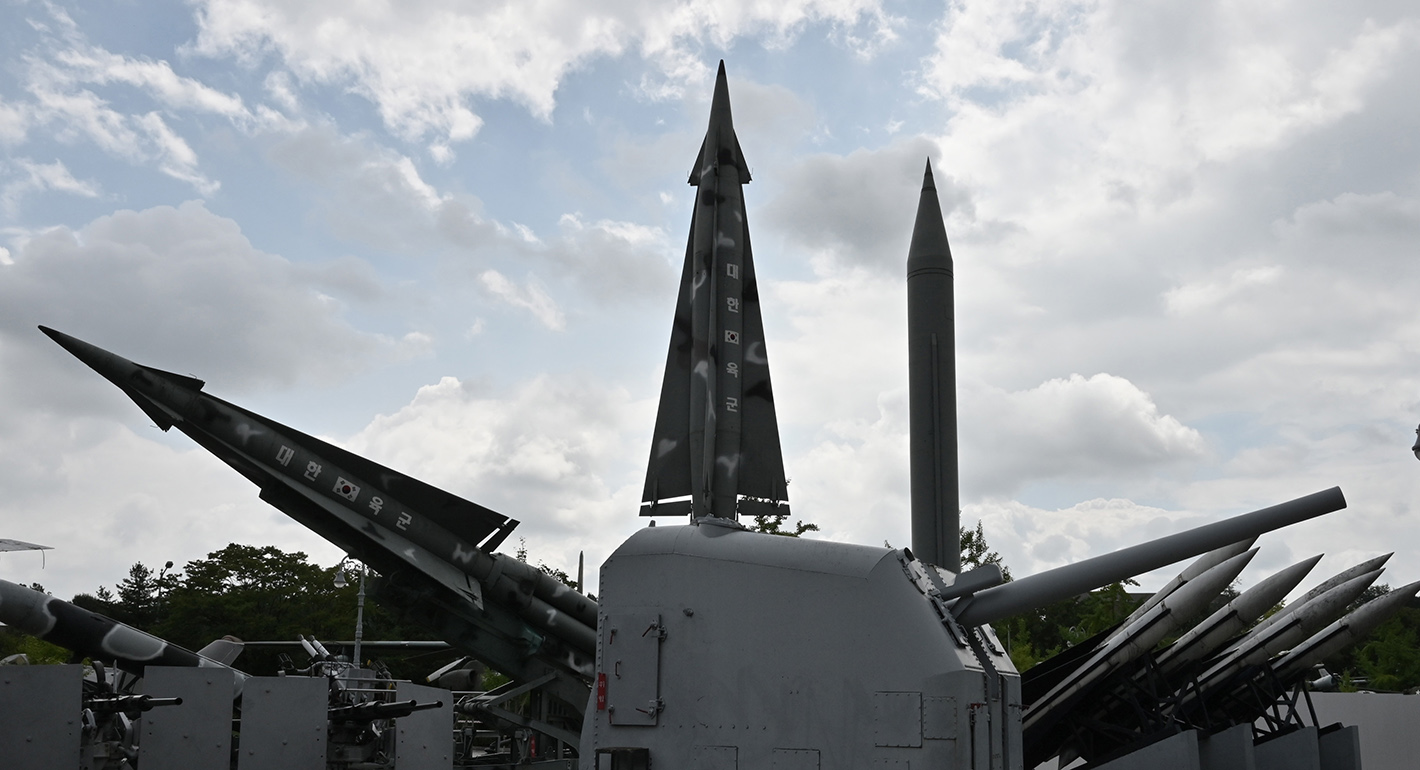
Japan and South Korea appear poised to let thorny political disagreements torpedo intelligence swapping on North Korea’s nukes and missiles. That would leave both countries and the United States all worse off and have broader regional security implications.
Since 2016, Tokyo and Seoul have had a way to share intelligence through the General Security of Military Information Agreement (GSOMIA). Although the largely successful arrangement is up for renewal in November 2019, South Korea has already announced that it plans to pull the plug for unrelated political reasons.
The main reason for the original agreement is North Korea’s growing arsenal of nuclear warheads and missiles. Whether Pyongyang could launch a nuclear strike against the U.S. homeland is open to debate, but few experts doubt it could attack South Korea and Japan with nuclear weapons. Although North Korea has opted to pause nuclear tests and long-range missile flight tests since 2018, Supreme Leader Kim Jong-un has continued to flight test short-range and medium-range missiles—which could threaten both South Korea and Japan.
Pooling their intelligence on North Korea’s weapons development and deployments has helped Tokyo and Seoul better understand Pyongyang’s military chops and improved their situational awareness during crises, preparing them for any North Korean provocations.
This intelligence swapping has worked out well for South Korea and Japan so far. For example, the countries compared notes when North Korea conducted short-range missile flight tests in 2019. Yet their individual early warning capabilities and situational awareness on North Korean military activities are still limited, and they would continue to benefit from close intelligence cooperation.
But sharing classified military intelligence with Japan has always been politically controversial in South Korea, so it was not an easy decision for former president Park Geun-hye to finally sign the GSOMIA agreement in 2016. If it ends as expected this month, the agreement would be hard to revive. Discarding it would also reinforce how difficult South Korea and Japan find it to work together, even in an area where the two countries face an obvious common threat from North Korea. Diplomacy on other issues—such as trade, science and technology cooperation, and people-to-people exchanges—could also be affected in the increasingly contentious atmosphere.
The tensions over the extension of the agreement are a result of unrelated political quarrels between the two countries. In late July 2019, Prime Minister Shinzo Abe decided to remove South Korea from Japan’s whitelist of preferred trading partners. In response, South Korean President Moon Jae-in’s administration threatened not to extend the GSOMIA. In effect, Tokyo chose to retaliate economically to protest previous South Korean measures that could reopen long-standing disputes over comfort women (who were forced into sexual slavery by Japanese troops) and forced labor issues during World War II.
Neither leader has the political will to end the dispute by pushing back against domestic nationalistic pressures. On the contrary, both seem to believe they can gain domestic support by catering to popular outrage.
If the two countries fail to compromise, GSOMIA would become the latest victim of a historical dispute, despite both countries’ continued interest in cooperating. This would deal another major blow to the Japan–South Korea relationship, which is already at its lowest point in decades. Letting the agreement lapse would also make it harder to reverse this diplomatic downturn.
GSOMIA allows Japan and South Korea to optimize each other’s unique intelligence strengths. South Korea is better positioned geographically to detect the launch of North Korean missiles and rockets, though in some cases Japan is closer to where they land. That means Tokyo can collect better intelligence on the later phases of missile flights and what happens after they reenter the atmosphere.
What’s more, Tokyo also has some of the best submarine-detecting sensors in the region, which could help alert Seoul to Pyongyang’s submarine movements. If North Korea succeeds in deploying nuclear weapons on submarines, timely warnings about the movements of its ballistic missile submarines would be even more important. Ultimately, South Korea’s rich human intelligence resources and Japan’s advanced sensor technologies—including those deployed in outer space—can provide complementary intelligence useful to both countries.
Without GSOMIA, however, the two countries would have to fall back to using the 2014 Trilateral Information-Sharing Agreement (TISA). Under TISA, intelligence can only be shared by using the United States as an intermediary; there are also more bureaucratic hoops to navigate, as South Korea and Japan can only share information on a voluntary and case-by-case basis. And because such issues can easily get tied up in domestic politics, without GSOMIA, intelligence swaps will be slower, harder, and less efficient.
Former president Barack Obama’s administration worked hard to put GSOMIA in place so as to better integrate three-way cooperation with Japan and South Korea. Encouraging close security cooperation between these two U.S. allies has been critical to larger U.S. regional security goals.
Washington also wants intelligence sharing between Tokyo and Seoul to encourage closer security cooperation in East Asia more generally. Traditionally, the U.S. hub-and-spokes alliance system operated like a wheel: it weighed heavily toward the United States as the key center of gravity, orbited by the spokes of various bilateral alliances between the United States and countries like Japan and South Korea.
In recent years, though, Washington has tended to view the old-school hub-and-spokes model as no longer sufficient to address new challenges, including not only North Korea’s provocations but also China’s growing military prowess. Three-way security cooperation, with closer connections between South Korea and Japan, would make it easier for all the allies to work together and would streamline decisionmaking. This would lighten the burden on the United States and make the alliance system more effective overall.
With Japan and South Korea on the outs, Washington worries about how its Asian alliance system will hold up against these new challenges. The United States also faces a more uphill challenge in encouraging South Korea and Japan to work closely together to help implement Washington’s Indo-Pacific strategy. Concerns could also arise that Russia and China might seek to exploit the alliance’s vulnerability and further undermine it. For example, Beijing and Moscow could conduct more bomber patrols over the disputed islands between South Korea and Japan to further alienate the two U.S. allies.
Washington’s failure to effectively mediate between Japan and South Korea could further erode their trust in the United States. A public display of the limits of American power to maintain alignment between two key allies would only prompt them to more seriously plan for a future where each depends less on Washington than before.
There is little question that North Korea and China would benefit from the termination of GSOMIA, as South Korea’s foreign minister has publicly acknowledged. If the alliance becomes less capable of quickly evaluating North Korea’s military activities and comparing notes, it might become more difficult for the United States, South Korea, and Japan to make joint, timely decisions during crises. A bruised alliance would also make it easier for North Korea to use divide-and-conquer tactics to stall denuclearization talks.
China has long worried that the intelligence sharing between South Korea and Japan also involved information on Chinese military activities. Beijing strongly suspects that close intelligence cooperation between the two countries contributes to establishing a de facto three-way alliance system—a mini-NATO in East Asia designed to contain China and Russia. As the U.S.-China strategic competition intensifies, Beijing will become even more sensitive to any efforts to strengthen the U.S.-led alliance network in East Asia.
If the GSOMIA agreement lapses as expected and Japanese-Korean infighting continues, however, that could help reduce Chinese concerns and increase Beijing’s confidence that it can soften the alliance’s negative impact by improving China’s relations with South Korea and Japan individually. If the China-Japan–South Korea free trade agreement can be successfully concluded soon, that would further boost China’s position in its competition with the United States for regional influence.

Senior Fellow with the Nuclear Policy Program and Carnegie China
Tong Zhao is a senior fellow with the Nuclear Policy Program and Carnegie China, Carnegie’s East Asia-based research center on contemporary China. Formerly based in Beijing, he now conducts research in Washington on strategic security issues.
Recent Work



Sheena Chestnut Greitens, Oriana Skylar Mastro, Yukon Huang, …
Carnegie India does not take institutional positions on public policy issues; the views represented herein are those of the author(s) and do not necessarily reflect the views of Carnegie, its staff, or its trustees.

In any defense establishment, change is an ongoing process. However, despite the best of intentions, existing bureaucracies, bound by habit and years of socialization, have their limits in implementing transformative change.

Anit Mukherjee

After the chill in ties between 2020 and 2024 that brought India–China relations to their lowest point in several decades, the two countries have engaged each other afresh. This paper argues that there are predominantly four imperatives guiding India’s approach to China, and they exist in an order of priority.

Saheb Singh Chadha

This piece argues that the present Indian strategy, based on opportunistic diversification and utilization of limited strategic reserves, remains inadequate when confronting supply disruptions. It evaluates India’s options in the short, medium, and long terms.

Vrinda Sahai

This piece examines India’s response to U.S. sanctions and tariffs, specifically assessing the immediate market consequences, such as alterations in import costs, and the broader strategic implications for India’s energy security and foreign policy orientation.
Vrinda Sahai
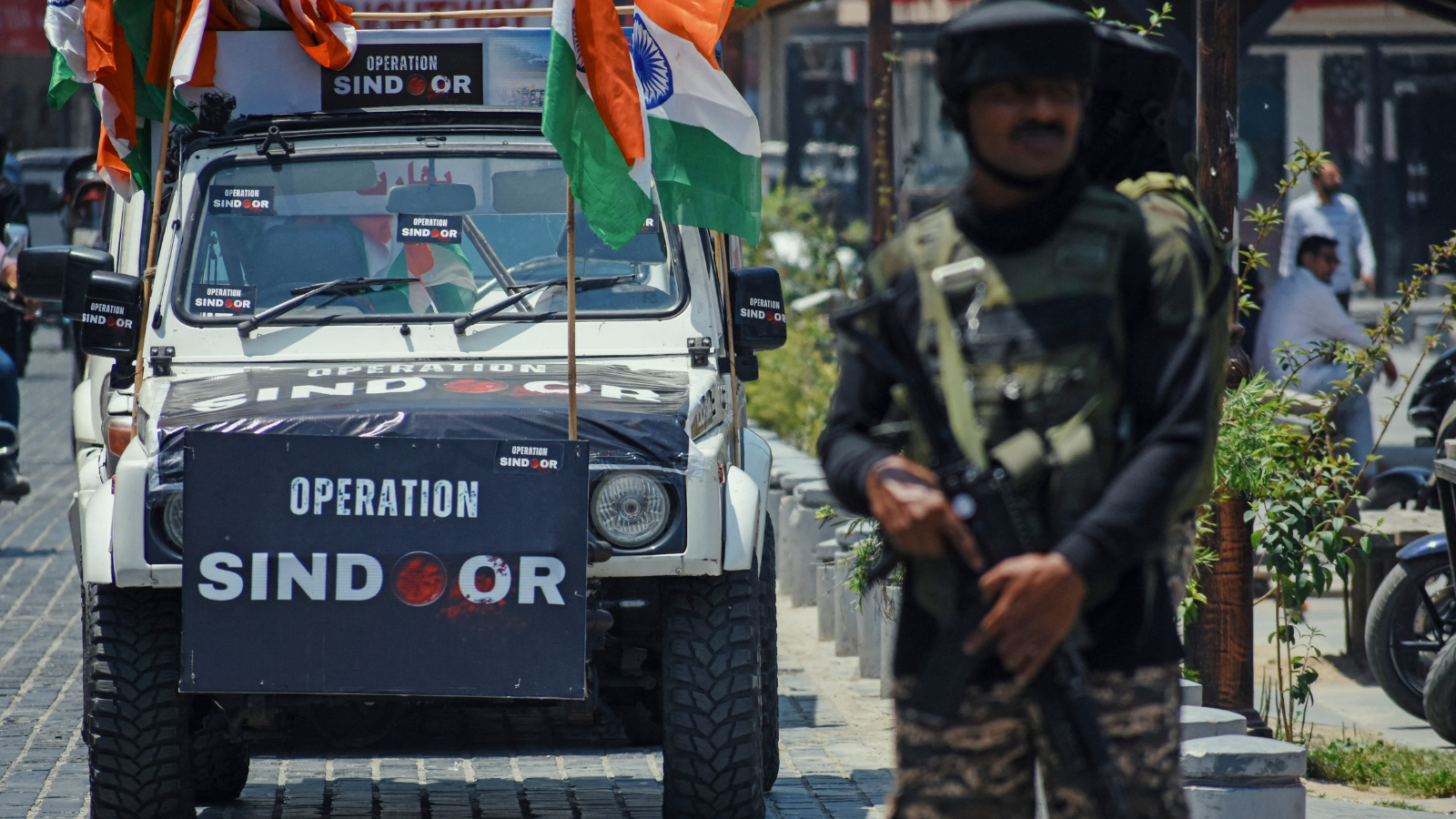
The India-Pakistan conflict that played out between May 6 and May 10, 2025, offers several military lessons. This article presents key takeaways from Operation Sindoor and breaks down how India’s preparations shaped the outcome and what more is needed to strengthen future readiness.

Dinakar Peri