

Article
Frederic Wehrey, Charles H. Johnson
{
  "authors": [
    "Frederic Wehrey"
  ],
  "type": "legacyinthemedia",
  "centerAffiliationAll": "dc",
  "centers": [
    "Carnegie Endowment for International Peace",
    "Malcolm H. Kerr Carnegie Middle East Center"
  ],
  "collections": [
    "Civil-Military Relations in Arab States"
  ],
  "englishNewsletterAll": "menaTransitions",
  "nonEnglishNewsletterAll": "",
  "primaryCenter": "Malcolm H. Kerr Carnegie Middle East Center",
  "programAffiliation": "MEP",
  "programs": [
    "Middle East"
  ],
  "projects": [],
  "regions": [
    "North Africa",
    "Tunisia",
    "Maghreb"
  ],
  "topics": [
    "Political Reform",
    "Security",
    "Military"
  ]
}
Source: Getty
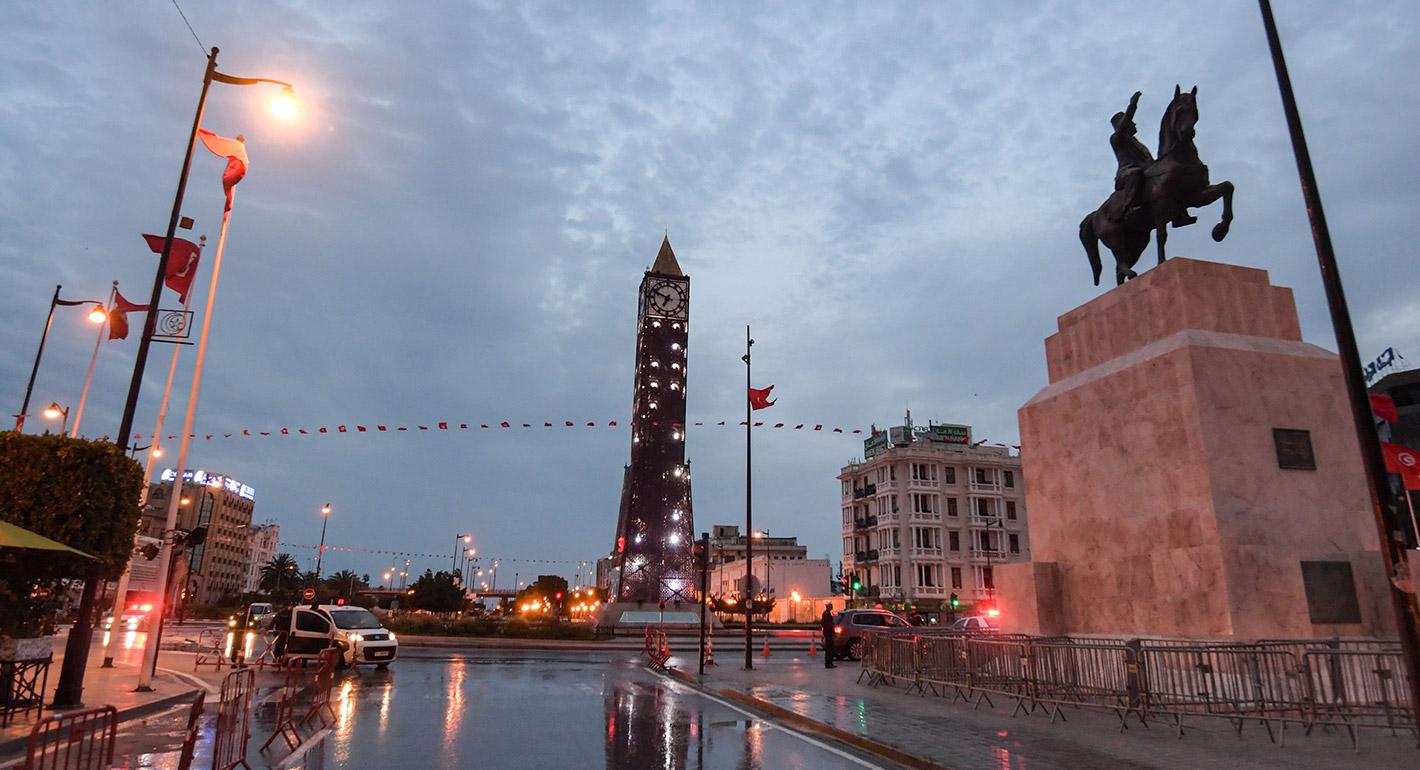
So far, the Tunisian military’s rapid response to the public health crisis in support of the elected government has been laudable. But there may be darker economic clouds on the horizon affecting the armed forces’ readiness and relations with the government.
Source: War on the Rocks
A military helicopter soars over the urban landscape, its crew scanning the city below through a cockpit video camera. They’re looking not for the enemy, but rather for their fellow citizens —crowds of them, illegally gathering in contravention of the government’s edicts on social distancing to prevent the spread of COVID-19. Sometimes they relay the coordinates of violators to ground patrols. And sometimes, as shown in one widely viewed video of a soccer match, they swoop in directly to break up the gaggle.
These flights are part of a broader mobilization of the Tunisian armed forces that, along with a range of other public health measures, have enabled this struggling Arab democracy to ride out the pandemic — so far — with relatively few cases and deaths. By the accounts of foreign observers and Tunisians alike, this military mobilization has mostly been greeted with popular support. There has been no evidence that the Tunisian military is trying to overstep its legal mandate or assert any national security prerogatives, like demanding that its members have priority in receiving protective equipment or other virus-related aid. Unlike militaries in some Arab autocracies, the Tunisian armed forces do not own commercial businesses or industries on any significant scale, for which they might be tempted to request special exemptions from government-directed restrictions...

Senior Fellow, Middle East Program
Frederic Wehrey is a senior fellow in the Middle East Program at the Carnegie Endowment for International Peace, where his research focuses on governance, conflict, and security in Libya, North Africa, and the Persian Gulf.
Recent Work
Frederic Wehrey, Charles H. Johnson
Frederic Wehrey, Charles H. Johnson
Carnegie India does not take institutional positions on public policy issues; the views represented herein are those of the author(s) and do not necessarily reflect the views of Carnegie, its staff, or its trustees.

In any defense establishment, change is an ongoing process. However, despite the best of intentions, existing bureaucracies, bound by habit and years of socialization, have their limits in implementing transformative change.

Anit Mukherjee

After the chill in ties between 2020 and 2024 that brought India–China relations to their lowest point in several decades, the two countries have engaged each other afresh. This paper argues that there are predominantly four imperatives guiding India’s approach to China, and they exist in an order of priority.

Saheb Singh Chadha

A partnership between India, a country of subcontinental size, and Africa, a continent of fifty-four countries, may seem asymmetric until one notes that both are home to nearly the same number of people—1.4 billion. This essay spells out the existing challenges to the partnership, its optimal potential, and the possible pathways to realize it over the next quarter-century.

Rajiv Bhatia
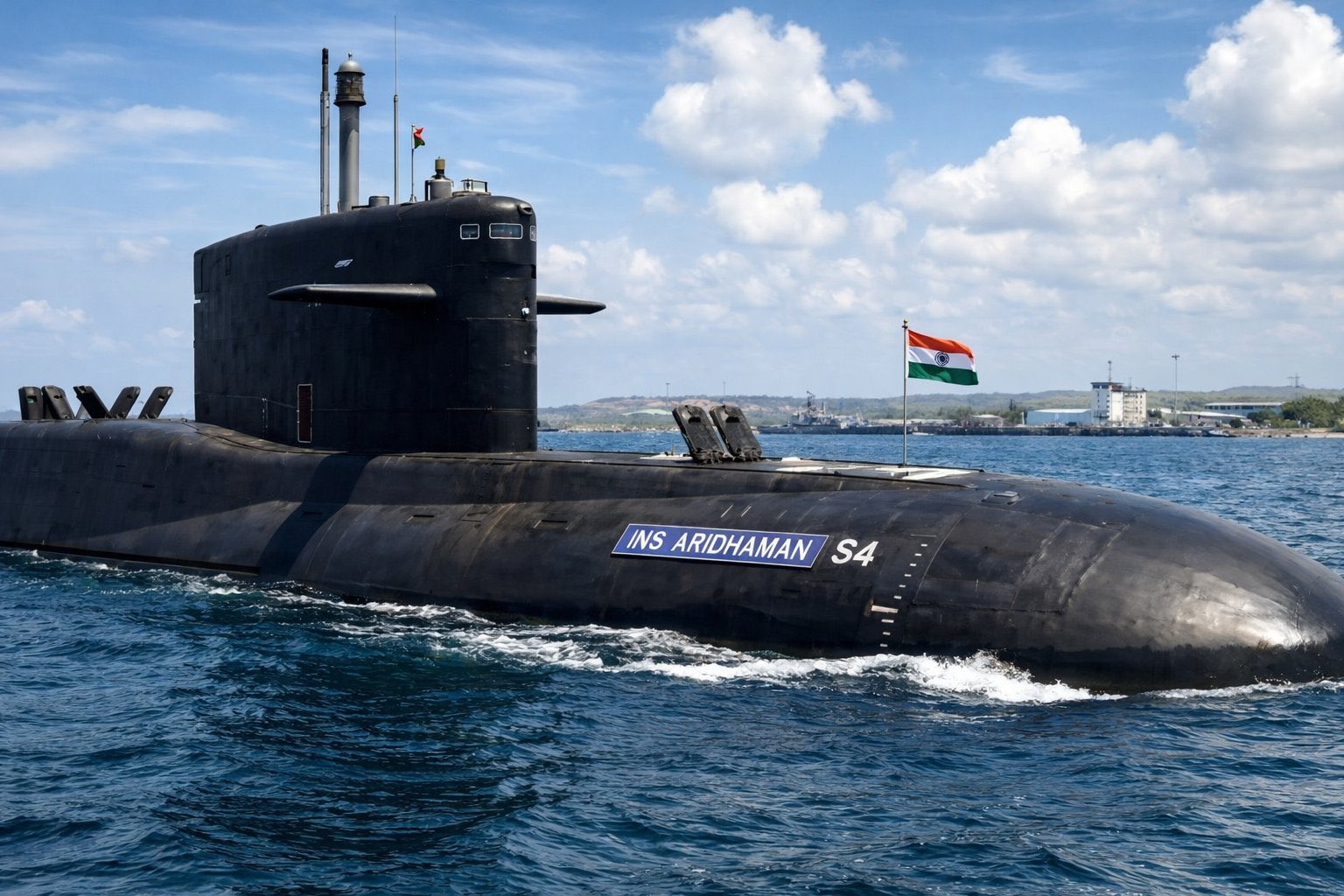
The induction of INS Aridhaman, which features several technological enhancements, now gives India the third nuclear ballistic missile submarine to ensure continuous at-sea deterrent.

Dinakar Peri

This piece argues that the present Indian strategy, based on opportunistic diversification and utilization of limited strategic reserves, remains inadequate when confronting supply disruptions. It evaluates India’s options in the short, medium, and long terms.

Vrinda Sahai