

Commentary
Richard Youngs

REQUIRED IMAGE
While enjoying both quantitative and qualitative advantages relative to U.S. efforts, European democracy policies in the Middle East require significant revision if they are to attain the sophisticated holistic gradualism to which they aspire.
Summary
Deliberation of democracy promotion in the Middle East intensified after the attacks of 9/11, and has been further energized by the transatlantic debates that were progeny of the Iraqi conflict. More intense debate over support for political change in the Middle East has forced the U.S. and Europe into a closer exploration of each other’s actual and intended approaches to democracy promotion in the region.
In this sixth Carnegie Paper framing key issues relating to democracy promotion in the Middle East, this essay outlines the way in which the EU introduced a limited and selective Middle Eastern democracy policy in the 1990s; catalogs some of the new initiatives introduced by both European governments and the EU collectively since the terrorist attacks of 9/11; identifies the distinctive conceptual features of Europe’s approach to political reform; and suggests ways in which EU strategy in the Middle East should be strengthened.
The paper contends that Europe’s determination to reinforce a distinctiveness from the U.S. has been a source of strength, but also an obstacle to tempering persistent insufficiencies in EU strategy. While enjoying both quantitative and qualitative advantages relative to U.S. efforts, European democracy policies in the Middle East require significant revision if they are to attain the sophisticated holistic gradualism to which they aspire.
Click on link above for the full text of this Carnegie Paper.
Also in the Middle East series:

About the Author
Richard Youngs is an EU Marie Curie research fellow and is coordinating the Civility project on Middle East reform run by the Foreign Policy Centre in London. He has previously worked in the Foreign and Commonwealth Office and coordinated an EU project on democracy promotion.

Senior Fellow, Democracy, Conflict, and Governance Program
Richard Youngs is a senior fellow in the Democracy, Conflict, and Governance Program, based at Carnegie Europe. He works on EU foreign policy and on issues of international democracy.
Recent Work
Richard Youngs


Richard Youngs, ed., Elena Viudes Egea, Zselyke Csaky, …
Carnegie India does not take institutional positions on public policy issues; the views represented herein are those of the author(s) and do not necessarily reflect the views of Carnegie, its staff, or its trustees.

The U.S.–India semiconductor cooperation story is well-stocked with top-level strategic intent. What remains unresolved, however, are some underlying challenges that will determine whether the cooperation actually functions. Three such friction points stand out.

Shruti Mittal
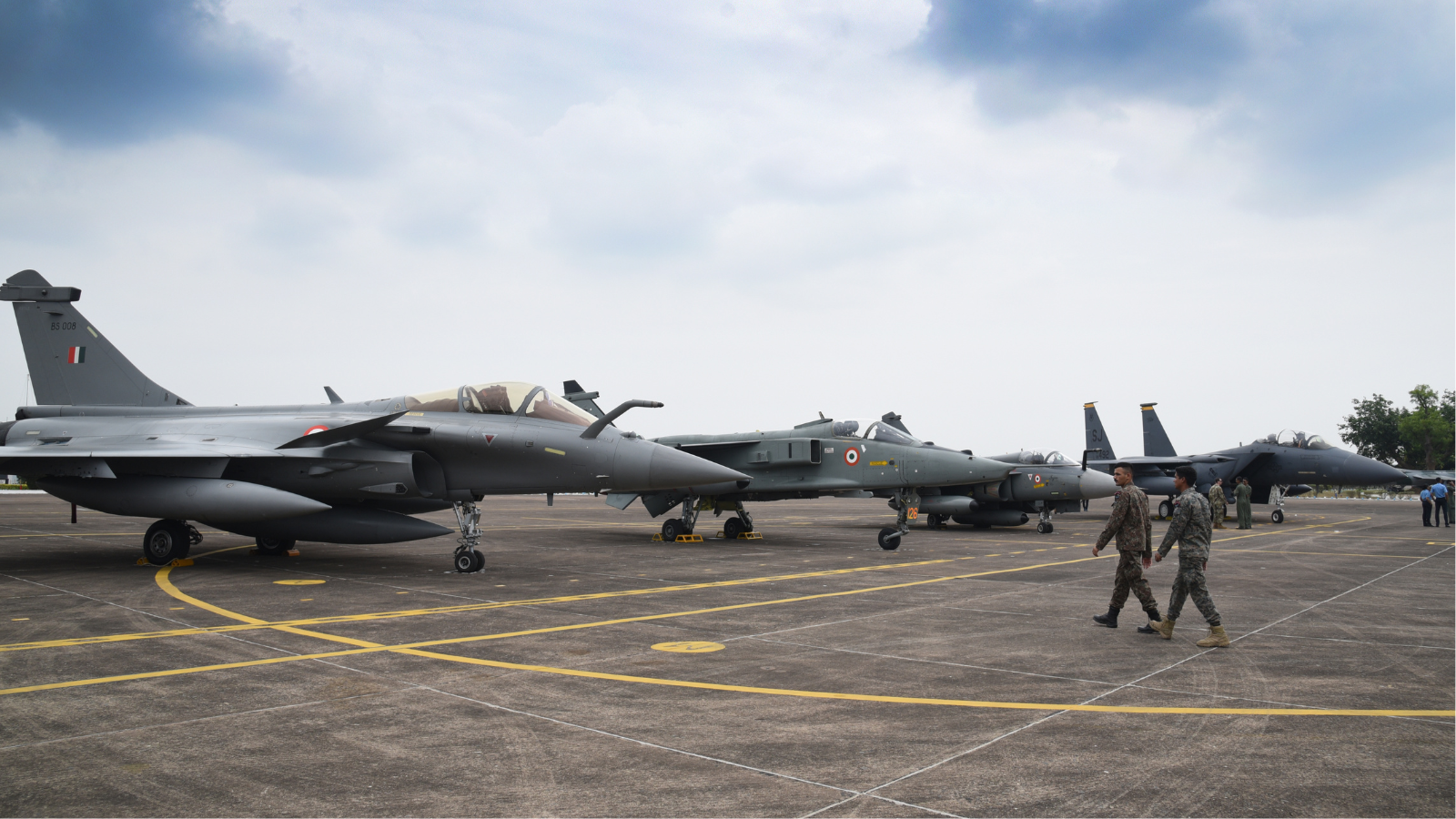
India and the United States are close to concluding a Reciprocal Defense Procurement Agreement (RDPA) that will allow firms from the two countries to sell to each other’s defense establishments more easily. While this may not remedy the specific grievances both sides may have regarding larger bilateral issues, an RDPA could restore some momentum, following the trade deal announcement.

Konark Bhandari

On the last day of the India AI Impact Summit, India signed Pax Silica, a U.S.-led declaration seemingly focused on semiconductors. While India’s accession to the same was not entirely unforeseen, becoming a signatory nation this quickly was not on the cards either.
Konark Bhandari

This piece examines India’s response to U.S. sanctions and tariffs, specifically assessing the immediate market consequences, such as alterations in import costs, and the broader strategic implications for India’s energy security and foreign policy orientation.

Vrinda Sahai
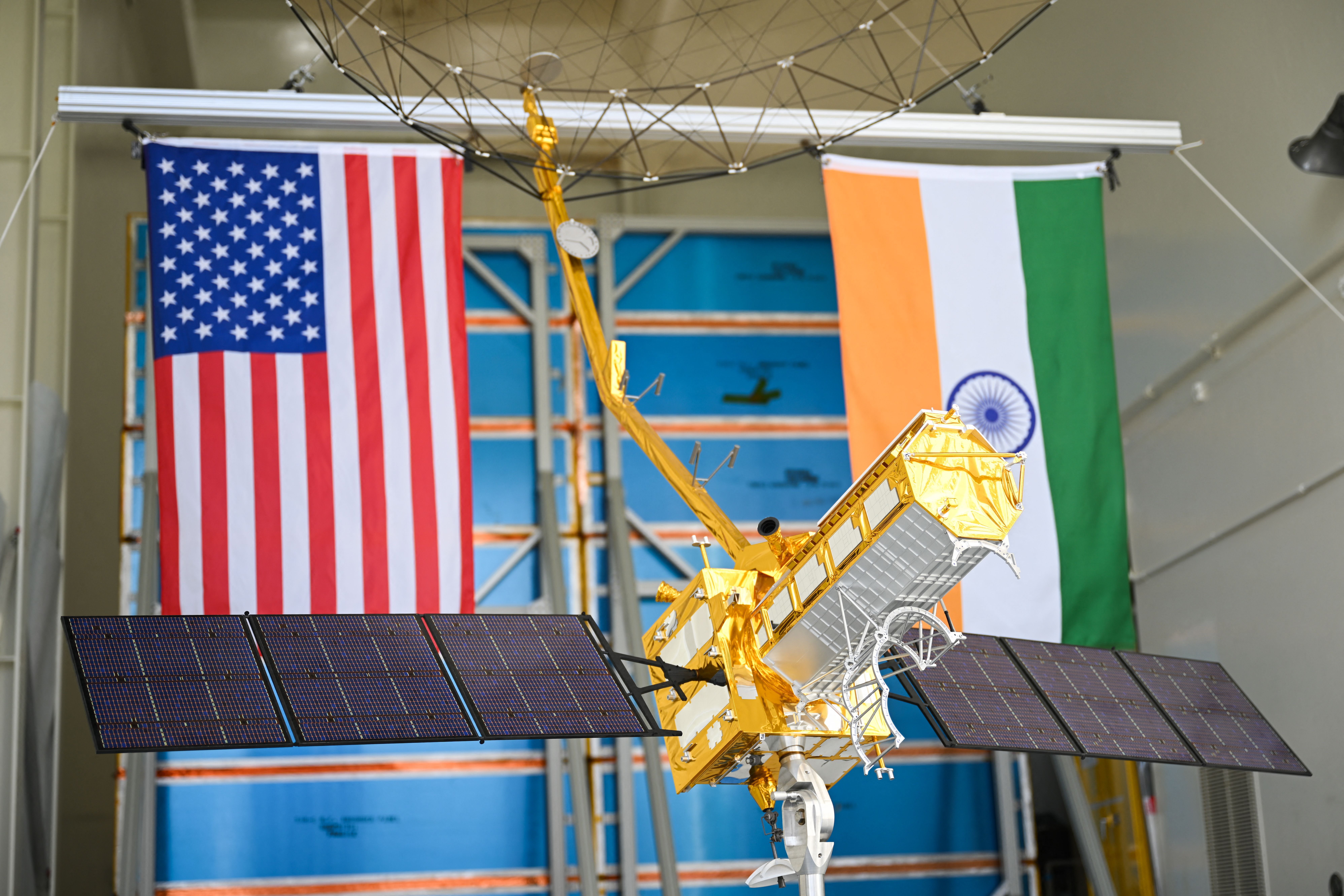
On July 30, 2025, the United States announced 25 percent tariffs on Indian goods. While diplomatic tensions simmered on the trade front, a cosmic calm prevailed at the Sriharikota launch range. Officials from NASA and ISRO were preparing to launch an engineering marvel into space—the NASA-ISRO Synthetic Aperture Radar (NISAR), marking a significant milestone in the India-U.S. bilateral partnership.

Tejas Bharadwaj