

Article
Richard Youngs
{
  "authors": [
    "Richard Youngs"
  ],
  "type": "commentary",
  "blog": "Strategic Europe",
  "centerAffiliationAll": "",
  "centers": [
    "Carnegie Endowment for International Peace",
    "Carnegie Europe"
  ],
  "collections": [
    "The Iran War’s Global Reach"
  ],
  "englishNewsletterAll": "",
  "nonEnglishNewsletterAll": "",
  "primaryCenter": "Carnegie Europe",
  "programAffiliation": "",
  "regions": [
    "Europe",
    "Germany",
    "Iran",
    "United States"
  ],
  "topics": [
    "Democracy",
    "EU",
    "Political Reform"
  ]
}
Source: Getty
European reactions to the war in Iran have lost sight of wider political dynamics. The EU must position itself for the next phase of the crisis without giving up on its principles.
European criticism that the United States’ attacks on Iran breach international law is fully justified. However, while upholding international law is essential, it is not especially edifying for European governments simply to repeat this line and stand back in passive disengagement.
The EU rejection of this war is sound, but should not preclude proactive, nonmilitary involvement in the next phase of the crisis. It should be where European policy debates start, not end.
There are international norms against military intervention, but also in the protection of human rights. The EU and its member states need to make sure they do not neglect the latter as they rightly stress the former. The challenge for the union is whether it can stand back from an illegitimate war, yet also help nudge Iran toward a more open and less repressive political system. This is a narrow course to chart, but it is an outcome the bloc can and should seek.
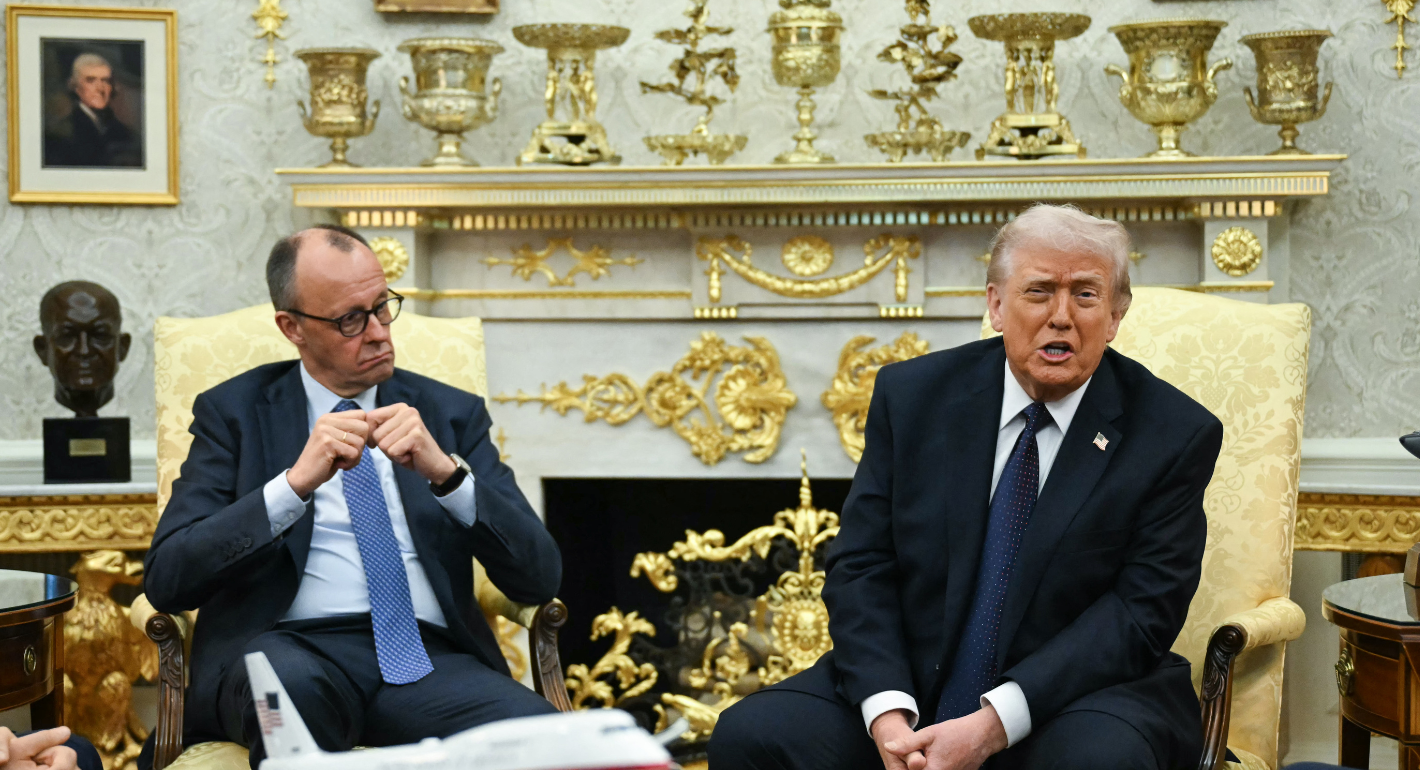
Most critical commentary hones in on the need for firmer resistance to U.S. President Donald Trump’s ill-grounded adventurism. Both European Commission President Ursula von der Leyen and German Chancellor Friedrich Merz have refrained from unequivocally condemning the attacks as illegal—although some German ministers have been more critical. Some commentators also doubt the full rigor of the distinction most states draw between rejecting offensive action and undertaking defensive measures against Iranian counterattacks. Yet, while it focuses on these obviously primary questions, the EU needs to take care not to lose sight of wider political dynamics.
Europe needs to map out a third way in Iran, between opposing illegal military attacks on the one hand, and disengagement from concerns over political rights on the other. While European opposition to U.S. actions in Iran is fully merited, the EU itself has erred in recent years, stepping back from human rights and democracy support in the country. Iranian democratic activists have been sharply critical of the EU for sidelining such support and focusing almost exclusively on nuclear negotiations.
If the EU is serious about showing autonomy from the United States, it can do so through proactive support for democratic change in Iran. Washington lacks a clear position on such political issues, and Brussels can help fill this vacuum of uncertainty. Of course, the EU cannot be the driver of such change—that is for Iranian actors to do. But, given the impact the war is already having on Europe’s economy, and with security at stake, the union can and should be looking to contribute positively at the margins.
In recent years, moments of democratic opportunity have appeared in many countries, and the EU has not been equipped to respond well. It is true that regime change does not come from the sky, an aphorism that has become prominent since the current crisis erupted. But this can easily become a straw man when European leaders, officials, journalists, and analysts skirt around using it to justify inaction. They have been better at stressing what the EU should not do than at offering any positive plan for what it can usefully do to assist Iranian reformers and citizens.
The EU would benefit from having a flexible fund specifically for support to be quickly mobilized in moments when the possibility—however faint—of democratic change emerges. The current events in Iran present precisely the kind of context in which such a democratic response mechanism could make a difference.
This would help in getting to grips with the complex dynamics of political change. Iranians have been mobilizing for political reform on and off for twenty years and have built the organizational capacities to do so. But protests rarely lead to democratic breakthroughs on their own, and the granular challenge is to help build reform alliances and agreed roadmaps between civic, economic, security, and regime-insider actors.
This is where quick and agile external facilitation can help. Many Iranian reformers want and need assistance in mapping the complexities of democratic change and sequencing reform strategies. Transitions require many moving levels of reform pressure to interlock with each other. Iran’s sui generis split political system—with its theocratic and republican strands—presents unique challenges and possibilities. A well-planned, coordinated, and comprehensive program of European support could help in material terms, in sharing lessons from other successful and failed democratic transitions, and in facilitating linkages between diverse reform actors.
Reflecting a crucial lesson in democratization experiences, it will be especially important to create fora bringing together Iranian exiles and informal civic movements that have proliferated inside the country. External militia and prominent individuals staking claims from outside Iran need to be brought together, as their conflicting unilateral actions are often what drag promising political openings into civil war—highly pertinent factors in the form of Kurdish forces in Iraq and diaspora communities rallying behind the ambitions of Reza Pahlavi, the exiled crown prince and son of the last shah. There are also many lessons to be applied from elsewhere about how best to entice security forces into so-called pacted processes of political liberalization.
Doubters will say that the United States’ actions are so egregiously illegitimate and damaging that that the EU should stay well clear. This was the route preferred by most member states and the union’s institutions after the Iraq invasion in 2003. However, this would make Iranians pay the price of actions for which they are not responsible.
Now that the military attacks have already taken place, European governments need to position themselves for the next phase of the crisis, without ceding principled opposition to military force. Helping reformers with a comprehensive plan that keeps the aspiration of political opening alive would help the EU regain strategic influence in the future.
In recent years, the EU has referred frequently to the security-democracy nexus that ostensibly guides its external policies: Iran is a test case for whether this is genuinely the case. On taking office, the current commission additionally promised a foreign policy that would listen to local voices. Ignoring Iranians’s pleas for pro-democratic help would signal the very opposite and be a bitter betrayal of this commitment.
Subscribe to Strategic Europe, delivered every Tuesday and Thursday!

Senior Fellow, Democracy, Conflict, and Governance Program
Richard Youngs is a senior fellow in the Democracy, Conflict, and Governance Program, based at Carnegie Europe. He works on EU foreign policy and on issues of international democracy.
Recent Work
Richard Youngs
Richard Youngs
Carnegie does not take institutional positions on public policy issues; the views represented herein are those of the author(s) and do not necessarily reflect the views of Carnegie, its staff, or its trustees.

Much has been said of the changes Brussels is trying to make to the EU enlargement process. Here’s why gradual integration might—or might not—be the answer.

Dimitar Bechev

The European Commissioner for Trade is headed to China. But after President Xi’s bridge-building visit to Washington, can a more isolated EU overcome Beijing’s stranglehold on critical raw materials? Who will blink first?

Rym Momtaz, ed.

The domestic impacts of how long it is taking to end the war in Ukraine have pushed the French electorate to the political extremes and compromised the country’s diplomatic capacity.
Rym Momtaz

Before the next wave of EU enlargement takes place, the union needs to grapple with thorny questions of how power is distributed among its members.


Emil Sondaj Hansen, Ditte Brasso Sørensen

Are Germany’s economic, industrial, and political struggles becoming a liability for the EU’s ability to rise to the geopolitical moment?
Rym Momtaz, ed.