

Report
- +2
George Perkovich, Jessica Tuchman Mathews, Joseph Cirincione, …

REQUIRED IMAGE
Iran is moving to restart its suspended uranium enrichment program. Negotiations with the European Union have collapsed and the crisis is escalating. Does the United States -- or Israel -- have a military option?
Iran is moving to restart its suspended uranium enrichment program. Negotiations with the European Union have collapsed and the crisis is escalating. Does the United States -- or Israel -- have a military option?
The same neoconservative pundits who campaigned for the invasion of Iraq are now beating the drums on Iran. Urging us this week to keep military options open, Weekly Standard editor William Kristol said Iran’s “nuclear program could well be getting close to the point of no return.” Writing from the same talking points, Washington Post columnist Charles Krauthammer said, “Instead of being years away from the point of no return for an Iranian bomb…Iran is probably just months away.”
There is no need for military strikes against Iran. The country is five to ten years away from the ability to enrich uranium for fuel or bombs. Even that estimate, shared by the Defense Intelligence Agency and experts at IISS, ISIS, and University of Maryland assumes Iran goes full-speed ahead and does not encounter any of the technical problems that typically plague such programs.
This is not a nuclear bomb crisis, it is a nuclear regime crisis. US Ambassador John Bolton has correctly pointed out that this is a key test for the Security Council. If Iran is not stopped the entire nonproliferation regime will be weakened, and with it the UN system.
But it will have to be diplomats, not F-15s that stop the mullahs. An air strike against a soft target, such as the uranium conversion facility at Isfahan (which this author visited in 2005) would inflame Muslim anger, rally the Iranian public around an otherwise unpopular government and jeopardize further the US position in Iraq. Finally, the strike would not, as is often said, delay the Iranian program. It would almost certainly speed it up. That is what happened when the Israelis struck at the Iraq program in 1981.
The Failure of the Osirak Raid
A bit of history: Back in June of 1991, then-Defense Secretary Cheney gave a photograph of the Iraqi nuclear reactor at Osirak to the man who had commanded the Israeli air force during the raid on the site in 1981. "With thanks and appreciation for the outstanding job he did on the Iraqi Nuclear Program in 1981," Cheney wrote, "which made our job much easier in Desert Storm." Cheney may have forgotten that the Reagan administration condemned the raid when it took place, as did most nations. And he may not be aware that the Israeli raid, far from crippling Iraq's nuclear program, actually accelerated it. The raid was a tactical success but a strategic failure.
After Israel bombed the Iraqi reactor on June 7, 1981, using U.S.-supplied F-16s and F-15s, the Reagan administration said, "The United States government condemns the reported Israeli air strike on the Iraqi nuclear facility, the unprecedented character of which cannot but seriously add to the already tense situation in the area." Most other nations joined in denouncing the action.
Israel defended the raid by saying that the Osirak reactor "was intended, despite statements to the contrary, for the production of atomic bombs. The goal of these bombs was Israel." The Israelis were right, at least about Saddam Hussein's plan to use the reactor to make bomb fuel. He intended to use the research reactor Iraq had purchased from France in 1979 to irradiate uranium, producing plutonium that could be extracted for the core of a bomb. The 40-megawatt reactor was near completion at the time of the raid, but it had not yet been fueled with uranium rods.
The raid was hotly debated in the government of Israeli Prime Minister Menachem Begin. Many, such as Yehoshua Saguy, the head of the intelligence division of the Israeli Defense Forces, argued that Israel should continue to try to find a nonmilitary solution to the threat, as it would take Iraq five to 10 years to produce the material needed for a bomb. In the end, Begin went with the worst-case estimate of a bomb within one to two years and ordered the attack.
The raid, however, speeded up the Iraqi program. According to former Iraqi nuclear official Khadir Hamza, "Israel made a mistake." Hussein had planned to slowly divert plutonium from the reactor, which was under International Atomic Energy Agency safeguards. His diversion plan might have escaped detection, but with what we now know, it also probably would have taken much longer than even the 10 years Saguy and others estimated at the time. The program was proceeding slowly and had run into numerous technical problems, while Iraq's intense war with Iran was diverting resources from the project. The raid, however, energized Saddam Hussein. He launched a new effort to secretly construct gas centrifuges and other devices (particularly electromagnetic isotope separation units) to produce weapons-grade uranium. The program went underground and mushroomed. "At the beginning we had approximately 500 people working, which increased to 7,000 working after the Israeli bombing," Hamza explained to a Washington audience in November 2000, "The secret program became a much larger and ambitious program."
Lesson of the Raid
Israel had pulled off a remarkable military raid, striking targets with great precision over long distances. But the bombing set back Israel more than Iraq. It further harmed Israel's international reputation, later worsened by the ill-fated 1982 invasion of Lebanon, while making Iraq appear a victim of Israeli aggression. Officials heralded the "Begin doctrine" of preemptive strikes, but the attack made Israel complacent. In the words of Israeli-born scholar Avner Cohen, author of Israel and the Bomb, "The operational success proved to be profoundly and strategically deceptive," as Israel remained unaware of Iraq's new efforts throughout most of the 1980s. Internally, Saddam Hussein's nuclear ambitions went from a side project to an obsession. Ten years later, in 1991, he was closer to producing a nuclear bomb with uranium than he might ever have been pursuing a plutonium path through Osirak.
The raid had not, despite Cheney's praise, made "our job much easier" but had complicated an already difficult problem. Hussein dispersed and hardened his secret new facilities and protected them with air defenses. In the 1991 war, 43 days of coalition bombing failed to destroy the program, which ended only when U.N. disarmament teams methodically destroyed the equipment on the ground.
Today, with Iran, many of my colleagues would like to keep this option open -if only as a bluff- believing that we need the threat of military action to force Iran into compromise. They may feel the need to prove their “toughness” to the current administration. But it is a dangerous stick to wave, particularly when you do not have any real control over it. The true lessons of the Osirak raid are worth remembering as optimistic plans for "solving" Iran now come flying out of neoconservative circles.

Former Senior Associate, Director for NonProliferation
Recent Work


George Perkovich, Jessica Tuchman Mathews, Joseph Cirincione, …
Joseph Cirincione
Carnegie India does not take institutional positions on public policy issues; the views represented herein are those of the author(s) and do not necessarily reflect the views of Carnegie, its staff, or its trustees.

How is AI reshaping space security, creating governance challenges, and where does international diplomacy stand today?


Tejas Bharadwaj, Almudena Azcárate Ortega

The U.S.–India semiconductor cooperation story is well-stocked with top-level strategic intent. What remains unresolved, however, are some underlying challenges that will determine whether the cooperation actually functions. Three such friction points stand out.

Shruti Mittal
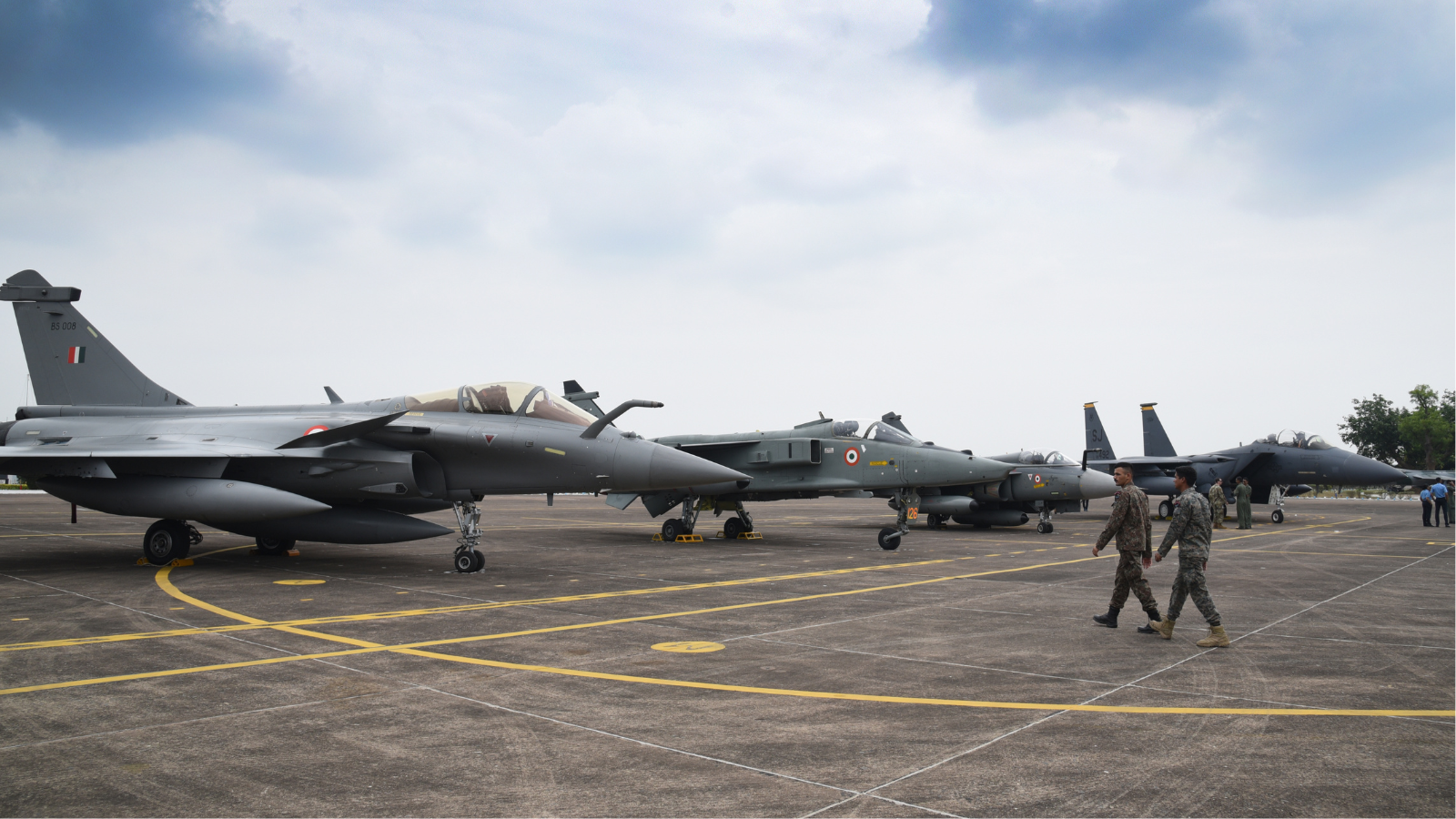
India and the United States are close to concluding a Reciprocal Defense Procurement Agreement (RDPA) that will allow firms from the two countries to sell to each other’s defense establishments more easily. While this may not remedy the specific grievances both sides may have regarding larger bilateral issues, an RDPA could restore some momentum, following the trade deal announcement.

Konark Bhandari

On the last day of the India AI Impact Summit, India signed Pax Silica, a U.S.-led declaration seemingly focused on semiconductors. While India’s accession to the same was not entirely unforeseen, becoming a signatory nation this quickly was not on the cards either.
Konark Bhandari

This piece examines India’s response to U.S. sanctions and tariffs, specifically assessing the immediate market consequences, such as alterations in import costs, and the broader strategic implications for India’s energy security and foreign policy orientation.

Vrinda Sahai