

Article
Marina Ottaway, Omar Hossino
Source: Getty
As the number of countries with the ambition to play a role in world affairs increases, Washington must decide whether to deal with them as legitimate global players or treat them as meddlers to be dismissed.
Turkey, Brazil, and Iran negotiated a deal whereby Tehran would turn over 1200 kilograms of low-enriched uranium to Turkey, to be exchanged for rods of more highly enriched uranium suitable for medical purposes. The repudiation of the deal by the United States was swift and uncompromising: Secretary Clinton announced that the United States had reached an agreement with Russia and China on the imposition of new, harsher sanctions on Iran, and that the sanctions were the U.S. answer to the deal.
While sending a needed message to Tehran that it cannot escape sanctions without a genuine change in its policies, the United States also sent a counterproductive message to Turkey and Brazil: their independent diplomacy is unwelcome interference and will be ignored. This response has implications that go far beyond the immediate issue and could make it more difficult for the United States to find allies for its policies outside Europe.
The number of countries with the ambition to play a role in world affairs is increasing. The phenomenon is more noticeable in the Middle East and surrounding regions where unresolved conflicts are numerous, U.S. diplomacy has made little headway, and few countries really trust Washington to find solutions. As a result, a very active regional diplomacy has emerged of which the United States or Europe are not a part (although it is not directed against them, at least so far).
Turkey is the most visible and outspoken participant in this regional diplomacy. Its policy of “zero problems with neighbors” has led it to forge close relations with Damascus and attempt to mediate between Syria and Israel for the return of the Golan Heights. It is also pursuing an active diplomacy in the Caucasus, including an opening toward Armenia and in Central Asia. Turkey has established good relations with Iran, which puts it at odds with the United States, but also with both Iraq and the autonomous Kurdish region, a policy Washington applauds.
It is not just Turkey. Gulf countries, including the ones that harbor U.S. military installations, refuse to follow Washington’s lead in ostracizing Iran and seek to maintain good relations with their large neighbor, even if they fear it. Tiny Qatar—armed with wealth and ambition way beyond its size—negotiated an agreement in 2008 between Hizbollah and the pro-Western Lebanese government. Washington saw this agreement as a sell-out to Hizbollah, but had to reluctantly accept it for lack of better alternatives. Qatar is also forging ahead with other initiatives in the region, seemingly indifferent to what the United States wants.
The attempt by Turkey and Brazil together to weigh in on the nuclear issue in Iran moved this diplomatic activism one step further, giving it a global rather than a purely regional dimension. It is the return of the Third World as envisaged in the 1950s by Jawarharlal Nehru, Marshal Tito, and Gamal Abdel Nasser: a bloc of countries refusing to be pulled into the Cold War and pursuing their own interests while maintaining neutrality between the United States and the Soviet Union. The ambition was never realized, and the Third World became synonymous with underdevelopment, poor economic policies, and, in the political realm, strident anti-Americanism.
The new Third World is different. The main protagonists are not newly independent countries with big dreams, no experience, and desperate need for economic aid. They are emerging powers with growing economies that do not believe their interests are well served by U.S. and European policies. These activist governments are driven by national interest, ambition to play in the global arena, domestic political considerations, as well as genuine desire to solve problems. In most cases, they will probably fail like everybody else, particularly in the Middle East, but this is not ground for rejecting their efforts out of hand.
The deal negotiated by Turkey and Brazil with Iran was highly problematic—a last-minute deal to avoid new sanctions that left the ultimate problem of Iranian nuclear ambitions unsolved. Ironically, the sanctions being debated are equally unlikely to change Tehran’s policies, particularly since international solidarity is already breaking down over the prospects of harsher bilateral measures. But the return of the Third World poses a challenge that goes far beyond this rift over Iran.
Emerging powers are here to stay, not only economically but also politically. They could become constructive players in the international arena or follow in the footsteps of the old Third World, turning against the United States and Europe and embracing radical causes. The outcome may well depend on whether Washington deals with them as legitimate players whose point of view deserves a hearing or treats them as meddlers to be contemptuously dismissed—as Turkey and Brazil were.

Former Senior Associate, Middle East Program
Before joining the Endowment, Ottaway carried out research in Africa and in the Middle East for many years and taught at the University of Addis Ababa, the University of Zambia, the American University in Cairo, and the University of the Witwatersrand in South Africa.
Recent Work
Marina Ottaway, Omar Hossino
Marina Ottaway
Carnegie India does not take institutional positions on public policy issues; the views represented herein are those of the author(s) and do not necessarily reflect the views of Carnegie, its staff, or its trustees.

How is AI reshaping space security, creating governance challenges, and where does international diplomacy stand today?


Tejas Bharadwaj, Almudena Azcárate Ortega

After the chill in ties between 2020 and 2024 that brought India–China relations to their lowest point in several decades, the two countries have engaged each other afresh. This paper argues that there are predominantly four imperatives guiding India’s approach to China, and they exist in an order of priority.

Saheb Singh Chadha

This piece argues that India’s central challenge is not managing a single flashpoint but resolving the underlying tension between expansion and institutional coherency of the BRICS grouping.

Vrinda Sahai
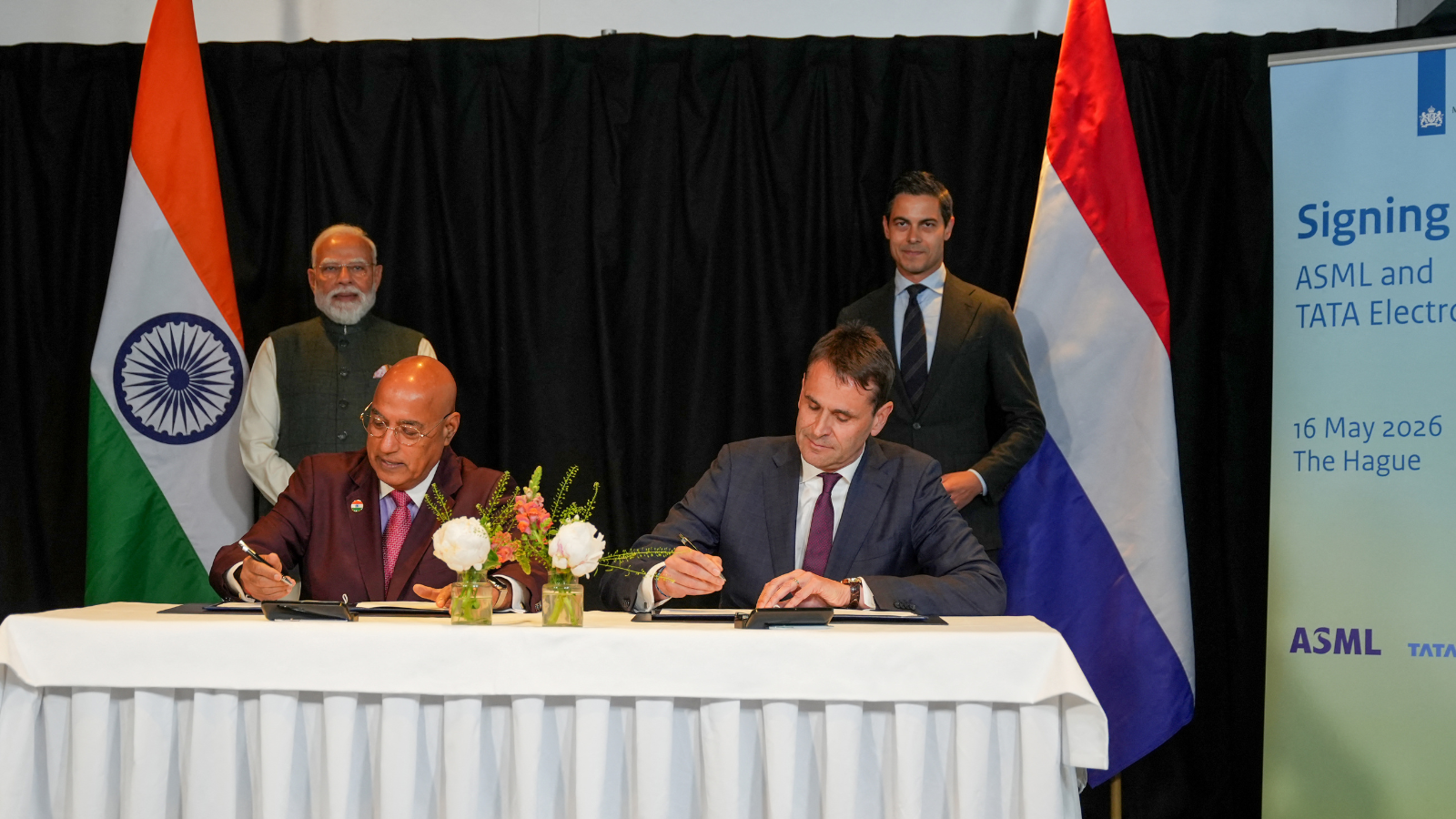
The ASML MoU with Tata Electronics is an indicator of how far the Indian semiconductor ecosystem has come. This ecosystem has been years in the making and represents real commercial logic.

Konark Bhandari

A partnership between India, a country of subcontinental size, and Africa, a continent of fifty-four countries, may seem asymmetric until one notes that both are home to nearly the same number of people—1.4 billion. This essay spells out the existing challenges to the partnership, its optimal potential, and the possible pathways to realize it over the next quarter-century.

Rajiv Bhatia