

In The Media
Lilia Shevtsova
Source: Getty
Khodorkovsky's conviction illustrates the dead-end road that Russia is on and underscores the personalized nature of Russia’s regime, despite attempts to don a “human face” over the past two years.
A court that strengthens the prosecutors’ accusations. A court that does not care for its own reputation, embracing absurdity. A court that reflects the essence of a controlled political system. A court that becomes a tool for the personal vendettas of the “national leader,” a man elevated to power by chance but unwilling to leave. That is the court in which Mikhail Khodorkovsky and Platon Lebedev were tried.
On December 27, Judge Viktor Danilkin announced his guilty verdict, which turned out to be even harsher than the accusations leveled by the prosecutors. That was to be expected. How could a court, integrated into the vertical column of executive power, rule—in the face of Vladimir Putin, who announced even before the trial that Khodorkovsky was guilty—against that same executive power?
The trial of Khodorkovsky and Lebedev has human, socio-economic, and political facets. The long and persistent persecution of these two individuals by their government began in 2003 and has laid bare over the past seven years the various passions involved: the anger, vindictiveness, and fear of reprisal on the part of the ruling elite and its leader, countered by the willpower and stubborn defense of human dignity on the part of the defendants.
This trial became a turning point in Russia’s development, confirming the Kremlin’s deliberate turn towards bureaucratic capitalism and repressive rule. This trial made it clear that the Russian system cannot be liberalized under the existing regime. This trial proved the helplessness of President Medvedev and bears witness to his unenviable role as a frontman to allow the “national leader”—with whom everyone, including the elite, is fed up—to remain in power.
Those who ask about where Russia is heading and the nature of its system of governance should require no further proof. The trial of Khodorkovsky illustrates the dead-end road that Russia is on and underscores the personalized nature of Russia’s regime, despite attempts to don a “human face” over the past two years.
Of course, the Kremlin’s gambit continues. Their latest trick was to time the verdict for the Christmas holidays in the West and for the eve of the New Year holidays in Russia. The Kremlin thus calculated that political life would go into hibernation for two to three weeks, after which time Khodorkovsky would cease to be news. The object of the game is to allow Medvedev to save face and give him the opportunity to potentially lessen the sentence by a year, as Putin did in Khodorkovsky’s first trial. It is not clear, however, whether Putin will allow his shadow that possibility.
But what impact does this have on Russia’s trajectory and the fate of the country’s most famous prisoners, whom the authorities have turned into political martyrs?
For many people, the guilty verdict is an uncomfortable result. In Russia, the verdict makes it harder for those in the elite who insist that Medvedev’s Russia is changing and that the president has “reform potential.” The verdict is also uncomfortable for Western governments, who began their “reset” with Russia on the basis of hopes for the country’s liberalization. How can Russia’s bellwethers preserve their reputation, despite being part of a repressive system? How can Western leaders justify their embrace of Medvedev? They must all be thinking, “couldn’t Putin have just let those guys go? He’d solve his image problem, and it would be easier for us to conduct our own business.”
The problem is that Putin and his team, including Medvedev, simply cannot free Khodorkovsky. They have turned him into a “systemic factor.” Khodorkovsky in jail is confirmation of the stability of the system, of the omnipotence of Putin and his team, and of their drive to hold onto power at any cost. Given that, releasing Khodorkovsky would be tantamount to political suicide. And this regime is not interested in suicide, particularly during an election year. To the contrary: the regime is girding itself to rule permanently.
Keep an eye on the case of Khodorkovsky and Lebedev. It will provide more information about Russia, the stability of its regime, and the sentiments of its elite and society than any other source. The Khodorkovsky case has become the core criterion of Russian reality.
And what of Khodorkovsky himself? Thanks to the Kremlin’s efforts and his own choices, he has become a political and moral alternative to the current regime. That is something the regime cannot forgive.
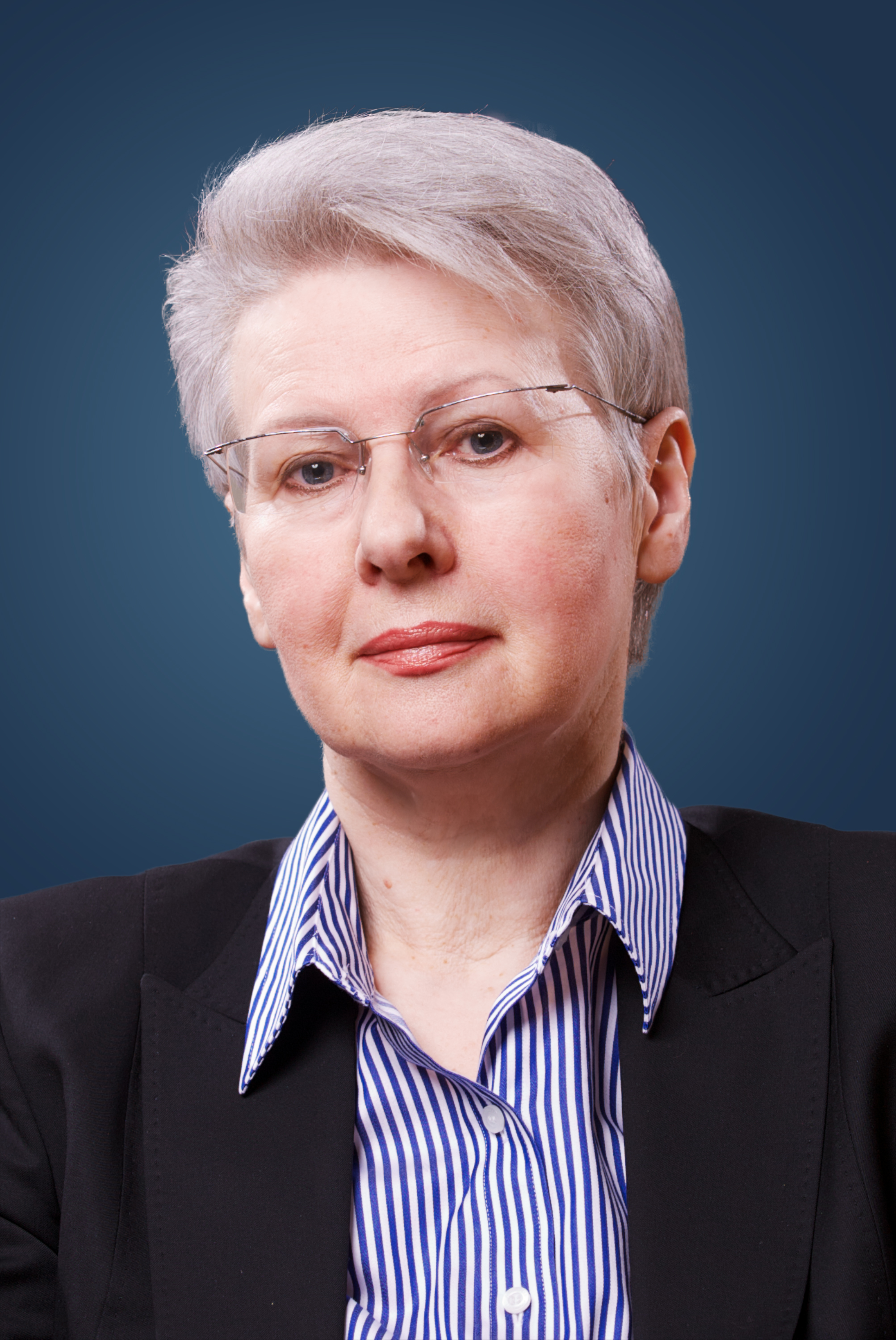
Former Senior Associate, Russian Domestic Politics and Political Institutions Program, Moscow Center
Shevtsova chaired the Russian Domestic Politics and Political Institutions Program at the Carnegie Moscow Center, dividing her time between Carnegie’s offices in Washington, DC, and Moscow. She had been with Carnegie since 1995.
Recent Work
Lilia Shevtsova
Lilia Shevtsova
Carnegie India does not take institutional positions on public policy issues; the views represented herein are those of the author(s) and do not necessarily reflect the views of Carnegie, its staff, or its trustees.

This piece argues that India’s central challenge is not managing a single flashpoint but resolving the underlying tension between expansion and institutional coherency of the BRICS grouping.

Vrinda Sahai
Unless the government can up its communications game, anti-vax movements could prolong India’s pandemic effects.

Shruti Sharma
The proposal aims to produce high and sustained growth to get the country back on track after slowdowns that preceded the coronavirus pandemic.
Suyash Rai
India’s proposed data protection law would create an enormous task for the new agency formed to regulate it. Given stretched resources, the new Data Protection Authority should take a strategic approach.
Shivangi Tyagi
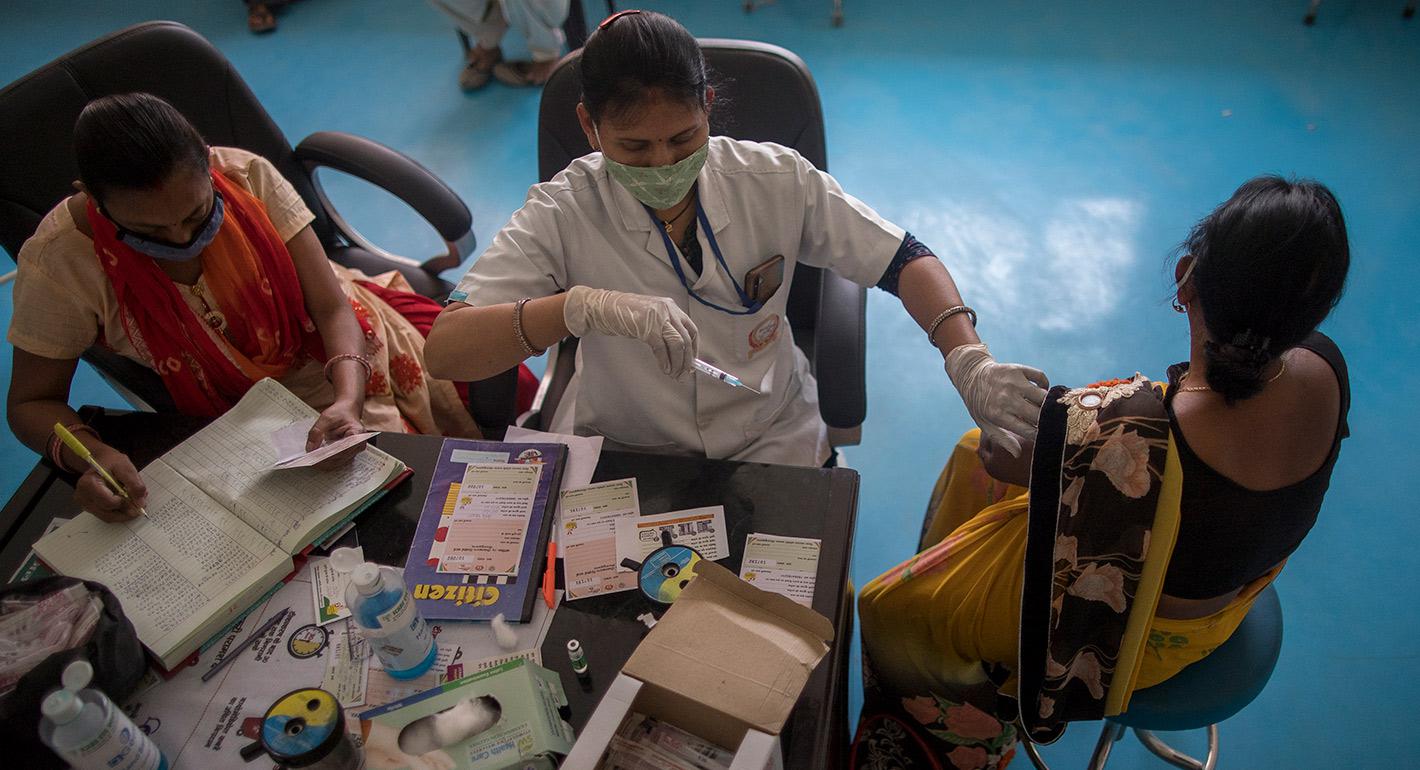
The COVID-19 crisis in India is devastating. The Biden administration must consider exceptions to the Defense Production Act and ease the global vaccine supply chain.

Arvind Gupta, Rudra Chaudhuri, Harsh Pant, …