Deradicalization programs will likely remain a necessary part of larger counter-radicalization and counterterrorism strategies. To succeed, deradicalization programs must include affective, pragmatic, and ideological components and considerable aftercare.
Link Copied
By Christopher Boucek, Angel Rabasa, Stacey L. Pettyjohn, Jeremy J. Ghez
Published on Apr 14, 2011
Source: Rand Corporation
There is an emergent consensus among counterterrorism analysts and practitioners that to defeat the threat posed by Islamist extremism and terrorism, there is a need to go beyond security and intelligence measures, taking proactive measures to prevent vulnerable individuals from radicalizing and rehabilitating those who have already embraced extremism. This broader conception of counterterrorism is manifested in the counter- and deradicalization programs of a number of Middle Eastern, Southeast Asian, and European countries.
A key question is whether the objective of these programs should be disengagement or deradicalization of militants. Disengagement entails a change in behavior (i.e., refraining from violence and withdrawing from a radical organization) but not necessarily a change in beliefs. A person could exit a radical organization and refrain from violence but nevertheless retain a radical worldview. Deradicalization is the process of changing an individual’s belief system, rejecting the extremist ideology, and embracing mainstream values.
There is a view in the scholarly community that deradicalization may not be a realistic objective and that the goal of terrorist rehabilitation programs should be disengagement. Deradicalization, in fact, may be particularly difficult for Islamist extremists because they are motivated by an ideology that is rooted in a major world religion. The tenets of the ideology, therefore, are regarded as religious obligations.
Nevertheless, deradicalization may be necessary to permanently defuse the threat posed by these individuals. If a militant disengages solely for instrumental reasons, when the circumstances change, the militant may once again take up arms. Conversely, when deradicalization accompanies disengagement, it creates further barriers to recidivism.
Moreover, there may be a tipping point. When enough exmilitants renounce radical Islamism, the ideology and the organizations that adhere to it are fatally discredited. Even short of this tipping point, as greater numbers of militants renounce extremism, radical Islamist organizations will experience greater hurdles in attracting adherents and sympathizers within the Muslim community.
Studies of those who leave gangs and criminal organizations, exit from cults and religious sects, and withdraw from terrorist organizations suggest that individuals follow a similar trajectory when leaving a criminal or extremist group. Certain lessons can be derived from this trajectory.
Boucek was an associate in the Carnegie Middle East Program where his research focused on security challenges in the Arabian Peninsula and Northern Africa.
Carnegie India does not take institutional positions on public policy issues; the views represented herein are those of the author(s) and do not necessarily reflect the views of Carnegie, its staff, or its trustees.
After the chill in ties between 2020 and 2024 that brought India–China relations to their lowest point in several decades, the two countries have engaged each other afresh. This paper argues that there are predominantly four imperatives guiding India’s approach to China, and they exist in an order of priority.
A partnership between India, a country of subcontinental size, and Africa, a continent of fifty-four countries, may seem asymmetric until one notes that both are home to nearly the same number of people—1.4 billion. This essay spells out the existing challenges to the partnership, its optimal potential, and the possible pathways to realize it over the next quarter-century.
This piece argues that the present Indian strategy, based on opportunistic diversification and utilization of limited strategic reserves, remains inadequate when confronting supply disruptions. It evaluates India’s options in the short, medium, and long terms.
This piece examines India’s response to U.S. sanctions and tariffs, specifically assessing the immediate market consequences, such as alterations in import costs, and the broader strategic implications for India’s energy security and foreign policy orientation.
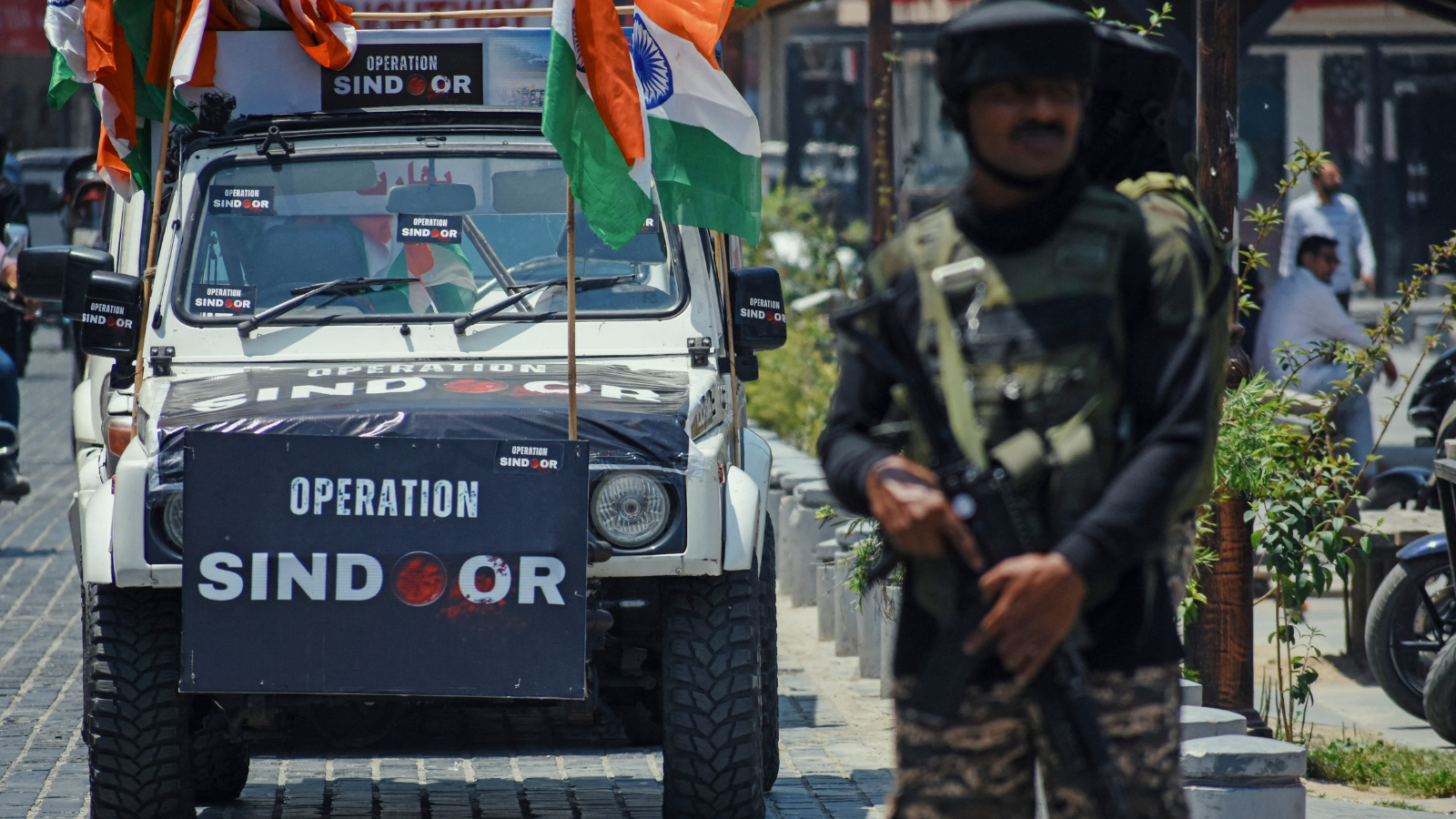
The India-Pakistan conflict that played out between May 6 and May 10, 2025, offers several military lessons. This article presents key takeaways from Operation Sindoor and breaks down how India’s preparations shaped the outcome and what more is needed to strengthen future readiness.