

Testimony
Rachel Kleinfeld
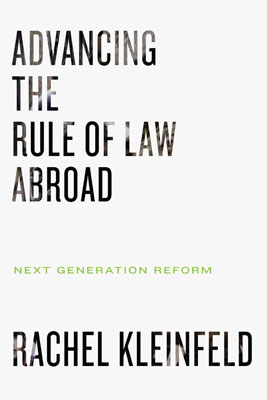
A growing movement of second-generation reformers view the rule of law not as a collection of institutions and laws that can be built by outsiders, but as a relationship between the state and society that must be shaped by those inside the country.
Source: Washington, DC: Carnegie Endowment for International Peace, 2012

In Advancing the Rule of Law Abroad, Rachel Kleinfeld describes the history and current state of reform efforts and the growing movement of second-generation reformers who view the rule of law not as a collection of institutions and laws that can be built by outsiders, but as a relationship between the state and society that must be shaped by those inside the country. Based on research in countries from Indonesia to Albania, Kleinfeld makes a compelling case for new methods of reform that can have greater chances of success at helping these internal reformers and improving the rule of law.
“Rachel Kleinfeld not only assesses past efforts to support the rule of law abroad, but offers innovative approaches for future assistance. The work of scholars and practitioners alike will benefit measurably from her insights.”
—Kenneth Wollack, President, National Democratic Institute
“While policymakers increasingly recognize the risks to U.S. national security when the rule of law breaks down abroad, there is far less consensus on what to do about it. Advancing the Rule of Law Abroad tackles this question head-on with timely and powerful insight. Full of careful analysis and accessible prose, Kleinfeld brings conceptual clarity to an emerging field.”
—Jeremy Weinstein, Stanford University, Former Director for Development and Democracy, National Security Council
“This book is impressive, thoughtful, and full of practical wisdom. Kleinfeld analyzes many of the challenges we faced in helping civilian rule-of-law development experts in Iraq and Afghanistan. This should be on the reading list of anyone preparing to perform rule-of-law work in a post-conflict setting.”
—Brigadier General Mark Martins, U.S. Army
Advancing the Rule of Law Abroad was named by Foreign Affairs as one of the best books of 2012 on political and legal topics. “Kleinfeld brings together a good grasp of the scholarship on law and society with the sensibilities and hard-earned experience of a field practitioner. The result is essential reading for the foreign policy community.”
—G. John Ikenberry, Foreign Affairs

Senior Fellow, Democracy, Conflict, and Governance Program
Rachel Kleinfeld is a senior fellow in Carnegie’s Democracy, Conflict, and Governance Program, where she focuses on issues of rule of law, security, and governance in democracies experiencing polarization, violence, and other governance problems.
Recent Work
Rachel Kleinfeld
Renée DiResta, Rachel Kleinfeld
Carnegie India does not take institutional positions on public policy issues; the views represented herein are those of the author(s) and do not necessarily reflect the views of Carnegie, its staff, or its trustees.
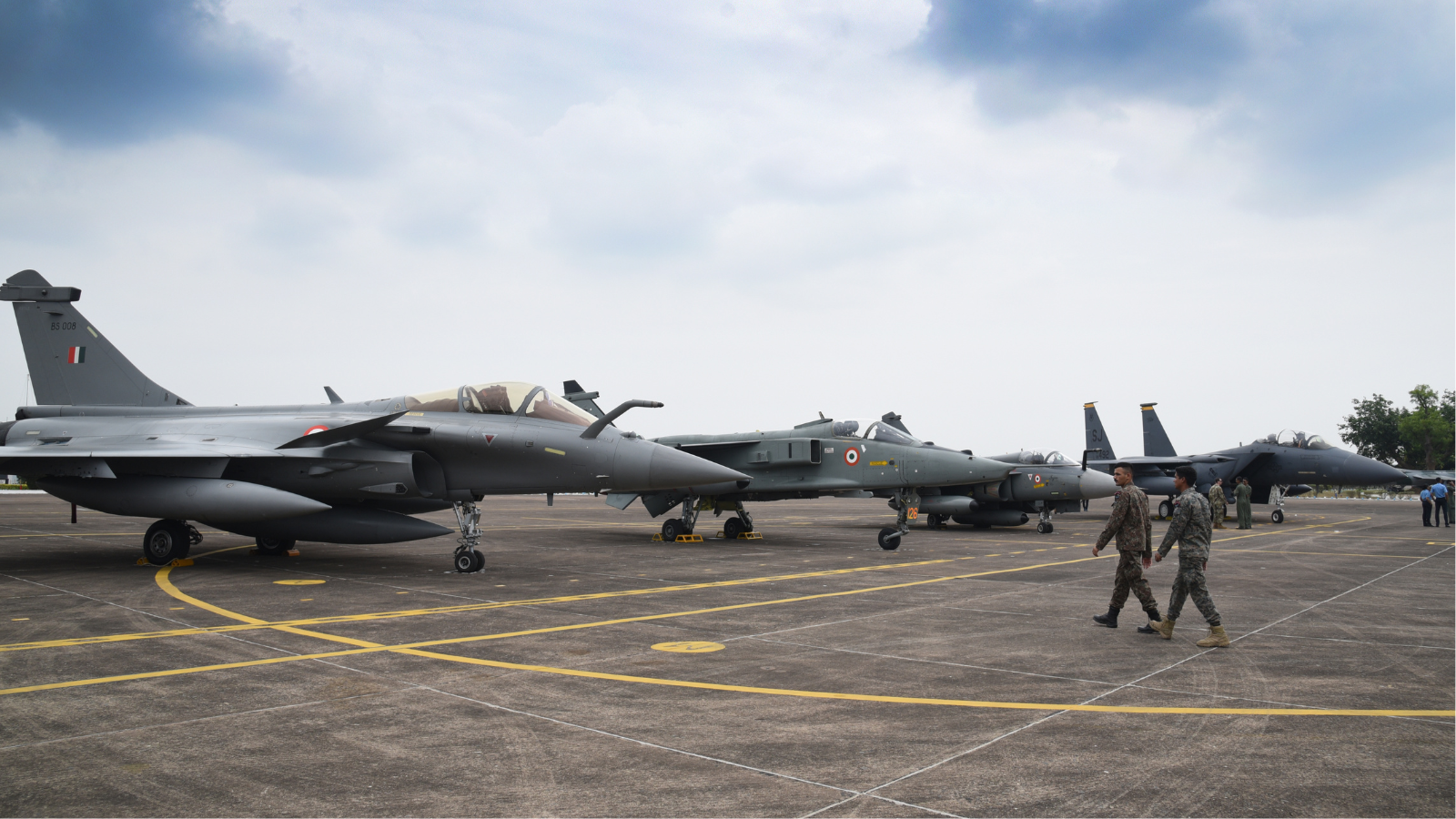
India and the United States are close to concluding a Reciprocal Defense Procurement Agreement (RDPA) that will allow firms from the two countries to sell to each other’s defense establishments more easily. While this may not remedy the specific grievances both sides may have regarding larger bilateral issues, an RDPA could restore some momentum, following the trade deal announcement.

Konark Bhandari

On the last day of the India AI Impact Summit, India signed Pax Silica, a U.S.-led declaration seemingly focused on semiconductors. While India’s accession to the same was not entirely unforeseen, becoming a signatory nation this quickly was not on the cards either.
Konark Bhandari

This piece examines India’s response to U.S. sanctions and tariffs, specifically assessing the immediate market consequences, such as alterations in import costs, and the broader strategic implications for India’s energy security and foreign policy orientation.

Vrinda Sahai
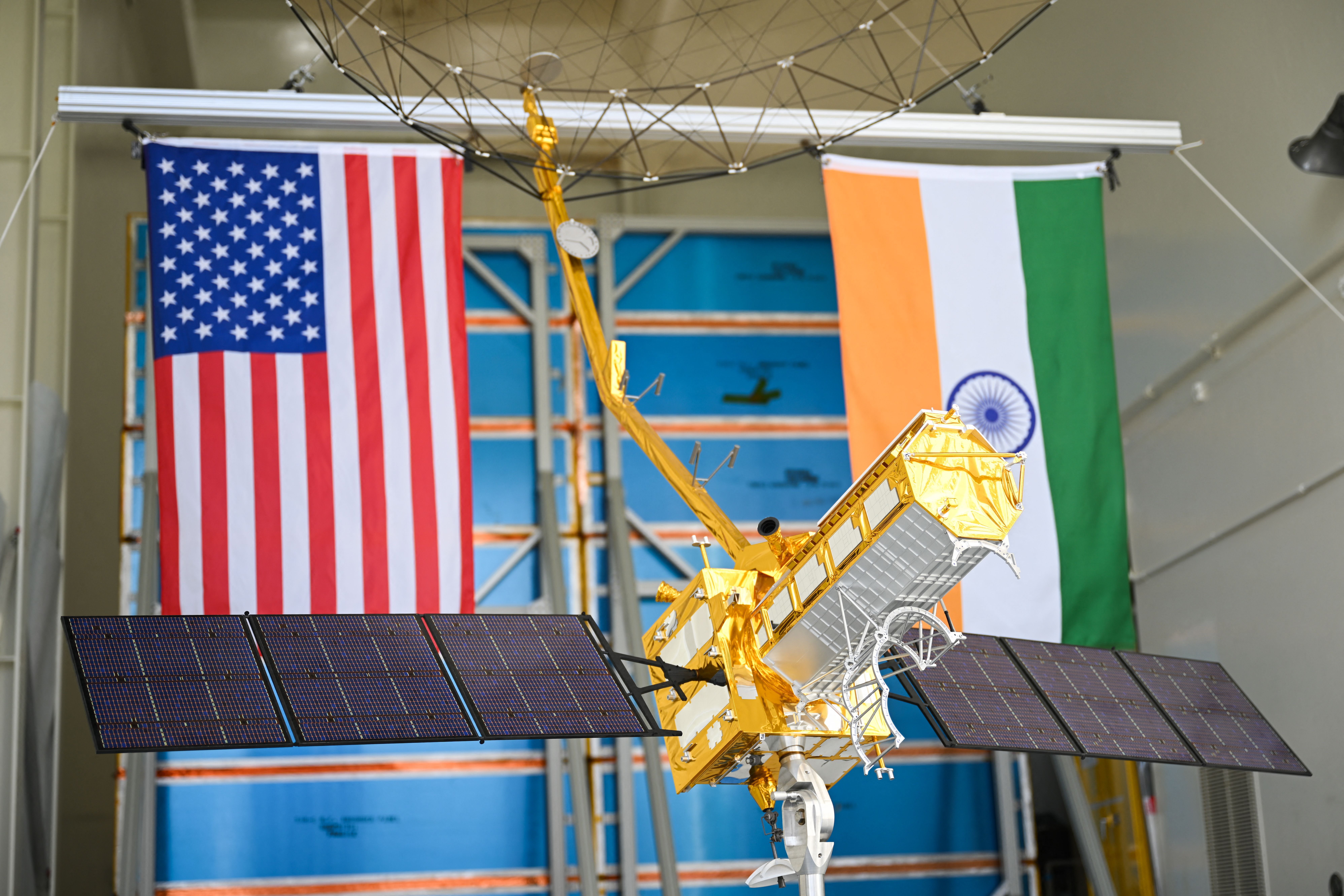
On July 30, 2025, the United States announced 25 percent tariffs on Indian goods. While diplomatic tensions simmered on the trade front, a cosmic calm prevailed at the Sriharikota launch range. Officials from NASA and ISRO were preparing to launch an engineering marvel into space—the NASA-ISRO Synthetic Aperture Radar (NISAR), marking a significant milestone in the India-U.S. bilateral partnership.

Tejas Bharadwaj
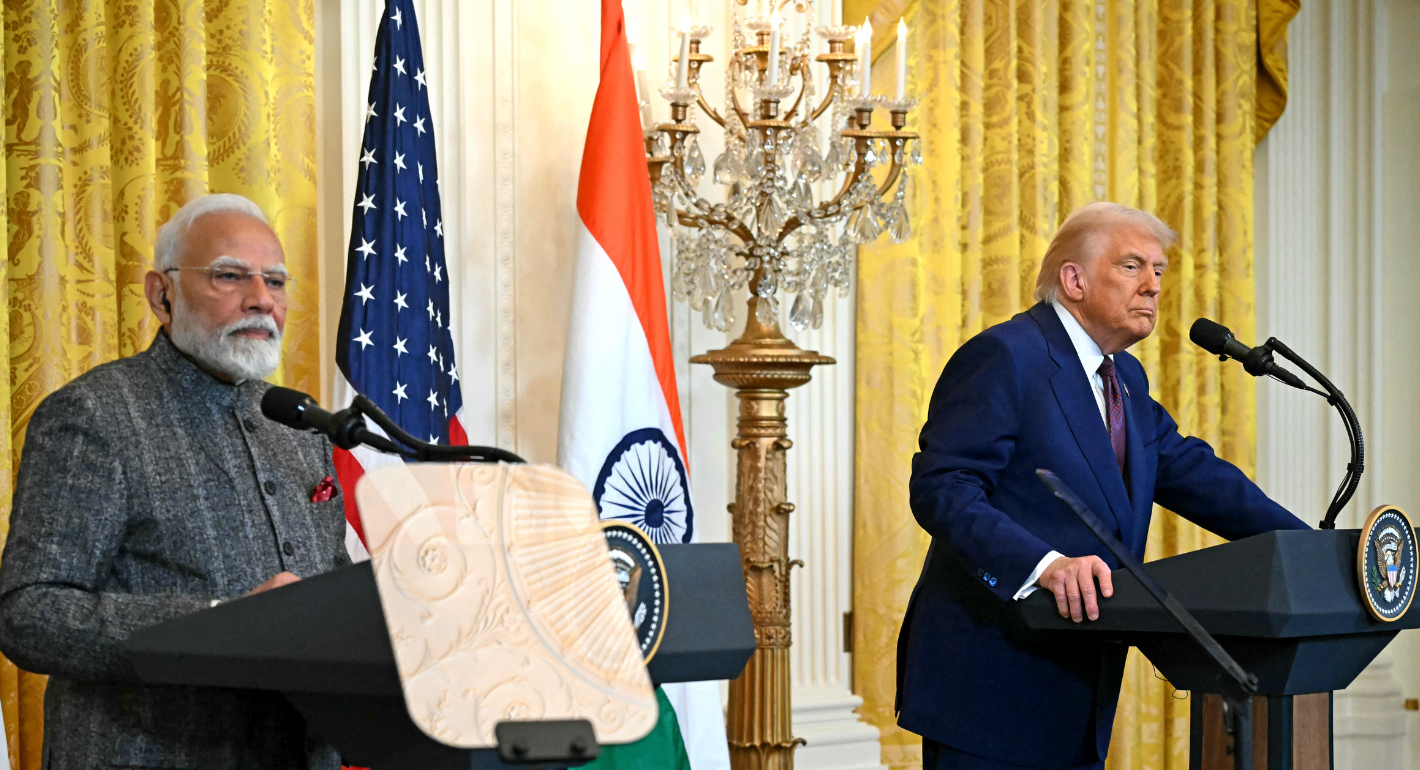
The India-U.S. relationship currently appears buffeted between three “Ts”—TRUST, Tariffs, and Trump.
Arun K. Singh