

Article
Thomas de Waal
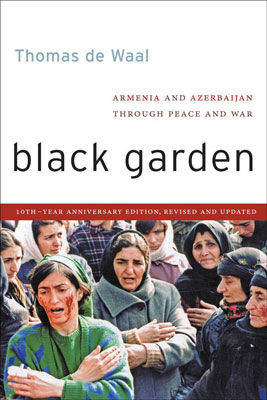
Nearly 20 years since the 1994 ceasefire, Armenia and Azerbaijan have still failed to resolve their dispute and normalize relations.
Source: NYU Press
Ten years after its initial release, Black Garden remains the definitive account of war and peace between Armenia and Azerbaijan, and the conflict over Nagorny Karabakh. Based on the author’s extensive experience in the region, Black Garden is the product of more than 120 original interviews in the South Caucasus, Moscow, and Washington, and a unique collection of historical primary sources. De Waal reveals a fascinating historical context for the conflict, including how it precipitated the end of the Soviet Union and thrust an entire region into disarray. Now nearly 20 years since the 1994 ceasefire, Yerevan and Baku have still failed to resolve the dispute and normalize relations.
The revised and updated 10th year anniversary edition includes a new forward and an expanded conclusion that analyzes the reasons for the intractability of the conflict and the prospects for its resolution.
This edition has also been expanded to cover regional developments up to 2012, including the election of new presidents in countries, Azerbaijan’s oil boom, and the new arms race in the region.

Senior Fellow, Carnegie Europe
Thomas de Waal is a senior fellow at Carnegie Europe, specializing in Eastern Europe and the Caucasus.
Recent Work
Thomas de Waal
Thomas de Waal
Carnegie India does not take institutional positions on public policy issues; the views represented herein are those of the author(s) and do not necessarily reflect the views of Carnegie, its staff, or its trustees.

After the chill in ties between 2020 and 2024 that brought India–China relations to their lowest point in several decades, the two countries have engaged each other afresh. This paper argues that there are predominantly four imperatives guiding India’s approach to China, and they exist in an order of priority.

Saheb Singh Chadha

This piece argues that India’s central challenge is not managing a single flashpoint but resolving the underlying tension between expansion and institutional coherency of the BRICS grouping.

Vrinda Sahai

This piece argues that the present Indian strategy, based on opportunistic diversification and utilization of limited strategic reserves, remains inadequate when confronting supply disruptions. It evaluates India’s options in the short, medium, and long terms.
Vrinda Sahai

This piece examines India’s response to U.S. sanctions and tariffs, specifically assessing the immediate market consequences, such as alterations in import costs, and the broader strategic implications for India’s energy security and foreign policy orientation.
Vrinda Sahai
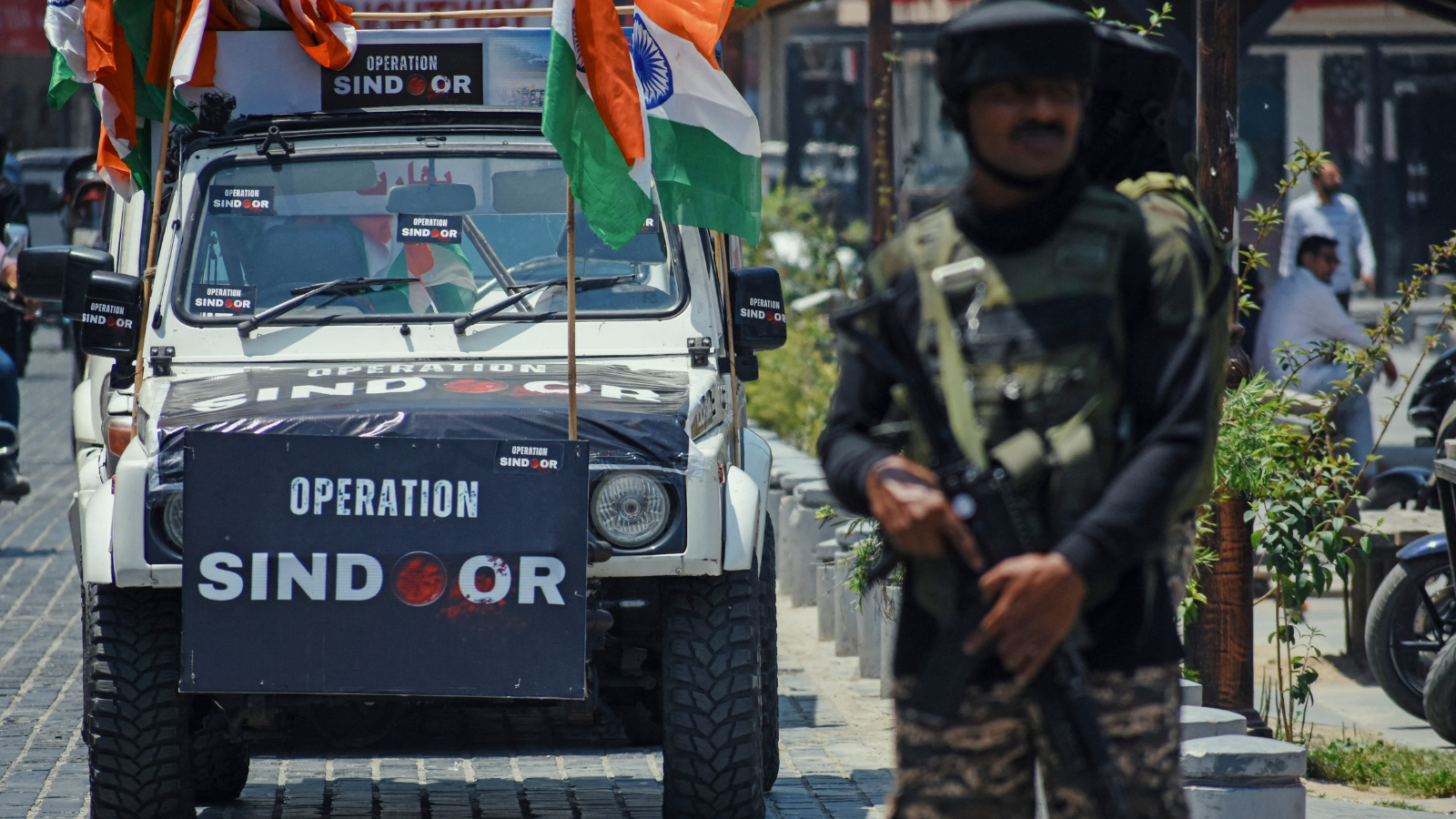
The India-Pakistan conflict that played out between May 6 and May 10, 2025, offers several military lessons. This article presents key takeaways from Operation Sindoor and breaks down how India’s preparations shaped the outcome and what more is needed to strengthen future readiness.

Dinakar Peri