

Commentary
As the U.S.-led Coalition withdraws, the Kurds’ reliance on Baghdad, and on themselves, will only increase.
Wladimir van Wilgenburg
{
  "authors": [
    "Ghida Tayara"
  ],
  "type": "commentary",
  "blog": "Diwan",
  "centerAffiliationAll": "dc",
  "centers": [
    "Carnegie Endowment for International Peace",
    "Malcolm H. Kerr Carnegie Middle East Center"
  ],
  "collections": [
    "Three Question Time"
  ],
  "englishNewsletterAll": "menaTransitions",
  "nonEnglishNewsletterAll": "",
  "primaryCenter": "Malcolm H. Kerr Carnegie Middle East Center",
  "programAffiliation": "MEP",
  "programs": [
    "Middle East"
  ],
  "projects": [],
  "regions": [
    "Levant",
    "Lebanon",
    "Middle East"
  ],
  "topics": [
    "Economy"
  ]
}
Source: Getty
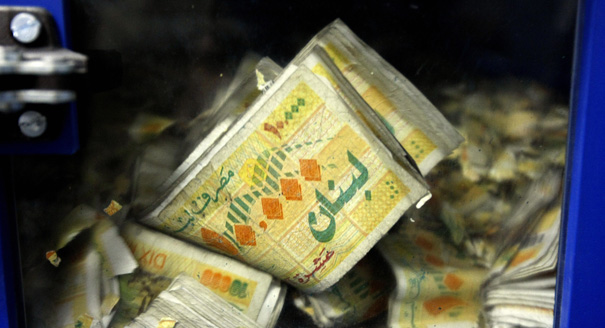
Economist Jad Chaaban talks about the challenges to Lebanon’s economy, but suggests that not all is bad.
Jad Chaaban is a Lebanese economist and an associate professor of economics at the American University of Beirut (AUB). Chaaban, who also describes himself as a social activist, views his research and advocacy as focused “on using evidence-based economics analysis to enhance the well-being of the most vulnerable groups in society.” He has served as an economic policy advisor to various Lebanese ministries and public agencies. Prior to joining AUB in September 2006, he was an economist in the World Bank’s Middle East regional office, where he did research related to poverty reduction and economic management in Lebanon, Syria, Jordan and Egypt. Diwan met with Chaaban to discuss the condition of Lebanon’s economy, at a time when the country’s economic health is high in the preoccupations of many Lebanese.
Ghida Tayara
Senior Digital and Web Coordinator
Carnegie does not take institutional positions on public policy issues; the views represented herein are those of the author(s) and do not necessarily reflect the views of Carnegie, its staff, or its trustees.
As the U.S.-led Coalition withdraws, the Kurds’ reliance on Baghdad, and on themselves, will only increase.
Wladimir van Wilgenburg

As the U.S. stumbles in its war with Iran, we are likely to see an acceleration of its disengagement from the region.

Michael Young
The Zaidi government’s objective to collect weapons is constrained by regional conflict, but it can take certain measures at home.
Ali Al-Mawlawi

Huawei pushed hard to enter the Egyptian data centers market, until the Americans made a better offer.

Angie Omar

The accord represents a pivotal moment in the region to avert a security vacuum in the Gulf.


Azeema Cheema, Mohanad Hage Ali