

Commentary
Perry Cammack, Cassia Bardos
{
  "authors": [
    "Perry Cammack"
  ],
  "type": "commentary",
  "blog": "Diwan",
  "centerAffiliationAll": "dc",
  "centers": [
    "Carnegie Endowment for International Peace",
    "Malcolm H. Kerr Carnegie Middle East Center"
  ],
  "collections": [],
  "englishNewsletterAll": "menaTransitions",
  "nonEnglishNewsletterAll": "",
  "primaryCenter": "Malcolm H. Kerr Carnegie Middle East Center",
  "programAffiliation": "MEP",
  "programs": [
    "Middle East"
  ],
  "projects": [],
  "regions": [
    "North America",
    "United States",
    "Middle East",
    "Iran",
    "Syria",
    "Russia",
    "Levant",
    "Caucasus"
  ],
  "topics": [
    "Political Reform"
  ]
}
Source: Getty
Donald Trump is so motivated to reach agreements, that we might have to worry if he succeeds.
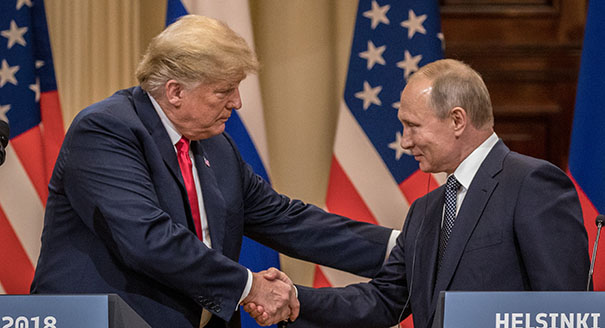
No direct evidence has been offered as yet that Moscow has compromising information on U.S. President Donald Trump, much less that he colluded with Russia during the 2016 American presidential campaign. But after Trump stood alongside Russian President Vladimir Putin in Helsinki on Monday and blamed his own country for Russian cyber-aggression against the United States, the possibility can no longer be discounted.
The alternative—that Trump’s unfathomable insecurity and narcissistic desire for the art of the deal is what allowed him to advance Russian interests over American ones—is hardly more gratifying. Whatever his motivation, the story, and the potential damage, will not end in Helsinki.
After eighteen months in office, Trump’s foreign policy approach is clarifying. He has invested in leaders such as Putin, Chinese President Xi Jinping, North Korean leader Kim Jong-un, Israeli Prime Minister Benjamin Netanyahu, and Saudi Crown Prince Mohammed bin Salman. Presidential diplomacy is warranted in each case. But the incremental diplomatic slog is not what Trump is after. The world’s greatest negotiator wants deals. Any deal is better than no deal at all.
What if one of Donald Trump’s signature initiatives—a grand bargain with Russia, a nuclear accord with North Korea, a trade deal with China, a Middle East peace agreement—actually succeeded? There are several reasons to believe that success is not out of the question.
First, Trump has been underestimated at every step of his meteoric political rise. Consider the August 2015 assessment by Nate Silver—America’s best-known political forecaster—that Trump had a 2 percent chance of winning the Republican nomination (let alone defeating Hillary Clinton). Trump’s foreign policy forays, too—from his attacks on NATO and the European Union to his summits with Putin and Kim to his Israeli-Palestinians efforts—have been panned by the pundits, present company included, as doomed to failure. It’s time to admit that Trump’s behavior is so unprecedented and unpredictable that we lack the ability to assess its consequences.
Second, Trump views the substance of his actions as inconsequential in comparison to how these actions are projected onto his populist base. He will go to almost any lengths to dominate the news cycle. But the foreign policy issues with which he is contending—the Iranian and North Korean nuclear programs, the war in Syria, and relations with China and Russia—are complex, multifaceted, and require the steady, plodding management of the kind Trump disdains.
Third, Trump is fixated with trade (and migration) above all else. Given the size of the U.S. economy, trade is less important to America than it is to almost any other country in the world. Trade as a share of GDP is 37 percent in China and 84 percent in Europe, but only 26 percent in the United States. Yet, Trump talks about trade—and the unfairness of America’s trade arrangements—more than any American leader in memory and more than any of his would-be counterparts.
Fourth, Donald Trump views traditional American national interests with disdain. The president is smitten with authoritarianism. He regards most traditional American economic and security commitments as intolerable. He is instinctively distrustful of multilateralism. Trump’s predecessors were frequently frustrated by the multiplicity of America’s intersecting global interests and differed over how to prioritize and support them. But they understood their importance.
Trump seems to approach foreign policy in the same way that he approaches Manhattan real estate. He starts with inherited money and then leverages his bankruptcies. He is heir to the trans-Atlantic alliance, security partnerships, trade institutions, territorial sovereignty, the U.S. military presence around the globe, and treaty obligations. But if Trump has no fidelity to 70 years of accumulated American foreign policy assets, then he has little compunction about trading them away or forfeiting them.
Add those ingredients together and you have a combustible mix. But for America’s adversaries (and Middle Eastern friends), the possibility that America will trade away its strategic interests for short-term political agreements may provide the opportunity of a lifetime. What might this approach look like in practice? Consider the following:
Syria: Syria has proven immune to political settlement given the hornet’s nest of conflicting regional priorities there. But imagine there are no American objections to accommodation with Syrian President Bashar al-Assad and that Jordanian and even Israeli interests can be dispensed with. The contours of a Russian-American deal come into focus, in which the Iranian presence near the Israeli border is (temporarily) traded for the (permanent) removal of American troops from the east of the country.
Europe: The Ukraine conflict has been in a stalemate for several years. But if recognition of Russia’s illegal annexation of Crimea or America’s military posture in Europe were on the table, a huge array of possible U.S.-Russia arrangements could be imagined. If Trump takes Putin at his word that he didn’t interfere in the U.S. elections, why not seek a deal that would sanctify such assurances going forward.
China: Trump’s recent threats of a trade war with China are pretty clear evidence that he wants a deal. Xi Jinping’s signature initiative, the Belt and Road Initiative, has been given a significant boost by Trump’s withdrawal from the Trans-Pacific Partnership trade agreement. But Beijing’s aspirations in the South China Sea have been largely held in check by U.S. support for international freedom of navigation. Might Beijing see the opportunity to trade temporary trade concessions (such as a currency devaluation or the purchase of American commodities to reduce the trade deficit) for U.S. strategic concessions in the South China Sea or the Belt and Road Initiative?
North Korea: The likelihood of Trump’s North Korea gambit, according to the standard playbook, seems extraordinarily low given the United States’ regional equities and limited leverage. Trump has already traded away American military exercises with the South Korean military for nothing in exchange and legitimized Kim on the world stage. For the sake of a deal, why not contemplate trading away American security commitments in East Asia to North Korea and China?
The Middle East conflict: There is almost universal agreement that progress toward a final Israeli-Palestinian settlement is not possible. But Trump seems eager to cut the Palestinians out of the picture altogether. So why not rebrand the budding rapprochement between Israel and Saudi Arabia as a broader Arab-Israeli peace agreement?
Let’s be clear, each of these scenarios is absurd and speculative. Each would be anathema to a properly functioning American administration. None of them is likely to come to fruition. But then again, raise your hand if you predicted Donald Trump’s election.

Former Nonresident Fellow, Middle East Program
Perry Cammack was a nonresident fellow in the Middle East Program at the Carnegie Endowment for International Peace, where he focuses on long-term regional trends and their implications for American foreign policy.
Recent Work
Perry Cammack, Cassia Bardos
Perry Cammack
Carnegie does not take institutional positions on public policy issues; the views represented herein are those of the author(s) and do not necessarily reflect the views of Carnegie, its staff, or its trustees.
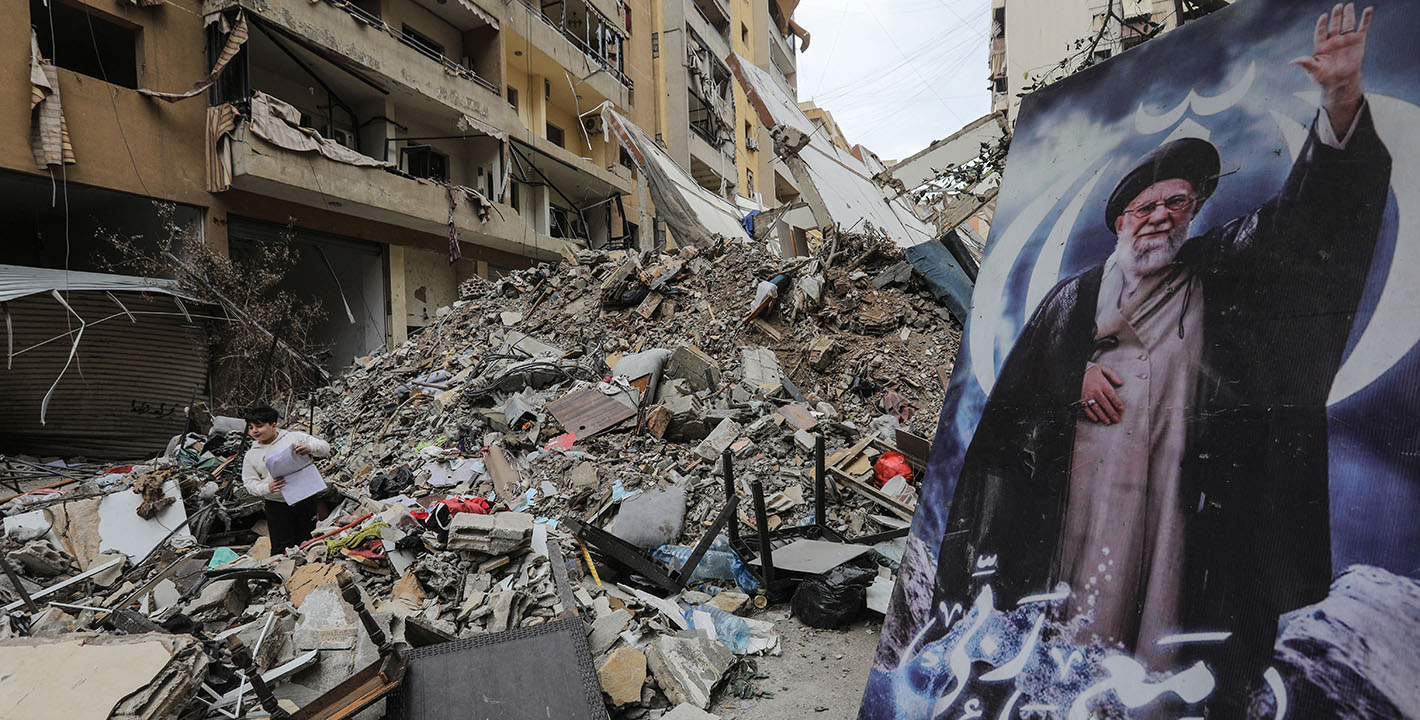
As talks begin between Washington and Tehran, Beirut has an opening to advance a regional plan for the party’s disarmament.

Michael Young
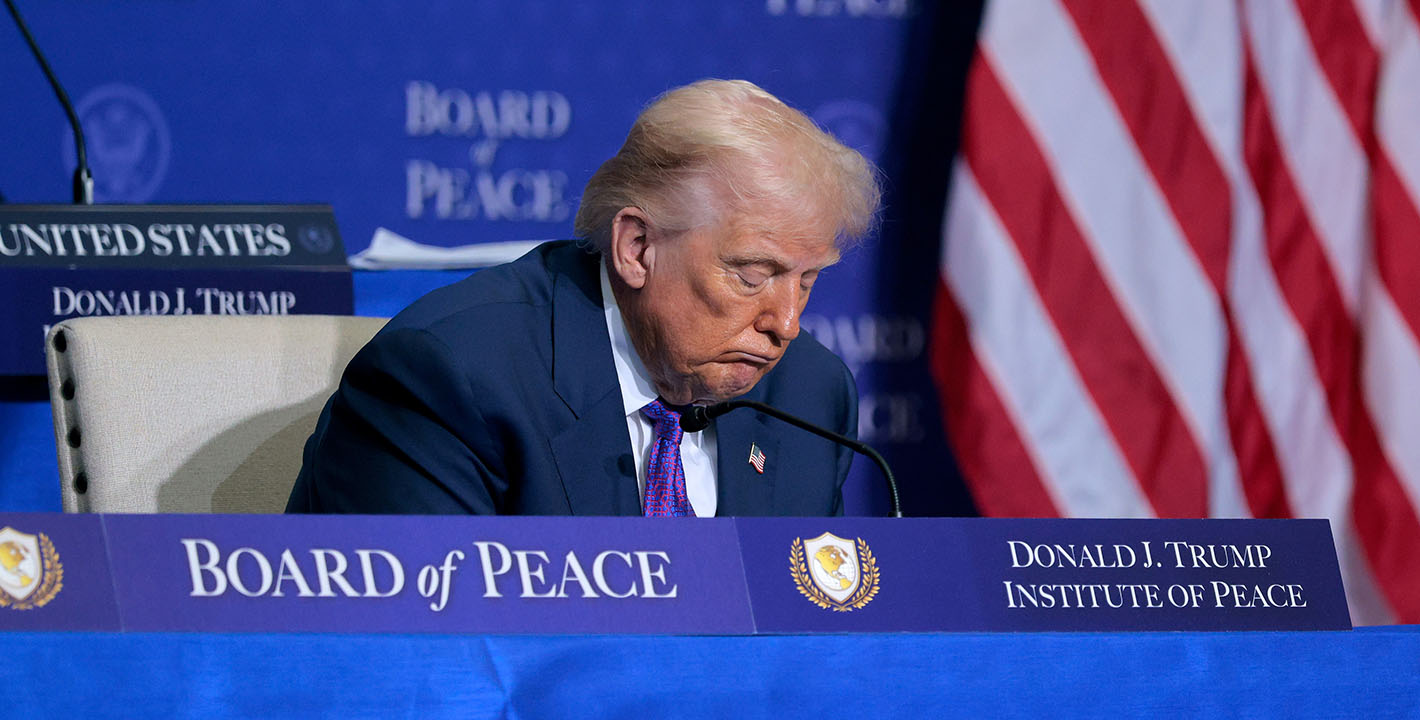
What is behind Marco Rubio’s announcement that the body is now an international nongovernmental organization?
Zaha Hassan
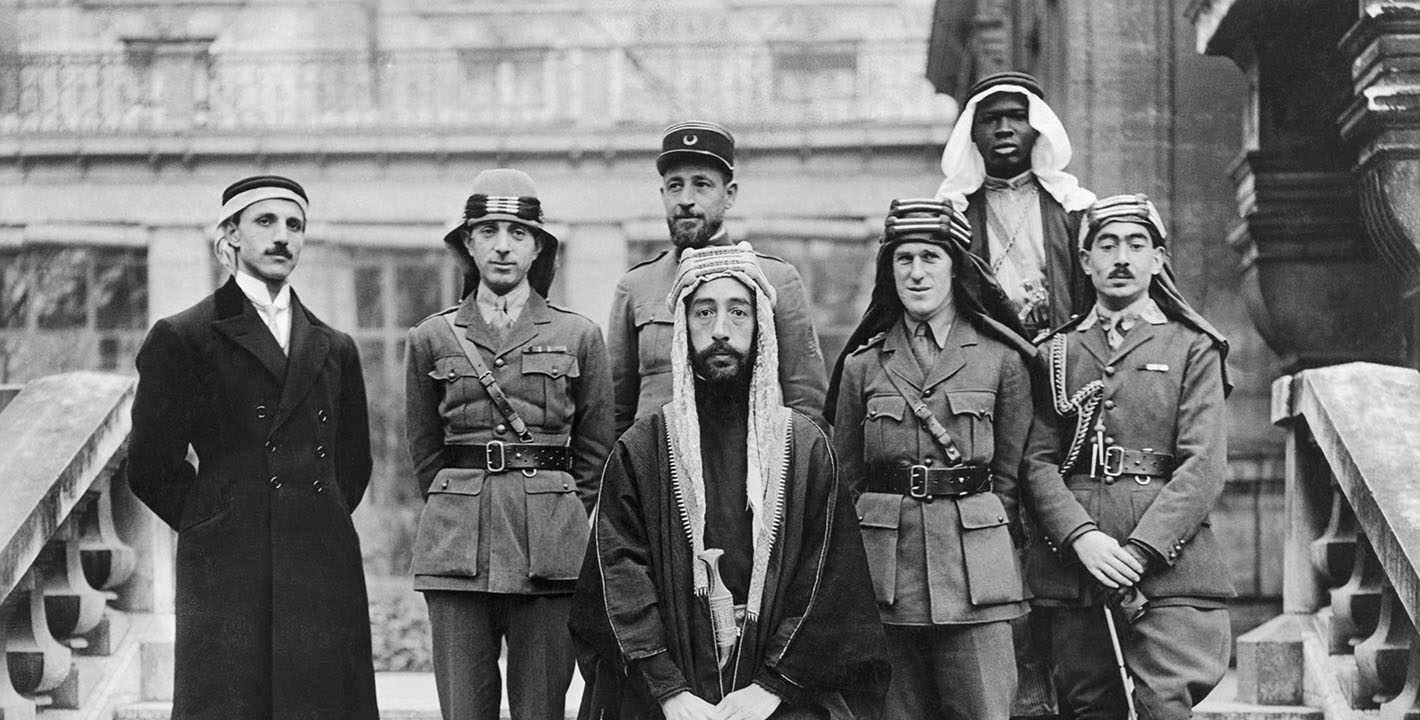
In an interview, Elizabeth Thompson recalls how the country formulated a liberal constitution in 1920, before being denied by France and Britain.
Michael Young
Policy discussion is ignoring that the Palestinian national project is hollowed out and apartheid is a present danger.

Nathan J. Brown
This will be the region’s most representative tournament, amid broad changes in its footballing landscape.

Issam Kayssi