

Commentary
Armenak Tokmajyan
{
  "authors": [
    "Armenak Tokmajyan"
  ],
  "type": "commentary",
  "blog": "Diwan",
  "centerAffiliationAll": "dc",
  "centers": [
    "Carnegie Endowment for International Peace",
    "Malcolm H. Kerr Carnegie Middle East Center"
  ],
  "collections": [],
  "englishNewsletterAll": "menaTransitions",
  "nonEnglishNewsletterAll": "",
  "primaryCenter": "Malcolm H. Kerr Carnegie Middle East Center",
  "programAffiliation": "MEP",
  "programs": [
    "Middle East"
  ],
  "projects": [
    "X-Border Local Research Network"
  ],
  "regions": [
    "Levant",
    "Syria",
    "Middle East"
  ],
  "topics": [
    "Political Reform"
  ]
}
Source: Getty
The rules of what is deemed acceptable political behavior are constantly shifting in Syria, with perilous consequences.
In those parts of Syria controlled by the Assad regime today, what is regarded as politically permissible behavior is different than what was before 2011. What has also changed during the Syrian conflict is the status and influence of intermediaries between regime and society who often played a crucial role in mediating on behalf of those who had crossed the regime’s red lines.
Many Syrians, especially those living outside regime-held areas during the war, have lost their once superb sense of operating within these treacherous red lines. At the same time, formerly influential people have lost their ability to reconcile between the state and members of their communities.
For decades, Syrians skillfully navigated the invisible boundaries of the politically acceptable. Complaining about corruption and nepotism was permissible; criticizing the president was not. Confronting a civil servant who wouldn’t process papers without a bribe was permissible; doing this to a security official was far riskier. Syrians, many of whom spent their lives living in a police state, developed a keen sense of such subtleties, allowing them to go on with their lives without crossing the invisible boundaries.
These lines, however, were sometimes breached, at times deliberately to challenge what the regime determined was not permissible. Despite the regime’s record of not tolerating perceived threats, these breaches didn’t always end in violence. That is because intermediaries who had good connections with the regime intervened on behalf of those who had transgressed the red lines and helped undo the harm. The beginnings of Syria’s two civil wars—one with the Muslim Brotherhood that culminated in the 1982 Hama massacre and the uprising that started in 2011—provided many such examples.
Today, the boundaries in regime areas are vaguer and constantly shifting, while the role of the old intermediaries has declined. Two stories from Deir Hafer near Aleppo—one involving a shepherd and the other a tribal notable—illustrate this transformation in state-society relations.
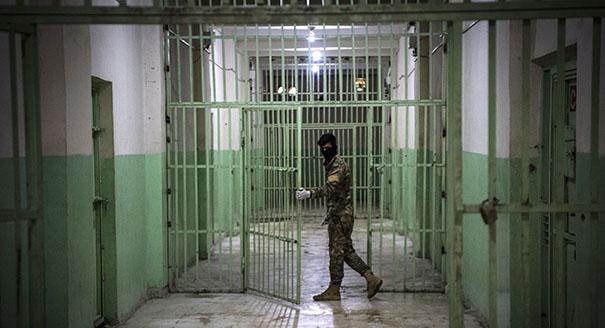
The story of an unfortunate man who recently returned from opposition-held areas to Deir Hafer illustrates how vague and decentralized the regime’s red lines have become. A shepherd by profession and a singer by passion, the man in his fifties had never engaged in any political activity. Confident of his “clean record,” he decided to come home after being internally displaced. The man successfully crossed into regime-held areas near Al-Bab, suggesting he was not on the regime’s wanted list, and returned to his hometown. However, a few days later he was called in by the local security forces and has not been heard from since.
It is not known why he was targeted. Did he cross a red line? Did the local security agent act on his own? Did someone report on him to settle a personal score? It is exactly this kind of uncertainty that makes the boundaries drawn by the regime and its local affiliates indeterminable. That is especially true for those who left regime areas during the conflict, therefore did not have to continuously adapt to the new limitations on what could be said and done.
Might an intermediary who has good contacts with the local authorities and knowledge of the shepherd save him? Possibly. The politics of informal intermediation remain a defining characteristic of Syria, though many such mediators now have new faces. Someone who felt this change most personally is a notable from the same city. The leader, or sheikh, of his clan, with a long history of pro-regime activity, this notable used to be an important figure in Deir Hafer before 2011. Today, however, he no longer appears to be.
After the regime recaptured Deir Hafer from the Islamic State* in 2017, the sheikh mediated with the authorities for the return of his brother from opposition-held areas. The plan was that his brother would come back, settle his security issues with the local security authorities, and return to normal life. Such a process was very much possible in pre-2011 Syria, especially after the intervention of an influential intermediary. The plan, however, took a horrifying turn. The notable’s brother was detained upon his return, severely tortured, and soon thereafter succumbed from his wounds in a local hospital.
Very little can be taken for granted in today’s Syria. State violence in pre-2011 Syria was an ugly phenomenon and shaped every citizen’s behavior in one way or another. But it also had a certain logic to it, and most ordinary people understood the limits. Today’s state violence has become uglier and multifaceted. It is often decentralized, uncontrolled, and sometimes applied without any logic that could help Syrians adapt their behavior accordingly.


Nonresident Scholar Malcolm H. Kerr Carnegie Middle East Center
Armenak Tokmajyan is a nonresident scholar at the Malcolm H. Kerr Carnegie Middle East Center in Beirut. His research focuses on borders and conflict, Syrian refugees, and state-society relations in Syria.
Recent Work
Armenak Tokmajyan
Armenak Tokmajyan
Carnegie does not take institutional positions on public policy issues; the views represented herein are those of the author(s) and do not necessarily reflect the views of Carnegie, its staff, or its trustees.
The Zaidi government’s objective to collect weapons is constrained by regional conflict, but it can take certain measures at home.
Ali Al-Mawlawi

Huawei pushed hard to enter the Egyptian data centers market, until the Americans made a better offer.

Angie Omar

The accord represents a pivotal moment in the region to avert a security vacuum in the Gulf.


Azeema Cheema, Mohanad Hage Ali

In an interview, Jason Burke discusses his sweeping account of the “revolutionists” who so shaped the 1970s and early 1980s.

Michael Young
In an interview, Sohaib Jawhar analyzes the profound changes in the ties between the neighboring countries.
Michael Young