

Commentary
Reconciliation councils are emerging throughout the country to mediate in intracommunal disputes, many from the war years.
Natacha Danon
{
  "authors": [
    "Araz Bedross"
  ],
  "type": "commentary",
  "blog": "Diwan",
  "centerAffiliationAll": "dc",
  "centers": [
    "Carnegie Endowment for International Peace",
    "Malcolm H. Kerr Carnegie Middle East Center"
  ],
  "collections": [],
  "englishNewsletterAll": "menaTransitions",
  "nonEnglishNewsletterAll": "",
  "primaryCenter": "Malcolm H. Kerr Carnegie Middle East Center",
  "programAffiliation": "MEP",
  "programs": [
    "Middle East"
  ],
  "projects": [],
  "regions": [
    "Levant",
    "Lebanon",
    "Middle East",
    "Caucasus",
    "Azerbaijan",
    "Armenia",
    "Central Asia"
  ],
  "topics": [
    "Political Reform"
  ]
}
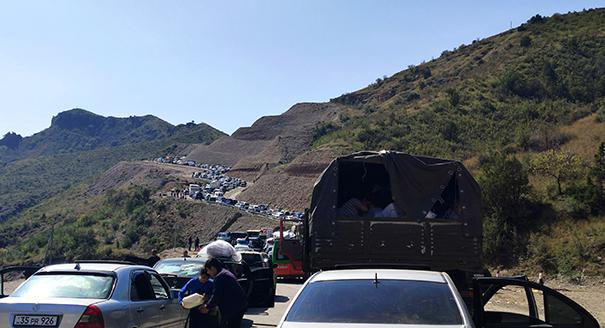
Source: Getty
The situation in Nagorno-Karabakh has revived memories of exile and pain in the diaspora community of Lebanon.
Life in the shadow of genocide can mean a shattered, even terrifying, existence. For many Armenians, it meant exile after the massacres of 1915, living in poverty as guests in lands not theirs, facing the daily humiliation of being dependent. I lost my roots from my mother’s side when her family fled Adana and settled in Lebanon after the genocide. And now, in light of the Armenian defeat in Nagorno-Karabakh, or what Armenians call Artsakh, I have also lost roots on my father’s side.
I remember how my father used to proudly say that our family was from Akna, or Aghdam in today’s Azerbaijan. It was said that many intellectuals lived in Akna. In the First Century B.C., during the reign of Tigranes the Great, the fortress city of Tigranakert was built in the district of Akna. During the Armenian-Tatar Massacres of 1905–1907 between Caucasian Tatars and Armenians, violent clashes took place in Akna, forcing my grandparents to leave for Agin, in Turkey. They settled there with the hope of a new beginning, and my grandfather opened a horseshoe business. However, during the Armenian genocide, he lost his parents and fled again, this time to Musa Ler, or Musa Dagh, in southern Turkey, before taking the long road to Lebanon, where he settled in the neighborhood of Ain al-Mreisseh. He arrived with his six brothers, all of whom decided to continue their journey to Europe, leaving him alone in the country.
The connection between my grandfather and his six brothers was lost forever, and I still wonder how many cousins I have whom I’ve never met. I can only imagine how beautiful Akna was, with green landscapes and a fortress built on a mountain, surrounded by ancient stones. The air must have been very clean to breathe and the water refreshing to drink, with people on horses riding by peacefully.
In 1921, my father was born in Beirut. As a descendant of survivors of the Armenian genocide, I never thought I would be witness to another major trauma of the Armenian people. Tens of thousands of Armenians, from a population of around 120,000, have been forced out of Artsakh after a nine-month blockade and Azerbaijan’s offensive of September 19–20. Azerbaijan has randomly bombed civilians and is ethnically cleansing Artsakh’s Armenian population. We are living 1915 all over again. Armenian homes are being torn down, and our culture is being rapidly erased in a very brutal way.
Artsakh holds a very sentimental place for all Armenians in the diaspora. It is in the hearts of all Lebanese Armenians who fled the genocide of 1915. As a child I remember the letters we used to send to children in Artsakh to show solidarity, the funds we would gather to help Artsakh remain Armenian and maintain its rich history and monuments, its churches and museums. Now all has been lost. Azerbaijan has disregarded international condemnation, not to mention SOS alerts from the Lemkin Institute for Genocide Prevention warning of the risk of genocide. The world once again has failed the Armenians. When you see a mother having to bury two of her sons, aged eight and ten, and struggling to transport their bodies to do so in Armenia; when you see children writing their names on the walls of their homes so that something will remain of them after they leave, you can understand better what cruelty means. This is what hell must be like.
I didn’t have the privilege of being be born in my ancestors’ lands, but I do have a vase that belonged to my grandmother. During my childhood I would frequently see her crying and praying in front of that vase. I remember thinking how strange the scene was. During my teenage years, my mother would light a candle before the vase every morning and have a conversation with it, as if it could hear her agony. Now, looking at that vase, I understand my mother and grandmother. The vase contains soil from Artsakh, and it has become a part of my home, my heritage, and my identity. It is the only thing close to my heart that I can pass on to my children.
On the monument near Stepanakert depicting tatik-papik, the grandmother and grandfather of Artsakh, there is the line, “We Are Our Mountains.” This story is not over. We will meet again tatik and papik, among those mountains.
Araz Bedross
Program Coordinator
Carnegie does not take institutional positions on public policy issues; the views represented herein are those of the author(s) and do not necessarily reflect the views of Carnegie, its staff, or its trustees.
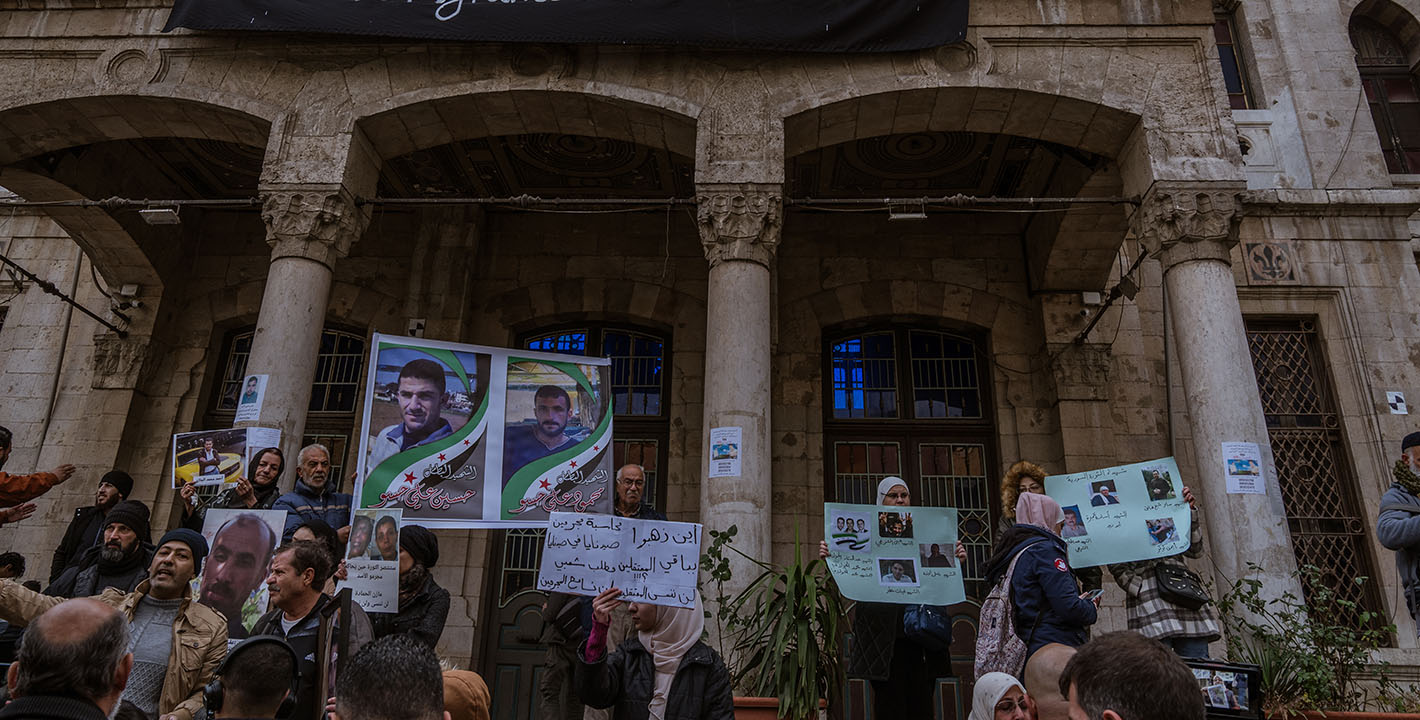
Reconciliation councils are emerging throughout the country to mediate in intracommunal disputes, many from the war years.
Natacha Danon
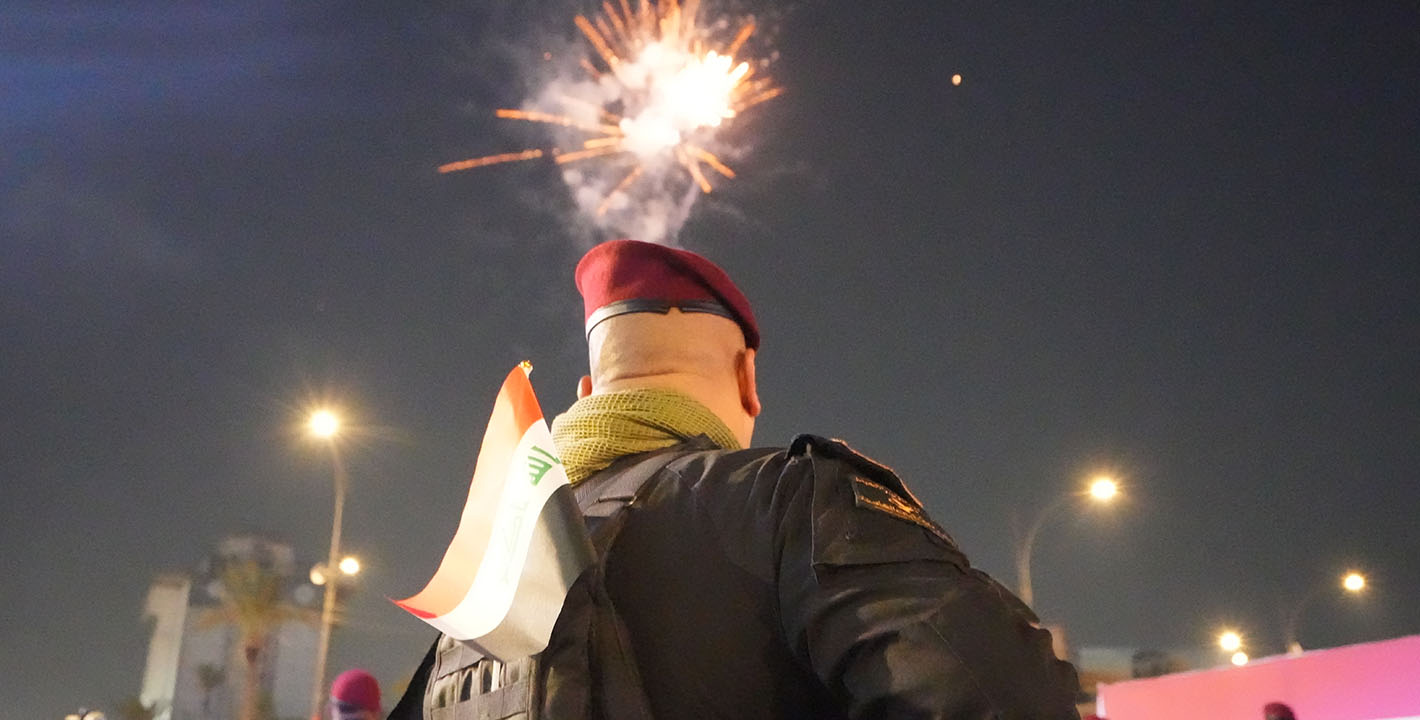
As the U.S.-led Coalition withdraws, the Kurds’ reliance on Baghdad, and on themselves, will only increase.
Wladimir van Wilgenburg

As the U.S. stumbles in its war with Iran, we are likely to see an acceleration of its disengagement from the region.

Michael Young
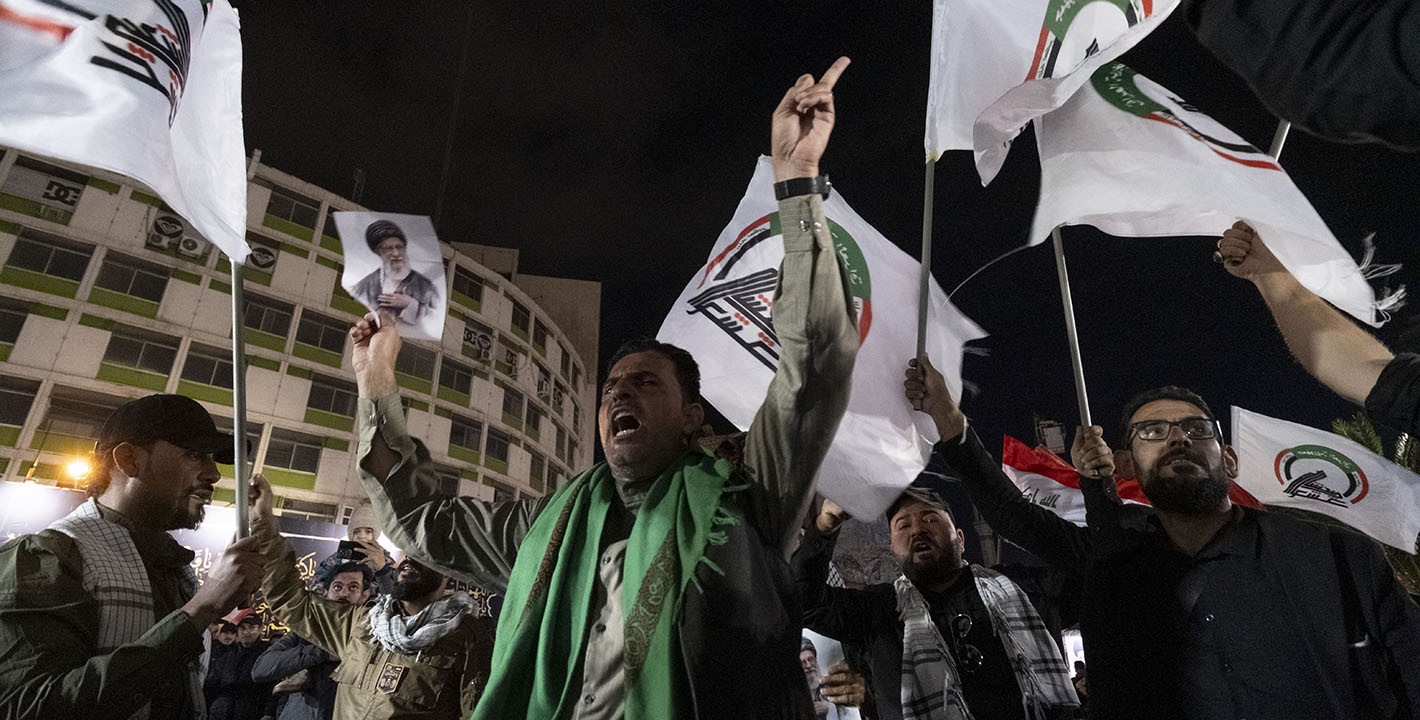
The Zaidi government’s objective to collect weapons is constrained by regional conflict, but it can take certain measures at home.
Ali Al-Mawlawi

The accord represents a pivotal moment in the region to avert a security vacuum in the Gulf.


Azeema Cheema, Mohanad Hage Ali