

Commentary
Michael Young
{
  "authors": [
    "Michael Young"
  ],
  "type": "commentary",
  "blog": "Diwan",
  "centerAffiliationAll": "",
  "centers": [
    "Carnegie Endowment for International Peace",
    "Malcolm H. Kerr Carnegie Middle East Center"
  ],
  "collections": [
    "Syria in a New Era"
  ],
  "englishNewsletterAll": "",
  "nonEnglishNewsletterAll": "",
  "primaryCenter": "Malcolm H. Kerr Carnegie Middle East Center",
  "programAffiliation": "",
  "programs": [],
  "projects": [],
  "regions": [
    "Syria",
    "Levant",
    "Middle East"
  ],
  "topics": []
}
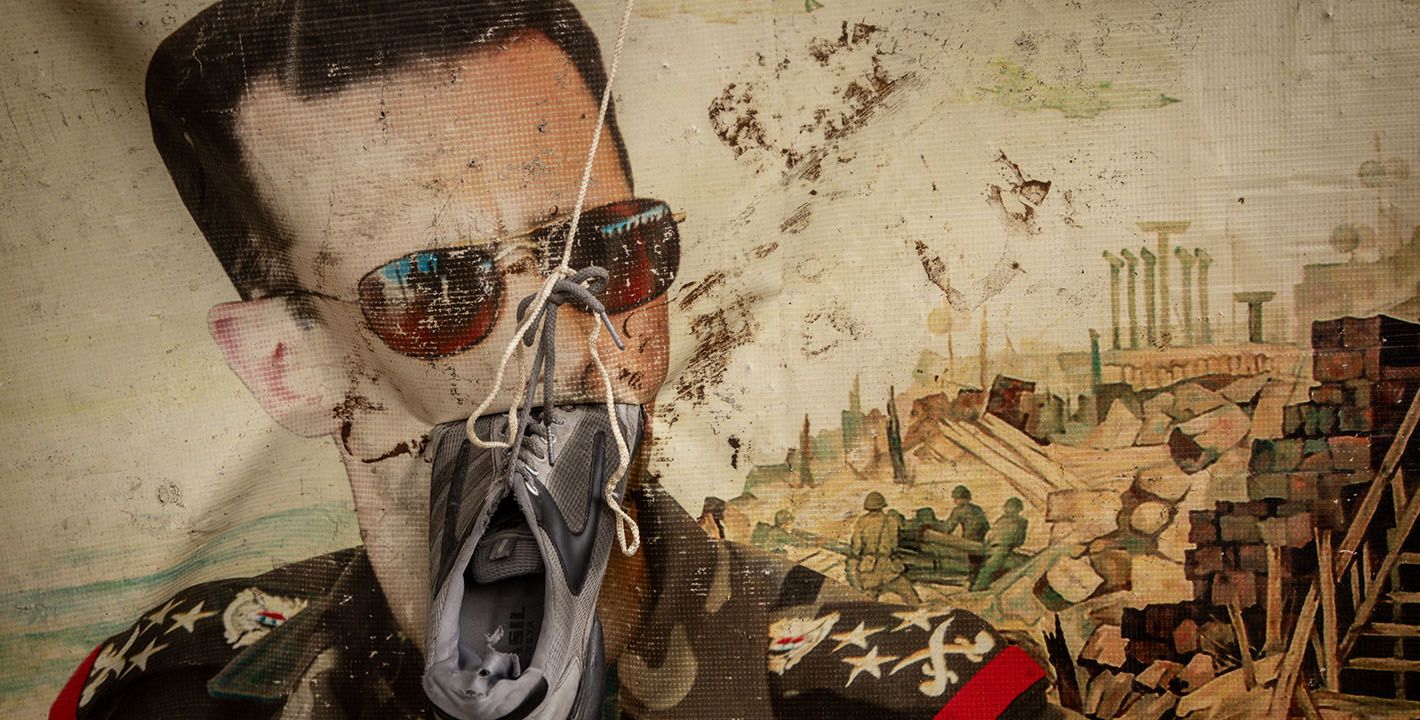
Source: Getty
A regular survey of experts on matters relating to Middle Eastern and North African politics and security.
Mohanad Hage Ali | Deputy director for research at the Malcolm H. Kerr Carnegie Middle East Center in Beirut
Syria’s achievements over the past year have been mostly confined to foreign policy. The self-proclaimed president, Ahmad al-Sharaa, has delivered little on the economic, security, or domestic political fronts, and has instead focused primarily on rebuilding the country’s external relationships, with impressive results given his background.
The security and political fronts are interlinked, and as the violence in Suwayda attests, long-term political concessions and coalition-building beyond Sharaa’s Islamist base are not on the table. Nor has the new administration put in place a process for transitional justice and reconciliation, a necessary step to spare the Alawite minority revenge attacks. However, what Sharaa has succeeded in doing is to keep the peace among various northern factions that had opposed the Assad regime, given their history of infighting. Türkiye’s support could be responsible for this, even if Ankara had to resort to Sharaa previously to manage factional infighting under the Turkish umbrella. Fresh recruitment into the security forces means that time is on Sharaa’s side when it comes to managing these groups under his leadership and transitioning to state institutions.
Yet, beyond the militant factions, the new regime has not presented a clear pathway to political legitimacy, whether through national elections or a timeline for holding them. For a leadership that does not fully control its own territory, nor fully command the loyalty of its armed forces, political legitimacy is a prerequisite for stability and security, which can only be achieved through a more inclusive approach to governance. This is as true for the Druze and Alawite communities, as it is for the factions in southern Syria and the Kurdish dominated Syrian Democratic Forces in the northwest.
So far, the new administration has opted for controlled elections to install a new parliament, while simultaneously seeking to consolidate power in both the economic and political spheres by installing loyalists and confidants. The focus on foreign policy underscores an overly optimistic belief that pragmatic foreign policy, regional support, and the lifting of sanctions might, on their own, generate economic recovery. The expectation could be that the Sharaa government wants to ultimately trade limited political participation for promises of economic revival. What the past year has shown us, however, is that such progress remains conditional on a security agreement with a maximalist and emboldened Israel, another major knot for Syria’s leadership, among many.
Zaha Hassan | Senior fellow at the Carnegie Endowment for International Peace
Among the issues many were watching for with the fall of the Iran-aligned Assad regime was how the new government, headed by a former member of Al-Qaeda and now supported by Saudi Arabia, would relate to Israel. Would Damascus agree to diplomatic relations even while Israel continues to occupy the Syrian Golan Heights and wages a war on Gaza that legal scholars and the United Nations have called genocidal?
Given the Trump administration’s strong desire to expand the Abraham Accords and Syria’s need for sanctions relief to effectively rebuild the war-torn country, some believed the ingredients for a deal existed. However, what they did not bargain for was the extent to which Israel might prefer holding on to its newly secured status as regional hegemon and pursue its plans for territorial aggrandizement.
Also underestimated was Syrian President Ahmad Sharaa’s unwillingness to buck domestic and regional opinion that opposes normalization with Israel without an Israeli withdrawal from Arab lands; or the adeptness of Sharaa, in partnership with Saudi Crown Prince Mohammed bin Salman, at instrumentalizing President Donald Trump’s transactional mode of foreign policy and America First agenda. During a recent White House visit, Trump asserted that he lifted the sanctions on Syria at the request of the crown prince. Saudi Arabia is a key player in Syria’s future—as well as Palestine’s—and right now, any capital it has with the Trump administration is unlikely to be deployed in the service of expanding the Abraham Accords. While much has changed with the fall of Bashar al-Assad on this score, a great deal has also stayed the same.
Issam Kayssi | Research analyst at the Malcolm H. Kerr Carnegie Middle East Center in Beirut
For anyone from Lebanon, the fall of Bashar al-Assad’s regime was less an external event than the end of a long, dark symbiosis. When Syrian tanks rolled into Lebanon in 1976, at the request of Lebanon’s Christian president at the time, Suleiman Franjieh, Damascus set itself on a path of becoming both a master and mediator in the country. It ruled Lebanon through local allies, crushed dissent, and even, as many forget, massacred Hezbollah members in Beirut when the organization threatened the Syrian order in 1987. The standoff was brief, and Damascus soon reached a lasting accommodation with Tehran over Hezbollah. Three decades later, after the start of the Syrian uprising, the hierarchy in that relationship was actually reversed. Hezbollah became a main pillar propping up the Baathist order in Syria, and the manner of Bashar al-Assad’s downfall on December 8, 2024 revealed just how complete that dependency had become.
The Lebanon war of autumn 2024, Israel’s campaign that broke Hezbollah’s military infrastructure, exposed the fragility of the Hezbollah project and that of its efforts to sustain Assad rule in Syria. Once Hezbollah was forced onto the defensive at home, the scaffolding that had sustained the Assad regime collapsed almost instantly. It was then that we understood how deeply the Syrian state had come to rest on the shoulders of a Lebanese militia born in the chaos of Syria’s (and Israel’s) occupations of Lebanon.
The Assad regime’s downfall has closed one cycle of domination, but it has not dissolved the often tragic interconnectedness between Syria and Lebanon. In its place, an anti-Iranian order may be emerging in Damascus, one that could eventually nurture new networks of influence within Lebanon. Yet for now, that moment of relief, one that expressed a genuine sense of liberation, is present alongside an old feeling of unease. Lebanon’s border with Syria remains the same, as does the possibility that power in Damascus may one day flow outward again. In the Levant, history rarely settles; it waits.
Kheder Khaddour | Nonresident scholar at the Malcolm H. Kerr Carnegie Middle East Center in Beirut
Assessing the downfall of Bashar al-Assad and the supposed end of the Syrian conflict overlooks a basic reality: that moment opened a more dangerous phase in Syria instead of closing the chapter of war. What preceded it was a layered trajectory of an uprising crushed with great violence, followed by a civil war, and then by proxy wars. By the time Assad fled, there was no Syrian national framework remaining as a unifying reference point for Syrians, only a political vacuum filled with contradictions.
In this vacuum, a transitional arrangement emerged, operating in a fractured Syrian map. In Damascus, a new authority that has a clear Islamist ideological character is in place, tied to regional and Turkish support. In the north, there is a Turkish military presence and alliances with local factions. In the east and northeast, the Syrian Democratic Forces and other Kurdish actors still hold weapons and administer territory. In the south, Israeli security concerns have largely shaped military and political dynamics, while Druze areas oscillate between a fear of chaos and attempts to preserve a degree of local autonomy. Along the coast, memories of massacres last March, political loss, and daily insecurity weigh heavily on the Alawite community. All of this is unfolding within fixed international borders, but also without the presence of any single national framework that can tie these different parts or define how they should function together.
The challenge facing the transitional leadership is not limited to installing a new regime in place of the old one. It consists above all in rebuilding a minimal common national space among communities that have emerged from the war more afraid of one another and less trusting of any central authority. This requires a different approach than what we have had until now to all groups that see themselves as losers or who feel excluded in the post-Assad phase. It also involves treating them as parties to a settlement and to the structure of the coming order, rather than as targets of security concern.
Without such an approach, Assad’s downfall is likely to be transformed from a moment that could have been used to reconstitute the Syrian state on new foundations into yet another stage in the fragmentation of the state, where the faces may change but the logic of domination and fear continues to shape political life.
Marwan Muasher | Vice president for studies at the Carnegie Endowment for International Peace
A year has passed since the success of the Syrian revolution in ousting the previous Syrian regime, which had monopolized power in favor of one faction over others, mistreated the Syrian people, killed hundreds of thousands of people, and displaced millions more. As such, there was worldwide relief at the demise of that brutal regime.
However, the ousting of Bashar al-Assad’s regime was a necessary but not sufficient condition to arrive at a stable and prosperous Syria. While some have argued it might be too early for the new regime under Ahmad al-Sharaa to introduce sweeping democratic reforms before stability is ensured, there are certain essential elements that must be addressed if this regime is to achieve an inclusive and stable outcome.
First, it must lead Syria reconstruction. This process will require hundreds of billions of dollars, but it is very doubtful that a large portion of this sum will come from the outside. Much of reconstruction will be the responsibility of Syria’s private sector, which is hesitant because it does not trust the country’s new economic measures. Moreover, the economic process is currently being led by Sharaa’s brothers, without any clarity.
Second, the system needs to be more transparent. In rebuilding Syria, the authorities need to put in place an independent judicial system and introduce laws assuring monitoring and accountability provisions. Syria’s various wealth funds, for example, offer no transparency, their management is unclear, and there is no regulatory system in place.
Third, there needs to be agreement on the form of governance in Syria. It’s no secret that most Syrians, regardless of sect, do not want a doctrinal jihadi Islamic state, but rather a civil state with secular laws. Reconstruction and significant investment from the private sector, both inside and outside Syria, will be closely linked to the nature of governance in Syria. If this is acceptable to all segments of the Syrian population, it has a chance of succeeding. However, if the form of governance and the Syrian people’s way of life is imposed by a single ideological party, we will not see the necessary investments.
These elements must be properly addressed to maximize the chances of reaching a pluralistic participatory society that produces political, economic, and social stability, instead of an authoritarian, repressive regime that produces the exact opposite.
Karim Sadjadpour | Senior fellow at the Carnegie Endowment for International Peace
Bashar al-Assad’s downfall was a reminder of how profoundly the geopolitics of the Middle East can shift with the removal of a single individual. It also reaffirmed the region’s chronic key man risk: when political systems rest on men rather than on institutions, the security and wellbeing of entire populations become bound to the manias and ambitions of their ruler. Syria’s politics, economy, and external alliances were shaped by the Assad family’s priorities, not the country’s. When Assad fled, the state’s foundations gave way with him.
That same fragility now surrounds Ahmad al-Sharaa, Syria’s president. He is not merely a transitional leader but the pivotal figure on whom several regional outcomes now depend. That alone makes him a marked man. His trajectory leaves little middle ground. In two years, he is likely to be either dead or a dictator.
For the Islamic Republic of Iran, Assad’s downfall was a historic strategic setback, involving the loss of its only dependable Arab ally and the severing of its land bridge to Lebanese Hezbollah, once the crown jewel of the 1979 revolution. Yet while Tehran is diminished, it is not finished. Iran’s regional influence has long thrived in weak or failing states, which is why we should expect the Iranian regime and its proxies to do everything possible—including targeted assassinations—to sabotage Syria and Lebanon’s efforts to build stable post-Iran orders.
Since World War II, fewer than a quarter of authoritarian breakdowns have led to democratic outcomes, and those brought about by foreign intervention or violence have been even less likely to do so. Until governments in the Middle East can build institutions strong enough to survive the loss of a leader, their futures will continue to hinge on the fate of single men—and the men who replace them.
Yezid Sayigh | Senior fellow at the Malcolm H. Kerr Carnegie Middle East Center in Beirut
Syria’s transitional government has yet to issue a clear economic policy framework, or even to lead public consultation about reconstruction. Much has been made of its declared commitment to a free market, but the implied break with a socialist past fundamentally misrepresents the economy under Bashar al-Assad. Partial liberalization of the economy, starting from the 1970s onwards under his father Hafez, had allowed the revival of a vibrant private sector that dominated certain economic sectors and accounted for around 40 percent of GDP by the mid-1990s. Bashar took this further, ushering in the so-called “social market economy” in 2005 that extended liberalization even further.
The real problem with the Assad-era economy was that liberalization under conditions of authoritarian rule engendered cronyism, in which the Assad family and relatives, ruling Baath Party officials, and officers of the powerful, ubiquitous security agencies awarded themselves privileged market access or engaged in blatantly predatory behavior. The war economy that emerged in the course of the armed conflict between 2011 and 2024 produced new and ever more violent forms of predation, to the degree that the regime periodically devoured its own business cronies to shore up its diminishing resources.
The challenge facing the transitional government is to undertake reforms that roll back the legacies of Assad-era cronyism and the war economy. Providing security is crucial, but so too is building credible policymaking processes based on consultation and inclusion, rehabilitating the judicial systems to ensure enforceability of contracts, and protecting property rights while addressing past injustices and forcible expropriations. Not only is this needed in order to motivate the repatriation of billions of dollars in Syrian capital sent abroad, but it is also essential to emancipate productive forces across Syrian society. Without such an approach, the economy may once again be marked by real estate speculation, insider trading and corruption, and other forms of cronyism, and the resort to arms may again become a determining factor in the accumulation and distribution of wealth.
Armenak Tokmajyan | Nonresident scholar at the Malcolm H. Kerr Carnegie Middle East Center in Beirut
One year after Bashar al-Assad’s downfall, the binary of external-internal challenges is a compelling way of grasping where Syria stands today, what has changed, and where it may be heading. On the external front, the pace of change has been bewildering, exemplified by a near-consensus among major powers to avoid destabilizing the country. Syria has broken out of its isolation, largely thanks to President Donald Trump’s decision to recast Syrian President Ahmad al-Sharaa as a statesman despite his jihadi past, granting his rule international legitimacy. Syria has also made major strides toward ending the severe U.S. sanctions that had long kept the Syrian economy isolated.
Internally, the picture is far grimmer. Many of the outsized promises made after Assad’s exit have failed to materialize. Goods and services are more available but are also far costlier, while the economic revival remains blocked on many fronts. The country continues to be fragmented, with Damascus’ authority waning in Syria’s many border regions—most clearly in the northeast and Suwayda, but also along the coast and in northern areas where Türkiye and its proxies hold sway. Politically, the disappointment is even sharper, as the leadership has been by characterized by authoritarian reflexes, personalized rule, and narrow alliances that have dominated what has largely been a ceremonial transition. New ethnic, religious and ideological rifts have formed atop old divisions, creating a volatile mix that has erupted in sudden bursts of violence along the coast, in Homs, and in Suwayda.
This external-internal contrast is likely to persist into the second year of Sharaa’s rule. While there haven’t been any signs of improvement in terms of political openness, social cohesion, territorial fragmentation, or levels of violence, two factors will be especially important to watch: a potential agreement with Israel, which is essential for Syria’s stability; and the full lifting of sanctions, which could give the Syrian economy a major boost.
Frederic Wehrey | Senior fellow at the Carnegie Endowment for International Peace
“We don’t want Libya to be destroyed like Syria,” said Ahmad, a 34-year-old former Syrian army officer who became an anti-Assad rebel before becoming a Turkish-backed mercenary. It was January 2020, and we were sitting in a villa in war-wracked Tripoli with two other Syrian fighters. Some 50 meters away was the front line. Across it were hundreds of Libyan militiamen under Khalifa al-Haftar, seeking to topple the internationally recognized government. Joining Haftar’s forces were Russian personnel from the Wagner Group. Days before, Ahmad had boasted that he and his comrades had killed a Russian sniper and taken his high-powered rifle.
Hardened by years of fighting the Assad regime, they were part of a contingent of thousands of Syrians who had arrived the previous month with Turkish military advisors and advanced weaponry. Ankara had intended this intervention to shore up the Libyan government against Haftar’s Wagner-backed assault. But the Syrians told me they had an additional motive: to kill Russians, as payback for Moscow’s brutal support of Assad.
I doubt that any of them could have imagined when they first took up arms in Homs, Qusayr, and Idlib in 2011 that fate would bring them to Tripoli. Or that five years after that deployment, the regime in Damascus would collapse so swiftly. Since then, some have returned home; others remain hired guns for Turkish interests, though many grumble about declining salaries.
A year later, Bashar al-Assad’s downfall continues to reverberate in the oil-rich North African state. Moscow had been redeploying forces to the eastern Libya bases it uses as a springboard into Africa. Yet Türkiye has emerged the undisputed winner, entrenching itself in Libya’s economy, politics, and military affairs. Ironically, Ankara now courts Haftar and his circle—the Libyan faction it once fought—to advance its hydrocarbon ambitions in the Eastern Mediterranean.
Meanwhile, Syrians now face many of the problems with which Libyans have struggled for a decade—building inclusive institutions from the wreckage of dictatorship, demobilizing and reintegrating thousands of armed young men, managing regionalism and identity politics, and reforming economies warped by years of cronyism. But Sharaa has so far shown a pragmatism that post-revolution Libya sorely lacked.
Maha Yahya | Director of the Malcolm H. Kerr Carnegie Middle East Center in Beirut
The downfall of Bashar al-Assad triggered a seismic shift in the Middle East, reshaping longstanding geopolitical fault lines and unsettling a regional balance of power that had held for decades. It also effectively severed Iran’s overland corridor to Lebanon, disrupting its logistical lifeline to Hezbollah, led Israel to recalibrate its threat assessments, and transformed the nature of Turkish and Russian influence in Syria. It also opened the door for greater political and economic influence by Gulf Arab states.
Today, Syria stands at a crossroads. It is navigating tensions between the country’s external realignments and internal fragility, between the possibilities of reconstruction and the risks of further fragmentation. Over the past year, it has presented a deeply contradictory picture: greater acceptance internationally, but also deepening internal strife, significant power consolidation, and unsettling signs of reemerging cronyism.
The new leadership under President Ahmed al-Sharaa has aggressively sought international reintegration with significant success. Indeed, the international embrace of the new leadership, members of which had previously been on terrorism lists, has been surprising in its speed. U.S. and European Union sanctions on Syria have begun to ease and will most likely be lifted soon, while the Gulf states now appear to be interested in investing in Syria and participating in its reconstruction efforts.
Internally, however, the transition has been marked by a troubling centralization of power and significant sectarian and ethnic strife. The Assad-era parliament was dissolved and the previous constitution abrogated, replaced by a new interim legislative system primarily controlled by allies of Sharaa and his former armed group, Hay’at Tahrir al-Sham. The government has established powerful new economic bodies—including the Supreme Council for Economic Development, chaired by Sharaa, and a Syrian Development Fund—that concentrate control of reconstruction funds and investment decisions in the presidency’s hands. Meanwhile, some oligarchs under Assad are reportedly involved in behind-the-scenes negotiations with the new regime. Most troubling have been the massacres in the coastal areas and Suwayda of Alawites and Druze, respectively, at the hands of government affiliates, which tell a story of new forms of identity-based exclusion and fragmentation.
In short, Syria’s current moment is defined by a contradictory and precarious balance. What comes next is poised to shape the region’s trajectory for years to come.

Editor, Diwan, Senior Editor, Malcolm H. Kerr Carnegie Middle East Center
Michael Young is the editor of Diwan and a senior editor at the Malcolm H. Kerr Carnegie Middle East Center.
Recent Work
Michael Young
Michael Young
Carnegie does not take institutional positions on public policy issues; the views represented herein are those of the author(s) and do not necessarily reflect the views of Carnegie, its staff, or its trustees.
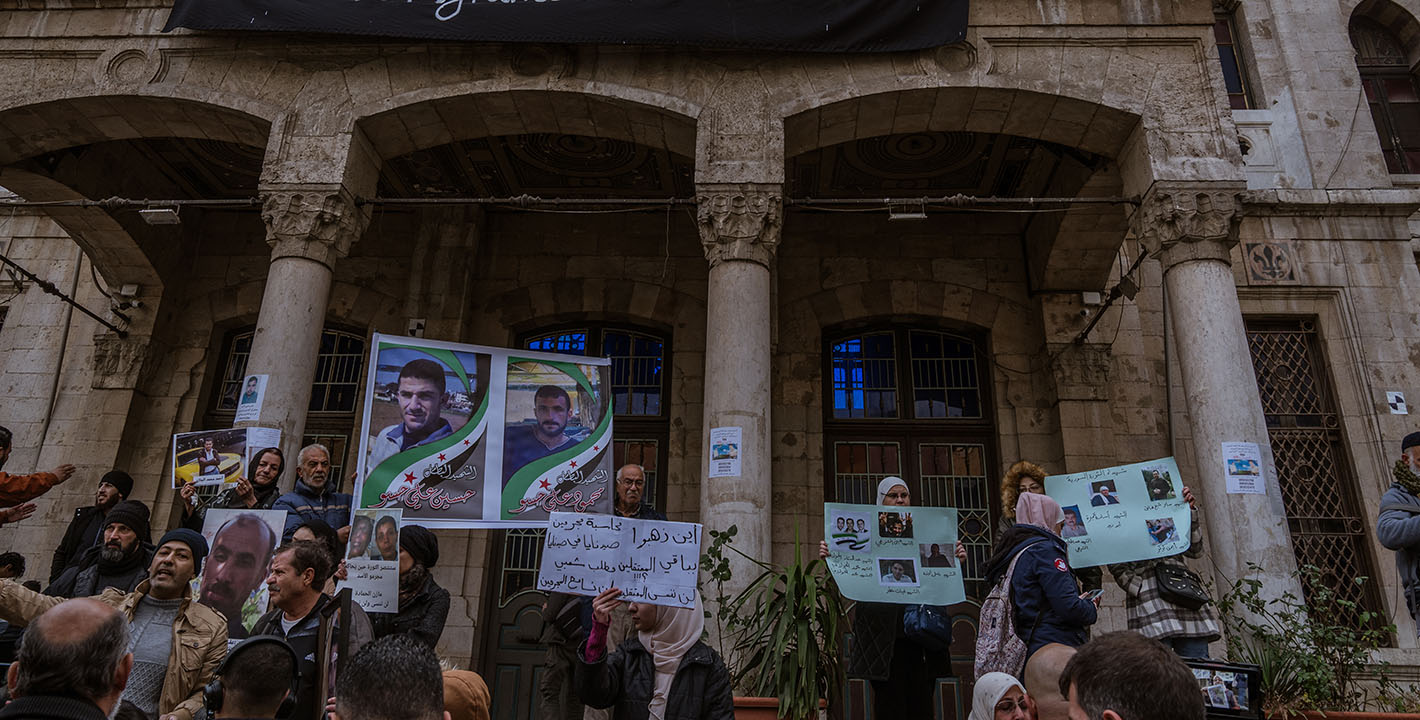
Reconciliation councils are emerging throughout the country to mediate in intracommunal disputes, many from the war years.
Natacha Danon
As the U.S.-led Coalition withdraws, the Kurds’ reliance on Baghdad, and on themselves, will only increase.
Wladimir van Wilgenburg

As the U.S. stumbles in its war with Iran, we are likely to see an acceleration of its disengagement from the region.
Michael Young
The Zaidi government’s objective to collect weapons is constrained by regional conflict, but it can take certain measures at home.
Ali Al-Mawlawi

The accord represents a pivotal moment in the region to avert a security vacuum in the Gulf.


Azeema Cheema, Mohanad Hage Ali