

Article
Леонид Гозман, Michael McFaul
{
  "authors": [
    "Michael McFaul"
  ],
  "type": "legacyinthemedia",
  "centerAffiliationAll": "dc",
  "centers": [
    "Carnegie Endowment for International Peace"
  ],
  "collections": [],
  "englishNewsletterAll": "ctw",
  "nonEnglishNewsletterAll": "",
  "primaryCenter": "Carnegie Endowment for International Peace",
  "programAffiliation": "russia",
  "programs": [
    "Russia and Eurasia"
  ],
  "projects": [],
  "regions": [
    "Caucasus",
    "Russia"
  ],
  "topics": []
}
REQUIRED IMAGE
Source: Carnegie
Moscow Times, March 2,
1999
In the wake of the August 1998 financial meltdown, many predicted that political breakdown would soon follow. Throughout the summer and fall, Russian analysts of all political orientations began to speak openly and often about the specter of Russian fascism should the economic crisis continue. Others, including even Yeltsin, have warned about coup plots aimed at toppling Russia's fragile democracy. The threat of Russian federal dissolution also loomed as a possible nightmare scenario as individual regional leaders began to deal with the economic crisis with little regard for national laws or national interests. In this new political context, challenges to Russian electoral democracy have proliferated. Before August 1998, it was taboo to speak of, let alone advocate, alternatives to elections as the method for selecting political leaders. After August 1998, discussions of alternatives have renewed again. Some groups have even begun to prepare to pursue these non-electoral strategies for achieving (or maintaining) power.
The threat to elections mentioned most frequently by Russian politicians is also the scenario with the lowest immediate probability - a fascist or communist coup d'etat. Militant nationalist groups such as the Russian National Union have advocated radical solutions to Russia's current desperate economic situation. In some regions of Russia, including most openly in Krasnodar where Governor Kondratenko has forged alliances with nationalist extremist organizations, these ideas are becoming part of the mainstream political discourse. Some national polls have even recorded support for the Russian National Union to be as high as 8.4 percent! To date, however, these groups have yet to demonstrate a capacity to mobilize people on a national scale. They are also constrained in growing by the lack of an alternative vision for Russia's future.
The authoritarian threat from the far left also does not
live up to the rhetoric and print accorded to it by Moscow elites. Radical groups
such as Working Russia have assumed a higher profile since the August 1998 meltdown
and, perhaps even more importantly, the radical wing of the Communist Party
of the Russian Federation has assumed much greater prominence within the party.
Led by Viktor Ilyukin, the ascendency of these militants has weakened Zyuganov's
hold on the party and may result in the split of the party before the 1999 parliamentary
elections. Yet, the rise of leftist radicals either from inside or outside of
the party has not translated into greater revolutionary fervor within communist
ranks as a whole. Communist-sponsored marches in the fall were smaller than
in previous years suggesting that popular support for another Bolshevik coup
is low. Within the party itself, the specter of extremists comingto power has
made the party's leaders more
accountable in assuming responsibility for resolving the economic crisis. Zyuganov
and his allies no longer adhere to the philosophy, the worse it gets, the better.
Instead, they fear revolutionaries as much as the Kremlin.
The immediate threat to electoral democracy comes from within
the government, not from without. Most disturbingly is Primakov's idea of reintroducing
the practice of appointing governors rather than electing them. This
is the most regressive proposal that has emanated from Russia's post- communist
leaders. That it is even being considered is a negative sign for the
development of democratic institutions in Russia.
The Russian Federation has severe problems today. Well before August 1998, the center had struggled to accomplish the basic functions of a federal government such as maintaining a single national currency, keeping open a common trade zone, and securing tax transfers from regional governments to the federal government. After August 1998, the center has become even weaker as Moscow has few incentives to offer to promote compliance and little capacity to coerce behavior whilst individual regional leaders have responded to the economic crisis with little regard for national laws or national interests.
The solution to this disturbing trend, however, is not a return to authoritarianism and the recreation of a unitary state. Obviously, this change would be a major setback for democracy as the appointment of regional heads would make them even less responsive to their constituents and more beholden to their Moscow bosses. The appointment of regional executives would set a dangerous precedent. If the governor of Sverdlovsk region can be appointed, why not the president of Russia as well?
Ironically, the financial crisis has yielded several positive outcomes for democratic stability in the short-run. The weakening of Russia's oligarchs must be seen as a positive development for democracy, as these economic elites will not be able to dominate the electoral process as they did in 1996. The crisis has also weakened the institution of the presidency, another positive development for democratic consolidation. De jure, the constitution still accords the president extraordinary executive powers. De facto, however, the financial crisis has triggered a major shift of power away from the presidency and to the parliament, the government and regional executives.
Perhaps, most impressively, Russian politicians played by the rules of the game outlined in the constitution in responding to the economic crisis in selecting a new prime minister and government. As he prepares to come to the United States this month to ask for financial support for his government, Primakov could cite these positive developments for Russian democracy to build his case for future support. However, to be credible, the prime minister must refrain from floating ideas that support the view held by many in the West that Russia is creeping towards dictatorship.
Renouncing this silly idea of appointing governors would
be a good first step towards rebuilding Primakov's democratic credentials both
in the West and in Russia.
Former Senior Associate
In addition to his role at Carnegie, McFaul is Peter and Helen Bing Senior Fellow at the Hoover Institution and associate professor of political science at Stanford University.
Recent Work
Леонид Гозман, Michael McFaul
Michael McFaul, Sanja Tatic
In an interview, Sergei Melkonian discusses Armenia’s and Azerbaijan’s careful balancing act among the United States, Israel, and Iran.

Armenak Tokmajyan
The country’s leadership is increasingly uneasy about multiple challenges from the Levant to the South Caucasus.
Armenak Tokmajyan
In an interview, Daniela Richterova speaks about her book on Czechoslovakia’s Cold War ties to Palestinian groups and others.

Michael Young
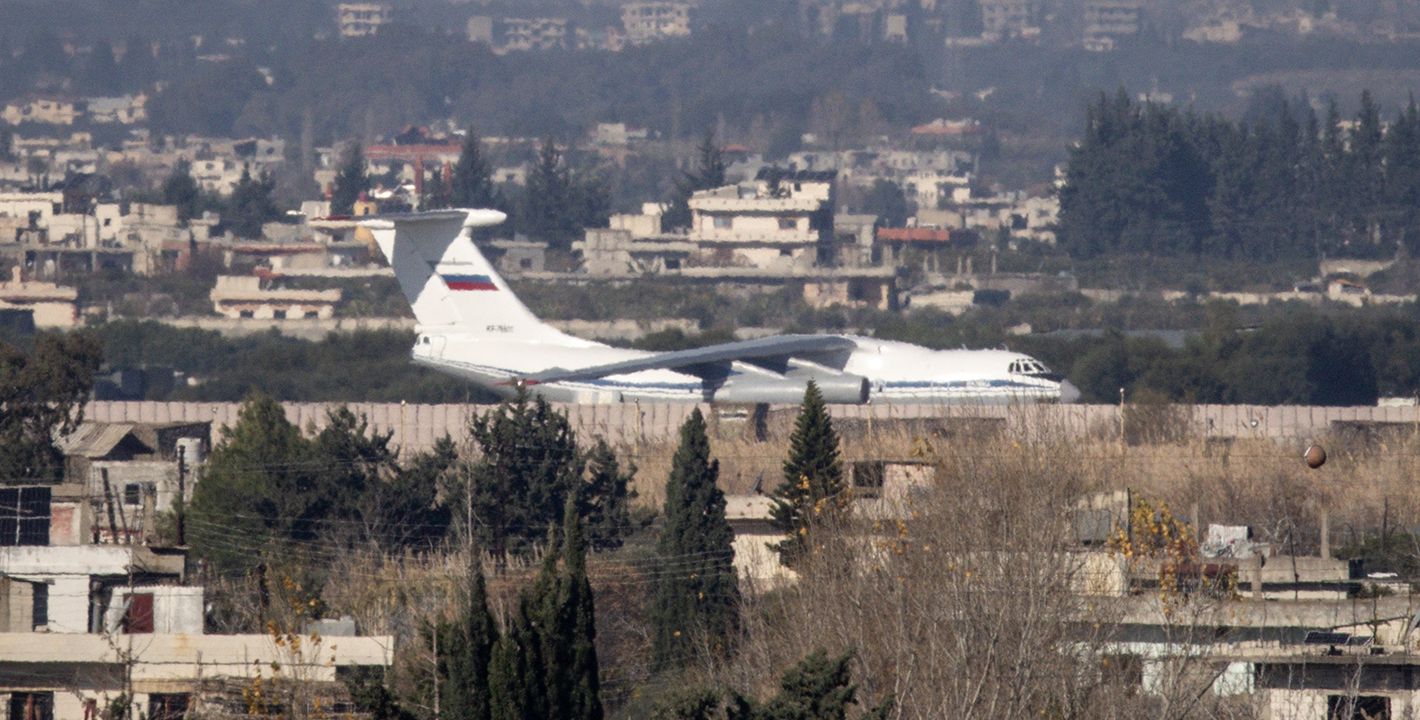
The downfall of the Assad regime represented a setback, but Russia’s primary focus remains Ukraine.
Sergei Melkonian
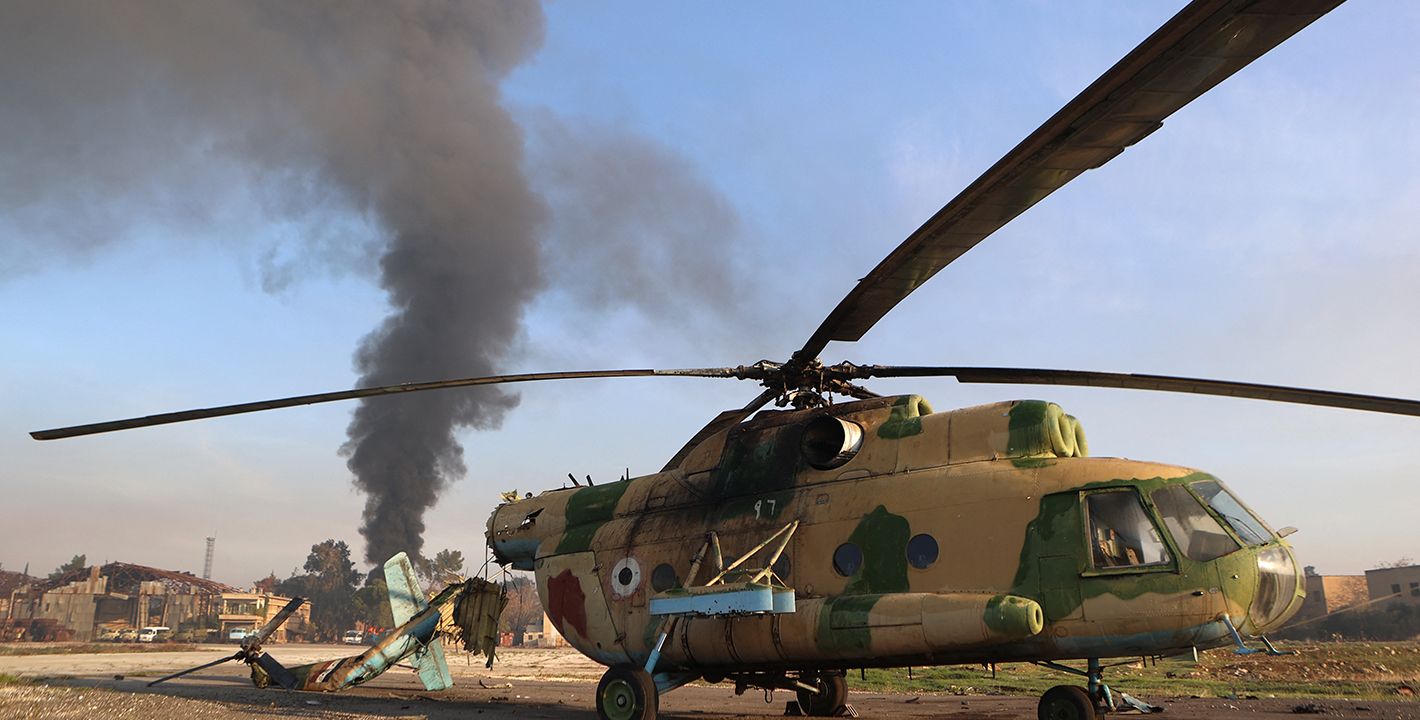
Why did Bashar al-Assad’s armed forces fail to act, unlike those in Egypt, Libya, Algeria, and Sudan?

Yezid Sayigh