

Commentary
As the U.S. stumbles in its war with Iran, we are likely to see an acceleration of its disengagement from the region.
Michael Young
{
  "authors": [],
  "type": "pressRelease",
  "centerAffiliationAll": "",
  "centers": [
    "Carnegie Endowment for International Peace"
  ],
  "collections": [],
  "englishNewsletterAll": "",
  "nonEnglishNewsletterAll": "",
  "primaryCenter": "Carnegie Endowment for International Peace",
  "programAffiliation": "",
  "programs": [],
  "projects": [],
  "regions": [
    "Middle East"
  ],
  "topics": [
    "Political Reform",
    "Democracy"
  ]
}
REQUIRED IMAGE
Are Islam and democracy compatible? Are Islamists willing to accept a democratic order and work within it? Graham E. Fuller, noted analyst of political Islam, writes in a new paper that democracy and political Islam are compatible in principle, but the short-term prognosis is less optimistic.
Source: publisher
FOR IMMEDIATE RELEASE: September 1, 2004Though Political Islam and Democracy Potentially Compatible, Current Geopolitical Context Impedes Moderation
Are Islam and democracy compatible? Are Islamists willing to accept a democratic order and work within it? Graham E. Fuller, noted analyst of political Islam, writes in a new paper that democracy and political Islam are compatible in principle, but the short-term prognosis is less optimistic. Fuller points out that Islamists in the Arab world have been steadily moving for decades towards acceptance of the concept of democracy. Indeed, as Islamist parties enter the political order, they have demonstrated a willingness to work with diverse political forces in pursuit of common goals, like regime liberalization. He also highlights additional positive developments, such as a broadening of the ideological debate among Islamists themselves and the non-violent nature of the vast majority of these political groups.
In isolation, these trends would provide much ground for optimism about the integration of a large segment of Islamist forces into potential democratization processes in the Middle East. Yet, the increasing radicalization of a Muslim world that feels under siege is creating a highly negative environment not conducive to strengthening moderate versions of political Islam. Until the external sources of radicalization are diminished, the region is unlikely to democratize. This means a settlement of the Palestinian problem, departure of U.S. troops from the region, and an end to the broad-brush, anti-Muslim discrimination resulting from the war on terrorism.
Access Fuller’s Carnegie Paper
Islamists in the Arab World: The Dance around Democracy is the latest publication in the Middle East Series from the Carnegie Endowment’s Middle East Political Reform Initiative (MEPRI). The full series is available at www.CarnegieEndowment.org/mepripubs.
Graham E. Fuller is a former vice-chair of the National Intelligence Council at the CIA, a former senior political scientist at RAND, and currently an independent writer and analyst.
Carnegie does not take institutional positions on public policy issues; the views represented herein are those of the author(s) and do not necessarily reflect the views of Carnegie, its staff, or its trustees.

As the U.S. stumbles in its war with Iran, we are likely to see an acceleration of its disengagement from the region.

Michael Young

Huawei pushed hard to enter the Egyptian data centers market, until the Americans made a better offer.

Angie Omar

The accord represents a pivotal moment in the region to avert a security vacuum in the Gulf.


Azeema Cheema, Mohanad Hage Ali

In an interview, Jason Burke discusses his sweeping account of the “revolutionists” who so shaped the 1970s and early 1980s.
Michael Young
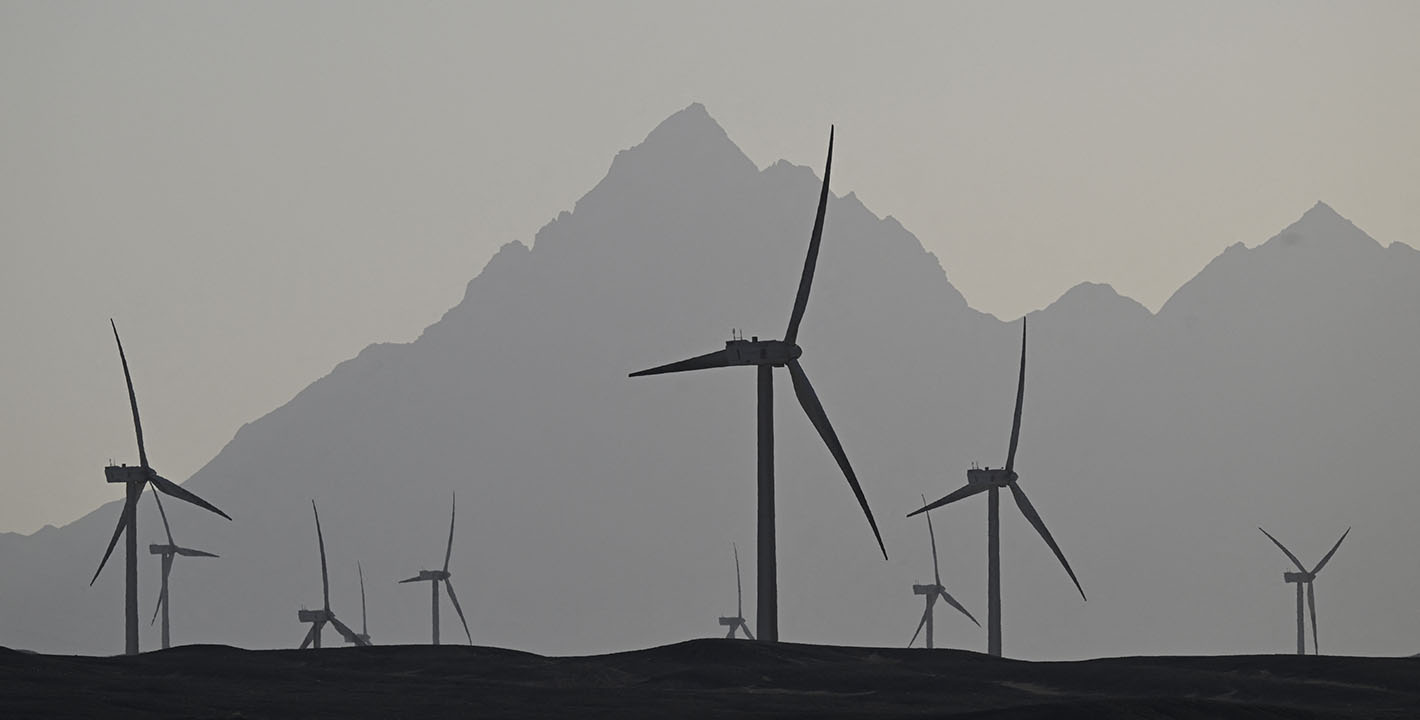
There is a disturbing structural parallel between the old global energy economy and the new green transition.
Angie Omar