

Commentary
Amr Hamzawy
{
  "authors": [
    "Amr Hamzawy"
  ],
  "type": "legacyinthemedia",
  "centerAffiliationAll": "dc",
  "centers": [
    "Carnegie Endowment for International Peace"
  ],
  "collections": [],
  "englishNewsletterAll": "democracy",
  "nonEnglishNewsletterAll": "",
  "primaryCenter": "Carnegie Endowment for International Peace",
  "programAffiliation": "DCG",
  "programs": [
    "Democracy, Conflict, and Governance",
    "Middle East"
  ],
  "projects": [],
  "regions": [
    "North America",
    "United States",
    "Middle East",
    "Iran",
    "Israel",
    "Lebanon",
    "Palestine",
    "Western Europe",
    "France"
  ],
  "topics": [
    "Political Reform",
    "Democracy",
    "Foreign Policy",
    "Nuclear Policy"
  ]
}
Source: Getty
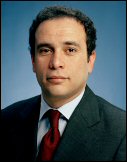
Carnegie's Amr Hamzawy appeared on Al Jazeera TV to talk about the current crisis in the Middle East. Hamzawy discussed prospects of a national unity government in Palestine, Iran's nuclear ambitions, French-American differences regarding the war in Lebanon, America's strategic interests in the Middle East, and the confrontation between Hizbullah and Israel.
Amr Hamzawy appeared on Al Jazeera TV to talk about the current crisis in the Middle East. Click on the links below to read the transcripts of these shows in Arabic.
On September 13, he discussed prospects of a national unity government in Palestine.
On August 19, he discussed Iran's nuclear ambitions and Arab fears.
On August 9, he discussed the French-American differences with regard to the war in Lebanon.
On July 22, he talked in depth about America's strategic interests in the Middle East.
On July 15, he discussed the confrontation between Hizbullah and Israel.

Director, Middle East Program
Amr Hamzawy is a senior fellow and the director of the Carnegie Middle East Program. His research and writings focus on Egypt’s and other middle powers’ involvement in regional security in the Middle East, particularly through collective diplomacy and multilateral conflict resolution
Recent Work
Amr Hamzawy
Amr Hamzawy
Carnegie does not take institutional positions on public policy issues; the views represented herein are those of the author(s) and do not necessarily reflect the views of Carnegie, its staff, or its trustees.
It is improbable that Israel’s forthcoming elections will alter much in terms of how the country thinks about security.

Nathan J. Brown

Huawei pushed hard to enter the Egyptian data centers market, until the Americans made a better offer.

Angie Omar

Middle Eastern states should welcome an accelerated U.S. disengagement from their region.

Michael Young

In an interview, former ambassador Charles Freeman assesses the Trump administration’s war against Iran.
Michael Young

The accord represents a pivotal moment in the region to avert a security vacuum in the Gulf.


Azeema Cheema, Mohanad Hage Ali