

Commentary
In an interview, Rozina Ali discusses her new book on the rise and manifestations of Islamophobia in the United States.
Michael Young
{
  "authors": [],
  "type": "pressRelease",
  "centerAffiliationAll": "dc",
  "centers": [
    "Carnegie Endowment for International Peace"
  ],
  "collections": [],
  "englishNewsletterAll": "menaTransitions",
  "nonEnglishNewsletterAll": "",
  "primaryCenter": "Carnegie Endowment for International Peace",
  "programAffiliation": "MEP",
  "programs": [
    "Middle East"
  ],
  "projects": [],
  "regions": [
    "North America",
    "United States",
    "Middle East",
    "North Africa",
    "Egypt",
    "Morocco",
    "Jordan"
  ],
  "topics": [
    "Economy",
    "Trade",
    "Foreign Policy"
  ]
}
REQUIRED IMAGE
Free trade agreements between the West (U.S. and EU) and Middle East and North African (MENA) countries, while containing beneficial elements, have strengthened negative perceptions of “western-led globalization” because they benefit unpopular elites and impose serious short term economic adjustment.
BEIRUT, June 24—Free trade agreements between the West (U.S. and EU) and Middle East and North African (MENA) countries, while containing beneficial elements, have strengthened negative perceptions of “western-led globalization” because they benefit unpopular elites and impose serious short term economic adjustment, concludes Riad al Khouri, a Carnegie Middle East Center economist specializing in MENA countries.
Examining the socio-economic and political effects of American and European trade agreements on Jordan, Morocco, and Egypt in EU and U.S. Free Trade Agreements in the Middle East and North Africa, al Khouri notes the more active pursuit of FTAs as an economic policy tool with political goals by the United States and the European Union in recent years.
Key Findings:
He concludes:
“The current U.S. and EU initiatives are a step in the right direction, but they alone cannot lead to robust, sustainable growth in the MENA region or create regional stability. The overall growth and precarious stability that the region has been able to achieve still has little to do with bilateral economic links with the U.S. or the EU. Nevertheless, FTAs and similar agreements show signs of increasing importance for both the West and the MENA region, with implications for EU and U.S. trade relations with other regions as well.”
###

Direct link to the PDF: www.carnegieendowment.org/files/cmec8_al_khouri_final.pdf
Direct link to the Arabic PDF: www.carnegieendowment.org/files/cmec8_al_khouri_final_arabic1.pdf
Riad al Khouri is a visiting scholar with the Carnegie Middle East Center based in Beirut, Lebanon. He has undertaken extensive research on regional trade and political economy, among other topics, and writes widely about development issues.
The Carnegie Middle East Center is a public policy think tank and research center based in Beirut, Lebanon. Bringing together senior researchers from the region, the Carnegie Middle East Center aims to better inform the process of political change in the Middle East and deepen understanding of the issues the region and its people face.
The Carnegie Middle East Program combines in-depth local knowledge with incisive comparative analysis to examine economic, socio-political, and strategic interests in the Arab world. Through detailed country studies and the exploration of key cross-cutting themes, the Carnegie Middle East Program, in coordination with the Carnegie Middle East Center, provides analysis and recommendations in both English and Arabic that are deeply informed by knowledge and views from the region. The Carnegie Middle East Program has special expertise in political reform and Islamist participation in pluralistic politics throughout the region.
The Arab Reform Bulletin addresses political reform in the Middle East. Sent monthly, it offers analysis from U.S.-based and Middle Eastern political experts in English and Arabic, as well as news synopses and resource guides.
Press Contact: Trent Perrotto, 202/939-2372, tperrotto@ceip.org
Carnegie does not take institutional positions on public policy issues; the views represented herein are those of the author(s) and do not necessarily reflect the views of Carnegie, its staff, or its trustees.

In an interview, Rozina Ali discusses her new book on the rise and manifestations of Islamophobia in the United States.

Michael Young
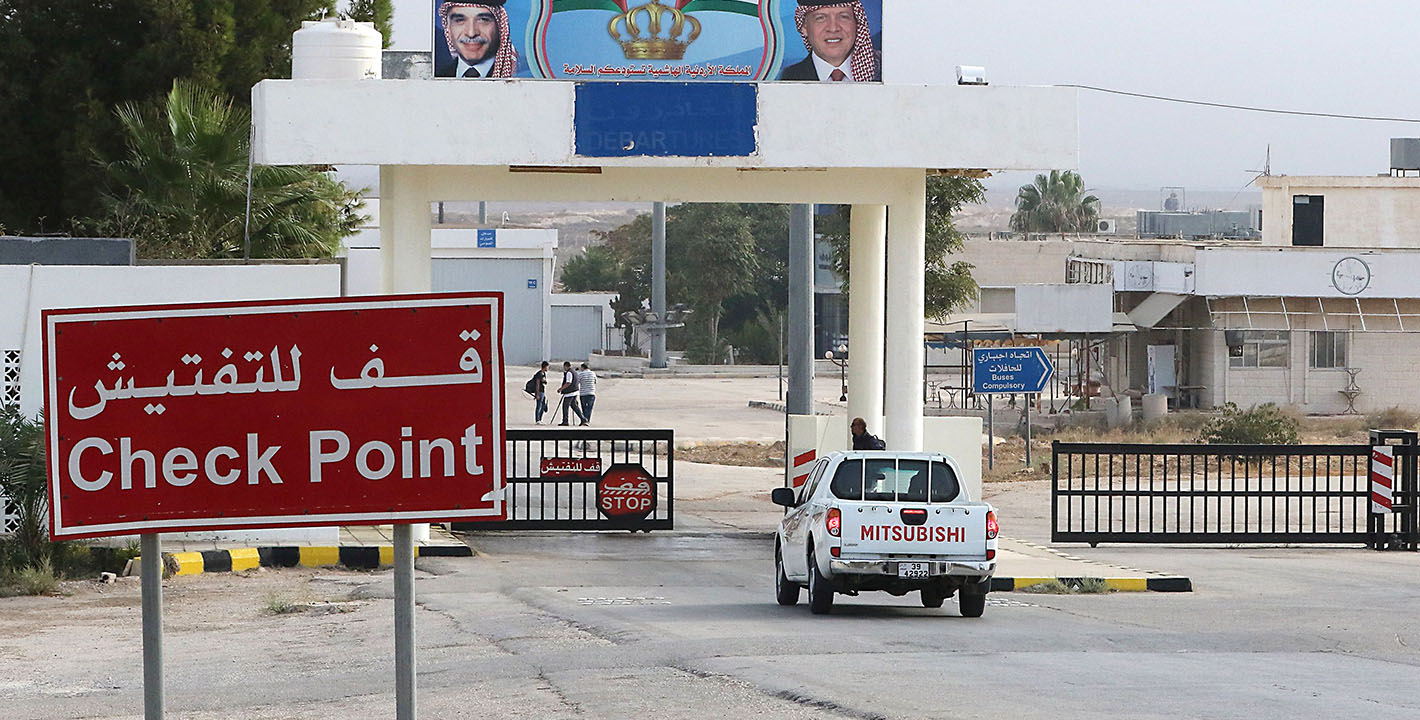
The civil war in Syria may have ended, but the country continues to serve as a source for the trafficking of illegal substances into and via Jordanian territory.

Armenak Tokmajyan, Laith Qerbaa

In an interview, Ian Lustick and Eli Clifton discuss their new book on why a prominent ally has so much influence in America.
Michael Young

As the U.S. stumbles in its war with Iran, we are likely to see an acceleration of its disengagement from the region.
Michael Young

Middle Eastern states should welcome an accelerated U.S. disengagement from their region.
Michael Young