

Commentary
Nikolay Petrov
{
  "authors": [
    "Nikolay Petrov"
  ],
  "type": "legacyinthemedia",
  "centerAffiliationAll": "",
  "centers": [
    "Carnegie Endowment for International Peace",
    "Carnegie Russia Eurasia Center"
  ],
  "collections": [],
  "englishNewsletterAll": "",
  "nonEnglishNewsletterAll": "",
  "primaryCenter": "Carnegie Russia Eurasia Center",
  "programAffiliation": "",
  "programs": [],
  "projects": [],
  "regions": [
    "Caucasus",
    "Russia"
  ],
  "topics": [
    "Political Reform",
    "Democracy"
  ]
}
Source: Getty
President Dmitry Medvedev's first month on the job has provided a good opportunity to analyze the developing relationship between the new leader and the regions. Most important, we have seen a continuation of Moscow's policy toward the regions that was initiated last autumn with the appointment of Dmitry Kozak as the regional development minister. And contrary to many predictions, no major shakedowns have taken place, and it doesn't appear that there will be any in the near future -- not in the gubernatorial ranks or the replacement of heavyweights, such as Mayor Yury Luzhkov.
Source: The Moscow Times

And contrary to many predictions, no major shakedowns have taken place, and it doesn't appear that there will be any in the near future -- not in the gubernatorial ranks or the replacement of heavyweights, such as Mayor Yury Luzhkov.
The exceptions may be Governor Sergei Darkin of the Primorye region and Sergei Kolesov of the Amur region, who seem to have been targeted as part of Medvedev's campaign against corruption and environmental violations. Both governors might be replaced in the near future. In addition, a number of regions are ripe for personnel changes that might come as early as autumn. These include primarily the Volgograd and Pskov regions, the republic of Khakasia and a few less obvious cases such as the Kirov, Kurgan and Astrakhan regions, as well as the Karachayevo-Cherkessia, Ingushetia and Marii-El republics.
The regional elite are also being cautious by demonstrating loyalty to both Medvedev and Prime Minister Vladimir Putin. At the same time, they are actively lobbying on two fronts for federal budgetary funds allocated for various large-scale regional projects. In this contest, the Kuban region is currently leading the pack, but the Ulyanovsk, Khabarovsk and Krasnoyarsk regions also did well for their victory in the first competition among regional applicants to create special port-centered economic zones. The winners were the Krasnoyarsk and Ulyanovsk airports and the Soviet Harbor in the Khabarovsk region.
The latest rotation of the members of the State Council presidium occurred at the end of May. The new members include the governors of Vologda, Tula, Tyumen, Novosibirsk, Perm and Kamchatka, as well as Chechen President Ramzan Kadyrov.
When Medvedev was given the role of head of the State Council's presidium after the presidential election, this was the first official sign of his new presidential authority. Medvedev also conducted two regional sessions of the State Council before he became president -- one in the Siberian city of Tobolsk concerning business development and another in Dubna in the Moscow region, on innovation. Because the presidium meets with the president and a few key ministers every month, it gives member governors an excellent opportunity to lobby for their regions' interests.
Putin's White House displayed a great deal of activity last month, making a number of decisions directing enormous additional funding into the economy and social sector. In addition to dramatic growth in social spending, the government took large-scale measures to support the country's agricultural sector, as well as the automobile and oil industries. It would seem that the "pro-growth" proponents in Putin's Cabinet have gained the upper hand in the struggle against those advocating measures to reign in inflation.
During the St. Petersburg International Economic Forum over the weekend, Medvedev added a fifth "I" -- intellect -- to his often-repeated four I's: institutions, infrastructure, innovation and investment. This might lead to greater state funding to regions in which the country's intellectual potential is concentrated. But it is unlikely to change the map of successes and failures in the regions.
Nikolai Petrov is a scholar in residence at the Carnegie Moscow Center.
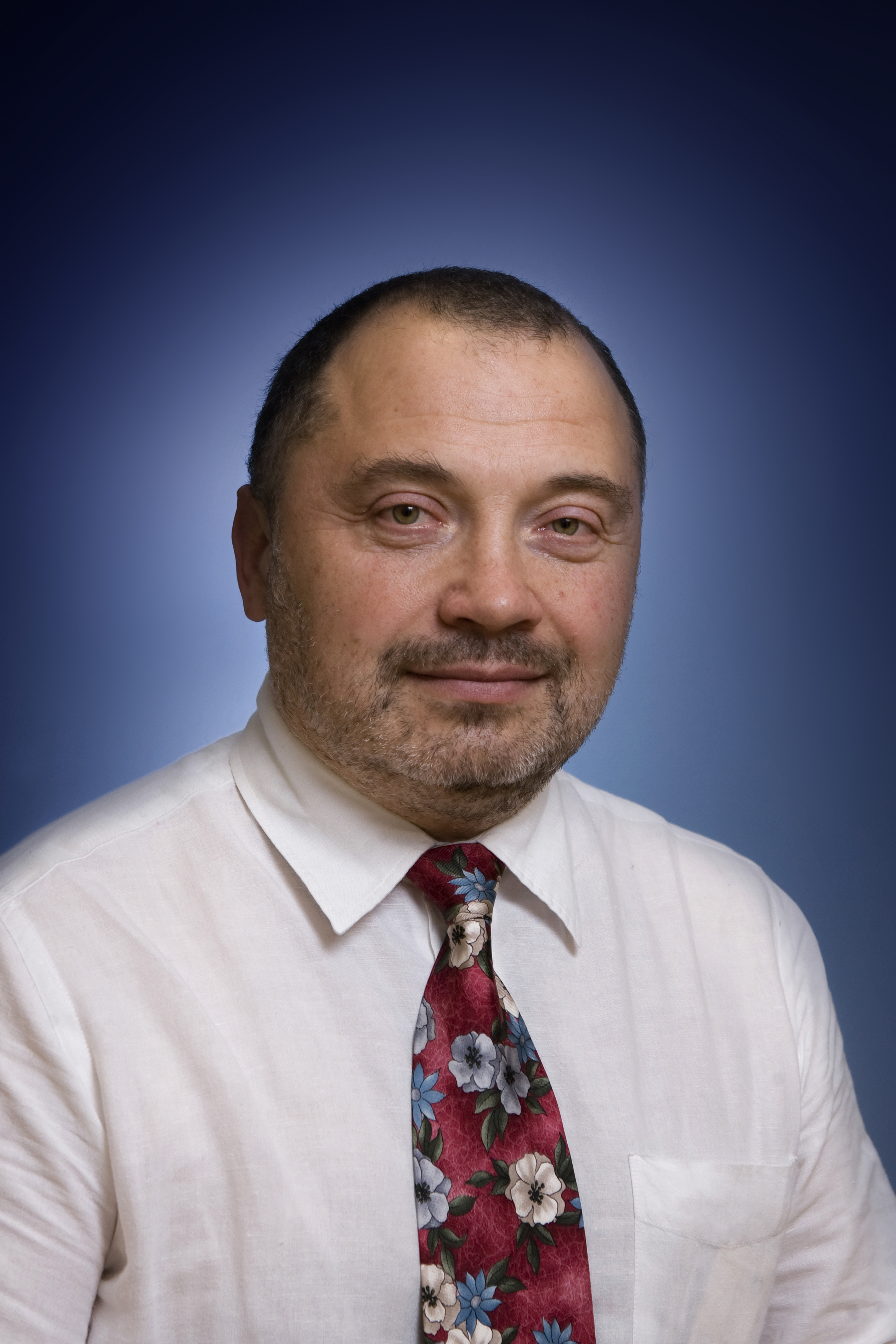
Former Scholar-in-Residence, Society and Regions Program, Moscow Center
Nikolay Petrov was the chair of the Carnegie Moscow Center’s Society and Regions Program. Until 2006, he also worked at the Institute of Geography at the Russian Academy of Sciences, where he started to work in 1982.
Recent Work
Nikolay Petrov
Nikolay Petrov
Carnegie does not take institutional positions on public policy issues; the views represented herein are those of the author(s) and do not necessarily reflect the views of Carnegie, its staff, or its trustees.
In an interview, Sergei Melkonian discusses Armenia’s and Azerbaijan’s careful balancing act among the United States, Israel, and Iran.

Armenak Tokmajyan
The country’s leadership is increasingly uneasy about multiple challenges from the Levant to the South Caucasus.
Armenak Tokmajyan
In an interview, Daniela Richterova speaks about her book on Czechoslovakia’s Cold War ties to Palestinian groups and others.

Michael Young
The downfall of the Assad regime represented a setback, but Russia’s primary focus remains Ukraine.
Sergei Melkonian
To address the deepening climate crisis, climate activism is employing a wider variety of tactics and aiming at a broader set of goals. In response, the movement faces stronger repression and civic backlash against climate action.

Erin Jones, Richard Youngs